HomeMCPWorkbenchSkills
HomeWorkbenchNotificationsMe
llms.txt · MCP GuidePrivacy Policy · Terms of Service · Supportv1.8.0
  1. Home
  2. /Reaction

Hydrochloric Acid → HCID 22285289, compound

HRID 1061767
Notes
Print preview

Reaction equation

HRID 1061767 reaction equation
CC1(C)CCCC(C)(C)N1.C([Li])CCC.[F:16][C:17]1[CH:22]=[CH:21][CH:20]=[CH:19][C:18]=1[C:23]1[CH:28]=[CH:27][CH:26]=[CH:25][N:24]=1.[B:29](OC)([O:32]C)[O:30]C.Cl>C1COCC1>[F:16][C:17]1[C:18]([C:23]2[CH:28]=[CH:27][CH:26]=[CH:25][N:24]=2)=[CH:19][CH:20]=[CH:21][C:22]=1[B:29]([OH:32])[OH:30]
ParticipantsConditionsProcedureWorkupSources & evidenceReaction notes

Participants

7

Reactant 5

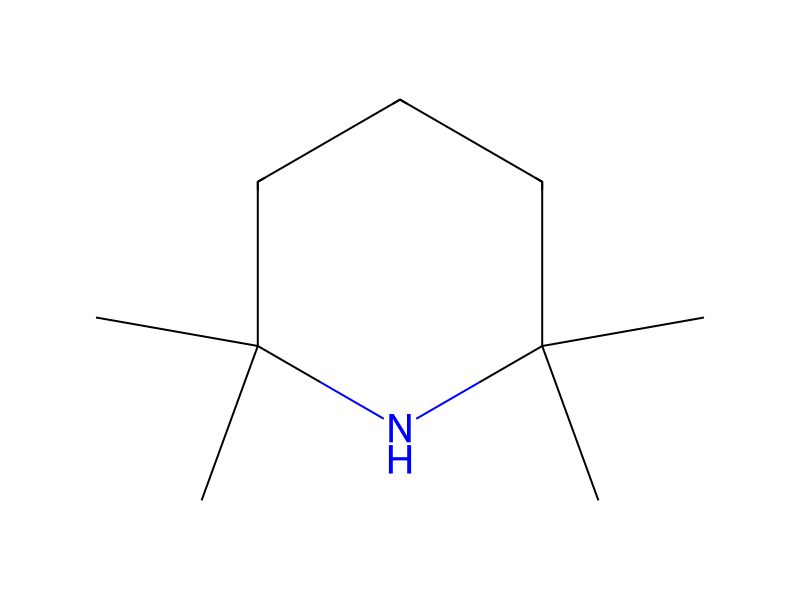
HCID 313Hydrochloric AcidHCID 8470Trimethyl borateHCID 130352,2,6,6-TetramethylpiperidineHCID 98555982-(2-Fluorophenyl)pyridineHCID 178418339Butyllithium

Product 1

HCID 22285289HCID 22285289, compound

Reagents, catalysts & solvents 1

HCID 8028TetrahydrofuranSolvent2×

Conditions

Temperature
-78 °C

Procedure

2,2,6,6-Tetramethylpiperidine (8.61 mL, 7.23 g, 51.2 mmol) was added dropwise with stirring to a mixture of 2.5 M solution of n-butyllithium in hexanes (19.6 mL, 49 mmol) and THF (130 mL) at −78° C. 2-(2-Fluoro-phenyl)pyridine (8.06 g, 46.5 mmol) in THF (25 mL) was added dropwise with stirring to the resulting solution at −78° C., and the mixture was stirred at the same temperature for 2 h. Trimethyl borate (10.5 mL, 9.67 g, 93 mmol) was added at −78° C., and the mixture was stirred for a further 10 min before being allowed to warm to room temperature. 2 N Hydrochloric acid (12 mL) was added, then the mixture was stirred for 30 min at room temperature, and was concentrated in vacuo. The residual material was stirred with 2 N hydrochloric acid (130 mL) for 1 h. The mixture was adjusted to pH 14 by addition of 2 N sodium hydroxide solution, and was then washed with diethyl ether. Concentrated hydrochloric acid was added to the aqueous phase with ice-bath cooling, until the pH was ˜8, precipitating a white solid. The slurry was stirred at 0° C. for 1 h, and was then filtered, yielding the residual boronic acid as a sticky white solid. This was refluxed in diethyl ether overnight, and was then filtered, affording 2-fluoro-3-(pyridin-2-yl)benzeneboronic acid as a white powder (3.4 g, 34%). m/z (ES+) 218 (M++H).


Workup

  1. stirringthe mixture was stirred at the same temperature for 2 h
  2. stirringthe mixture was stirred for a further 10 min
  3. temperatureto warm to room temperature
  4. stirringthe mixture was stirred for 30 min at room temperature
  5. concentrationwas concentrated in vacuo
  6. stirringThe residual material was stirred with 2 N hydrochloric acid (130 mL) for 1 h
  7. additionThe mixture was adjusted to pH 14 by addition of 2 N sodium hydroxide solution
  8. washwas then washed with diethyl ether
  9. additionConcentrated hydrochloric acid was added to the aqueous phase with ice-bath
  10. temperaturecooling, until the pH was ˜8
  11. customprecipitating a white solid
  12. stirringThe slurry was stirred at 0° C. for 1 h
  13. filtrationwas then filtered

Sources & evidence

ORD record
ord-06b42e2cf5cb471bbce85efc0b8af52e
Source dataset
uspto-grants-2005_11
DOI
10.6084/m9.figshare.5104873.v1
Patent number
US06960598B2

Reaction notes

Loading…

On this pageParticipantsConditionsProcedureWorkupSources & evidenceReaction notes