HomeMCPWorkbenchSkills
HomeWorkbenchNotificationsMe
llms.txt · MCP GuidePrivacy Policy · Terms of Service · Supportv1.8.3
  1. Home
  2. /Reaction

Hydrochloric Acid → (2S)-1-((benzyloxy)carbonyl)-4-hydroxypyrrolidine-2-carboxylic acid

HRID 1065654
Print

Reaction equation

HRID 1065654 reaction equation
[OH:1][CH:2]1[CH2:6][NH:5][C@H:4]([C:7]([OH:9])=[O:8])[CH2:3]1.Cl[C:11]([O:13][CH2:14][C:15]1[CH:20]=[CH:19][CH:18]=[CH:17][CH:16]=1)=[O:12].C(=O)(O)[O-].[K+].C(=O)([O-])[O-].[K+].[K+].Cl>CC(C)=O.O>[C:11]([N:5]1[CH2:6][CH:2]([OH:1])[CH2:3][C@H:4]1[C:7]([OH:9])=[O:8])([O:13][CH2:14][C:15]1[CH:20]=[CH:19][CH:18]=[CH:17][CH:16]=1)=[O:12]

ParticipantsProcedureSources & evidenceReaction notes

Participants

8

Reactant 5

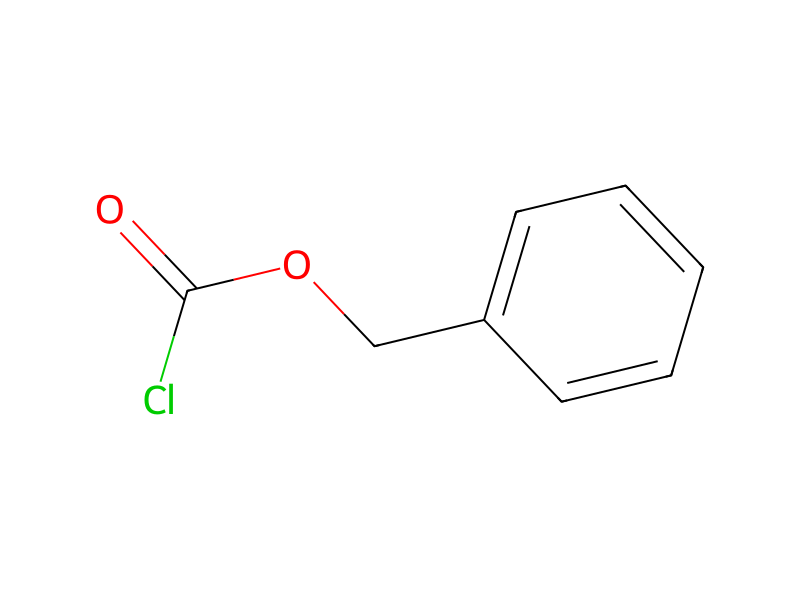
HCID 313Hydrochloric AcidHCID 10387Benzyl chloroformateHCID 11430Potassium CarbonateHCID 69248L-Proline, 4-hydroxy-, cis-HCID 516893Potassium Bicarbonate

Product 1

HCID 12731799(2S)-1-((benzyloxy)carbonyl)-4-hydroxypyrrolidine-2-carboxylic acid

Reagents, catalysts & solvents 2

HCID 180AcetoneSolventHCID 962WaterSolvent

Procedure

26.5 g. (0.02 mole) of 4-hydroxy-L-proline and 32.8 ml. (0.23 mole) of benzyl chloroformate are reacted in 200 ml. of water and 100 ml. of acetone in the presence of 20 g. (0.02 mole) of potassium bicarbonate and 69.2 g. (0.50 mole) of potassium carbonate and worked up with 90 ml. of concentrated hydrochloric acid as described in Can.J. Biochem. & Physiol. 37, 584 (1959) to obtain N-carbobenzyloxy-4-hydroxy-L-proline. This product is reacted with cyclohexylamine to form the cyclohexylamine salt yield 69 g., m.p. 193°-195°. The salt (34 g.) is neutralized with N-hydrochloric acid to obtain 27 g. of free acid as a colorless glass [α]D26 -70°, (c, 1% in chloroform).

Sources & evidence

ORD record
ord-0f9b8529a9d845afab6d953ea54f3e22
Source dataset
uspto-grants-1982_05
DOI
10.6084/m9.figshare.5104873.v1
Patent number
US04330548

Reaction notes

On this pageParticipantsProcedureSources & evidenceReaction notes


