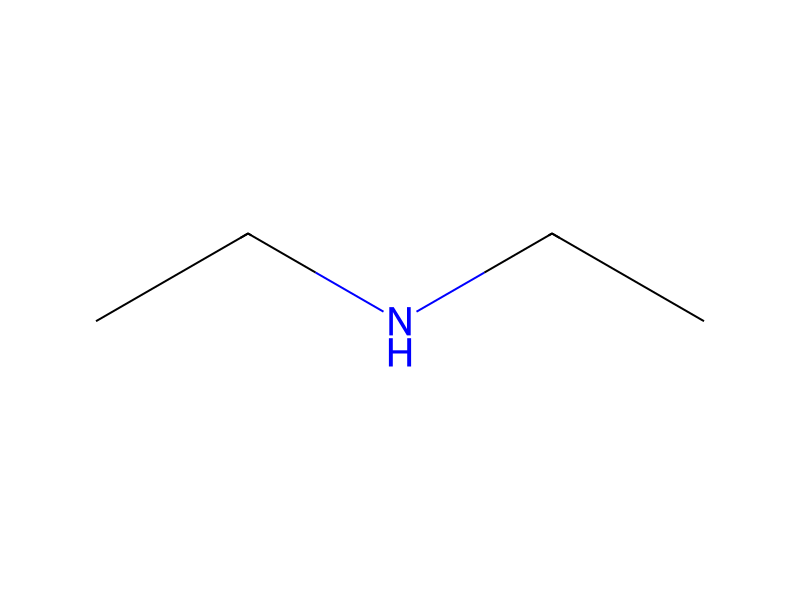
[Cl:1][C:2]1[CH:23]=[CH:22][C:5]([CH2:6][NH:7][C:8]([C:10]2[CH:11]=[N:12][C:13]3[C:18]([C:19]=2[OH:20])=[CH:17][C:16](I)=[CH:15][CH:14]=3)=[O:9])=[CH:4][CH:3]=1.CN(C=O)C.[CH2:29]([OH:32])[C:30]#[CH:31]>N(CC)CC.[Cu]I.Cl[Pd](Cl)([P](C1C=CC=CC=1)(C1C=CC=CC=1)C1C=CC=CC=1)[P](C1C=CC=CC=1)(C1C=CC=CC=1)C1C=CC=CC=1>[Cl:1][C:2]1[CH:23]=[CH:22][C:5]([CH2:6][NH:7][C:8]([C:10]2[CH:11]=[N:12][C:13]3[C:18]([C:19]=2[OH:20])=[CH:17][C:16]([C:31]#[C:30][CH2:29][OH:32])=[CH:15][CH:14]=3)=[O:9])=[CH:4][CH:3]=1To a mixture of N-(4-chlorobenzyl)-4-hydroxy-6-iodo-3-quinolinecarboxamide from Preparation No. 1 (0.494 g) in Et2NH (12.9 mL) is added CuI (10.8 mg) and (Ph3P)2PdCl2 (39.7 mg). DMF (2 mL) is added to solubilize the reactants. To this solution is added propargyl alcohol (0.066 mL) and the reaction is stirred at room temperature for 2 days. The reaction mixture is concentrated to remove Et2NH. The resulting residue is partitioned between CH2Cl2 (3×) and H2O. A brown solid precipitated from the CH2Cl2 layer is filtered and collected to obtain pure product as indicated by NMR. The organic layers are combined, dried over Na2SO4, and concentrated to obtain a brown residue. The residue is placed under high vac to remove residual DMF. The residue is adsorbed onto silica and chromatographed eluting with 2% MeOH in CH2Cl2 and 3% MeOH in CH2Cl2. Fractions homogenous by TLC are combined, condensed and recrystallized with EtOAc/hexanes to obtain a creme solid. The two crops yielded 325.4 mg (79%) of the desired product as a tan solid.