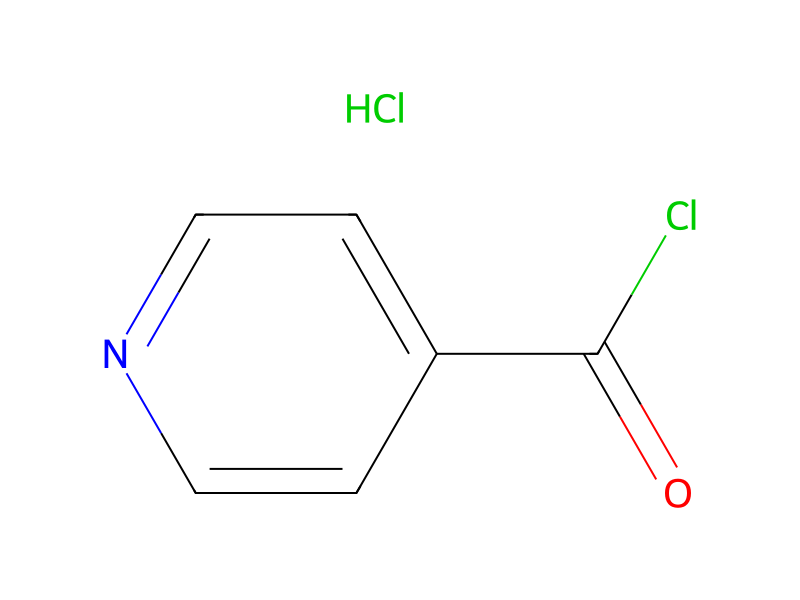
Cl.[C:2](Cl)(=[O:9])[C:3]1[CH:8]=[CH:7][N:6]=[CH:5][CH:4]=1.[NH2:11][C:12]1[CH:13]=[C:14]2[C:18](=[CH:19][C:20]=1[NH2:21])[NH:17][C:16](=[O:22])[C:15]2([CH3:24])[CH3:23].C(N(CC)CC)C.Cl>C(O)C.C(Cl)Cl>[OH2:9].[OH2:22].[OH2:9].[OH2:9].[CH3:23][C:15]1([CH3:24])[C:14]2[C:18](=[CH:19][C:20]3[NH:21][C:2]([C:3]4[CH:8]=[CH:7][N:6]=[CH:5][CH:4]=4)=[N:11][C:12]=3[CH:13]=2)[NH:17][C:16]1=[O:22]3 g. (0.017 mol) Isonicotinic acid chloride hydrochloride are added portionwise to a solution of 2.9 g. (0.015 mol) 5,6-diamino-3,3-dimethylindolin-2-one in 30 ml. methylene chloride containing 4.4 ml. (0.032 mol) triethylamine and the reaction mixture is left to stir overnight. It is then evaporated to dryness in a vacuum, the residue is stirred up several times with water, filtered off with suction and the crystals obtained are heated under reflux for about 12 hours in a solution of 100 ml. ethanol containing 10 ml. concentrated hydrochloric acid. The mixture obtained is evaporated to dryness in a vacuum, the residue is stirred up with 20 ml. water and then rendered neutral with an aqueous solution of ammonia. The product is subsequently filtered off with suction, washed with water, dried and recrystallised from water containing 30% ethanol. The yield is 1.9 g. (36% of theory); m.p. 215° C.