HomeMCPWorkbenchSkills
HomeWorkbenchNotificationsMe
llms.txt · MCP GuidePrivacy Policy · Terms of Service · Supportv1.8.3
  1. Home
  2. /Reaction

2,6-Lutidine → N-(6-amino-5-(2-chloro-5-methoxyphenyl)pyridin-2-yl)-3-methylisoxazole-4-carboxamide

HRID 1094783
Print

Reaction equation

HRID 1094783 reaction equation
[CH3:1][C:2]1[C:6]([C:7]([OH:9])=O)=[CH:5][O:4][N:3]=1.C(Cl)(=O)C(Cl)=O.[Cl:16][C:17]1[CH:22]=[CH:21][C:20]([O:23][CH3:24])=[CH:19][C:18]=1[C:25]1[C:26]([NH2:32])=[N:27][C:28]([NH2:31])=[CH:29][CH:30]=1.N1C(C)=CC=CC=1C>ClCCl.CN(C)C=O.C(#N)C>[NH2:32][C:26]1[N:27]=[C:28]([NH:31][C:7]([C:6]2[C:2]([CH3:1])=[N:3][O:4][CH:5]=2)=[O:9])[CH:29]=[CH:30][C:25]=1[C:18]1[CH:19]=[C:20]([O:23][CH3:24])[CH:21]=[CH:22][C:17]=1[Cl:16]
ParticipantsProcedureWorkupSources & evidenceReaction notes

Participants

8

Reactant 4

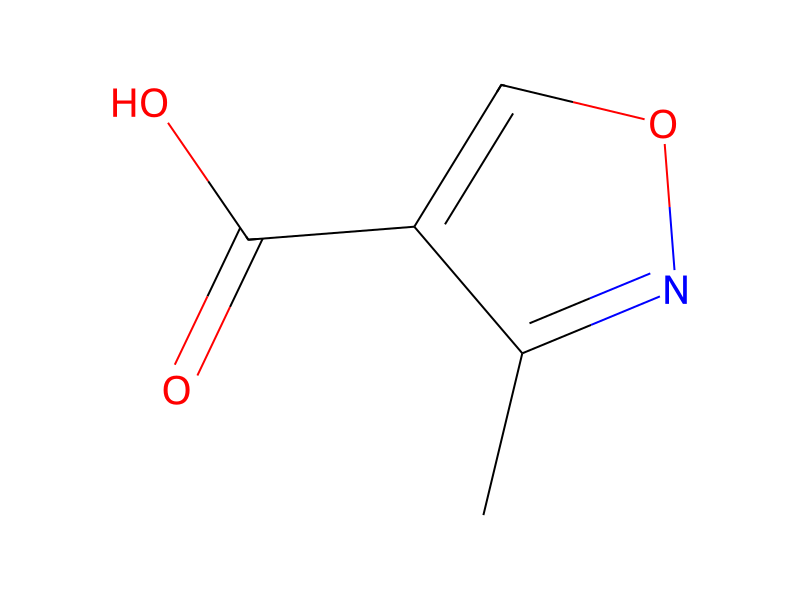
HCID 79372,6-LutidineHCID 65578Oxalyl chlorideHCID 45896923-Methyl-1,2-oxazole-4-carboxylic acidHCID 575823413-(2-Chloro-5-methoxyphenyl)pyridine-2,6-diamine

Product 1

HCID 25159056N-(6-amino-5-(2-chloro-5-methoxyphenyl)pyridin-2-yl)-3-methylisoxazole-4-carboxamide

Reagents, catalysts & solvents 3

HCID 6228
Dimethylformamide
Catalyst
HCID 6342AcetonitrileSolvent
HCID 6344DichloromethaneSolvent

Procedure

To a suspension of 3-methylisoxazole-4-carboxylic acid (2.73 g, 21.48 mmol) in dichloromethane (10 ml) was added oxalyl chloride (2.62 ml, 30.1 mmol) followed by 2 drops of dimethylformamide. The reaction was stirred at room temperature for 18 hours before concentration in vacuo. The residue was azeotroped with dichloromethane, dissolved in acetonitrile (15 ml) and added dropwise to a cooled solution of 3-(2-chloro-5-methoxyphenyl)pyridine-2,6-diamine (preparation 1, 5.2 g, 20.82 mmol) and lutidine (3.15 ml, 27.1 mmol) in acetonitrile (150 ml). The reaction was allowed to warm to room temperature and stirred under nitrogen for 30 minutes. The reaction was quenched by the addition of water (100 ml), extracted into ethyl acetate (200 ml), dried (MgSO4) and concentrated in vacuo. The residue was purified by silica gel column chromatography eluting with ethylacetate:heptane 1:2 to furnish a pale yellow solid. This was triturated with t-butylmethylether, filtered, and recrystallised from ethyl acetate to furnish the title product as a white solid.

Workup

  1. customThe residue was azeotroped with dichloromethane
  2. dissolutiondissolved in acetonitrile (15 ml)
  3. temperatureto warm to room temperature
  4. stirringstirred under nitrogen for 30 minutes
  5. customThe reaction was quenched by the addition of water (100 ml)
  6. extractionextracted into ethyl acetate (200 ml)
  7. dry with materialdried (MgSO4)
  8. concentrationconcentrated in vacuo
  9. customThe residue was purified by silica gel column chromatography
  10. washeluting with ethylacetate:heptane 1:2
  11. customto furnish a pale yellow solid
  12. customThis was triturated with t-butylmethylether
  13. filtrationfiltered
  14. customrecrystallised from ethyl acetate

Sources & evidence

ORD record
ord-45afb22bc5e8400ca0f16014da6be4c2
Source dataset
uspto-grants-2012_03
DOI
10.6084/m9.figshare.5104873.v1
Patent number
US08134007B2

Reaction notes

On this pageParticipantsProcedureWorkupSources & evidenceReaction notes