Reaction equation

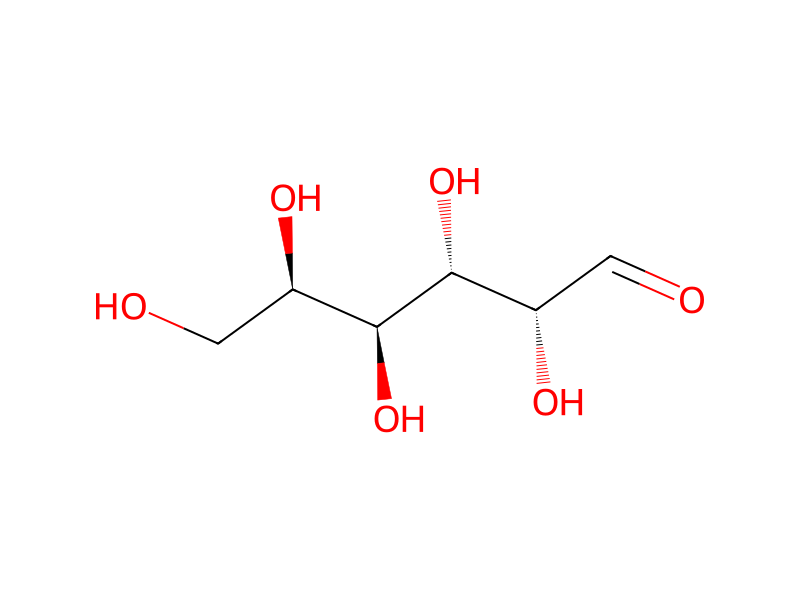
[O:1]=[CH:2][C@@H:3]([C@H:5]([C@H:7]([C@@H:9](CO)[OH:10])[OH:8])[OH:6])[OH:4].C(O)C(N)(CO)CO.Cl.[Mg+2].[Cl-].[Cl-].N[C@H](C(O)=O)CS.S(=O)(=O)(O)O.C1C2NC3C(=CC=CC=3)C=2C=CC=1.OCC([C@H]([C@H]([C@@H](CO)O)O)O)=O>>[O:1]=[CH:2][C@H:3]([C@@H:5]([C@@H:7]([CH2:9][OH:10])[OH:8])[OH:6])[OH:4]Participants




Procedure
The isomerization of galactose was performed with a mixture of 25 μl of 100 mM galactose and 100 μl of the crude enzyme solution as a substrate at 60° C. for 1 hour. To measure the activity of galactose isomerization, 100 μl of the crude enzyme solution containing 40 mM of galactose as a substrate was mixed with 1 Ml of reaction buffer (50 mM Tris-HCl, pH 7.0), followed by reaction at 65° C. for 20 minutes. At that time, 5 mM of MgCl2 and 1 mM of MnCl2 were added to the reaction mixture. The activity of the isomerase was measured by the cystein-carbazol-sulfuric acid method (Dische, Z., and E. Borenfreund., A New Spectrophotometric Method for the Detection and Determination of Keto Sugars and Trioses, J. Biol. Chem., 192:583-587, 1951). The protein contained in the crude enzyme solution was quantified with a Bradford assay kit (Biorad, U.S.A.). As a result, the isomerase activity was 0.2045±0.0078 (mg-tagatose/mg-protein·h), indicating that the product of galactose isomerization, tagatose, was successfully generated (FIG. 3).
Workup
- customfollowed by reaction at 65° C. for 20 minutes
Sources & evidence
- ORD record
- ord-b58030edd3e8478883cdca7def9287ef
- Source dataset
- uspto-grants-2012_03
- Patent number
- US08137946B2
Linked notes
Loading…