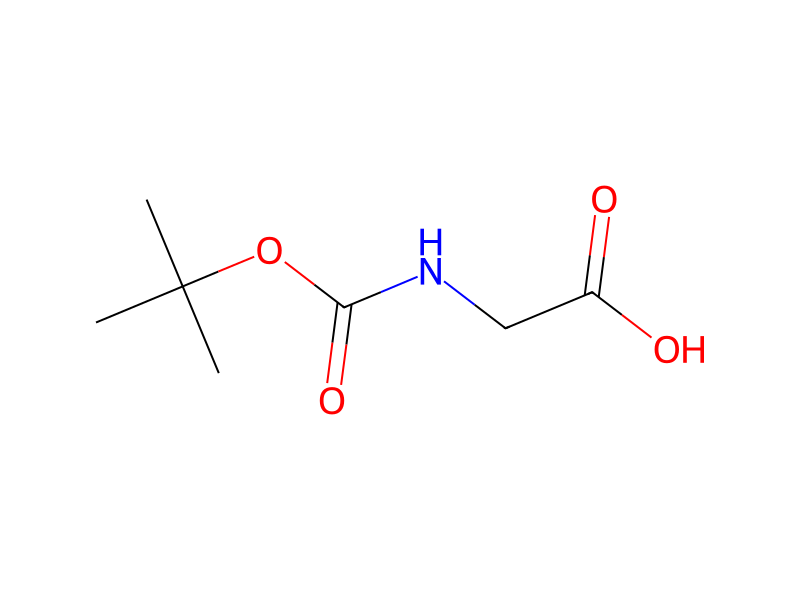
N-(tert-butoxycarbonyl)glycine → {2-[4-(4-Fluoro-benzyl)-(2R,5S)-2,5-dimethyl-piperazin-1-yl]-2-oxo-ethyl}-carbamic Acid tert-butyl Ester
HRID 11685
Reaction equation

[C:1]([O:5][C:6]([NH:8][CH2:9][C:10]([OH:12])=O)=[O:7])([CH3:4])([CH3:3])[CH3:2].Cl.CN(C)CCCN=C=NCC.[F:25][C:26]1[CH:40]=[CH:39][C:29]([CH2:30][N:31]2[CH2:36][C@H:35]([CH3:37])[NH:34][CH2:33][C@H:32]2[CH3:38])=[CH:28][CH:27]=1>ClCCl.CN(C)C1C=CN=CC=1>[C:1]([O:5][C:6](=[O:7])[NH:8][CH2:9][C:10]([N:34]1[CH2:33][C@H:32]([CH3:38])[N:31]([CH2:30][C:29]2[CH:39]=[CH:40][C:26]([F:25])=[CH:27][CH:28]=2)[CH2:36][C@H:35]1[CH3:37])=[O:12])([CH3:2])([CH3:3])[CH3:4]Participants
6