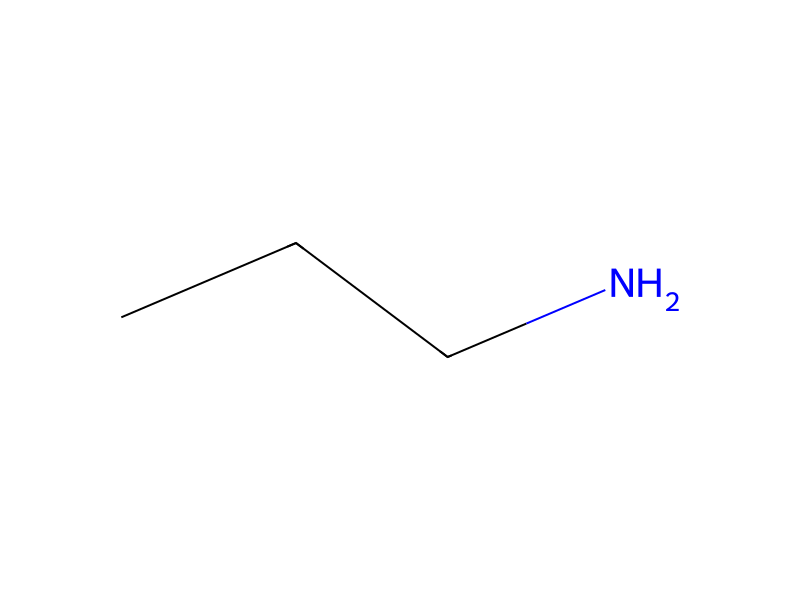
[Br:1][C:2]1[CH:11]=[C:10]2[C:5]([CH2:6][CH2:7][C:8](=O)[CH2:9]2)=[CH:4][CH:3]=1.[CH2:13]([NH2:16])[CH2:14][CH3:15].C(O[BH-](OC(=O)C)OC(=O)C)(=O)C.[Na+]>ClCCCl>[Br:1][C:2]1[CH:11]=[C:10]2[C:5]([CH2:6][CH2:7][CH:8]([NH:16][CH2:13][CH2:14][CH3:15])[CH2:9]2)=[CH:4][CH:3]=1To a solution of 7-bromo-3,4-dihydro-1H-naphthalen-2-one, prepared as described in J. Med. Chem, 1993, 36, 2279-2291, (5.2 g, 23 mmol) in 1,2 dichloroethane (30 mL), propyl amine (1.63 g, 28 mmol) was added, followed by addition of sodium triacetoxyborohydride (7.3 g, 34.5 mmol). The reaction was stirred at ambient temperature under nitrogen for 24 h, at which time it was concentrated in vacuo. The remaining solid was partitioned between 1 M sodium hydroxide and ethyl acetate. The ethyl acetate was washed with brine, dried over magnesium sulfate, and filtered to yield (7-bromo-1,2,3,4-tetrahydro-naphthalen-2-yl)-propyl-amine (2.75 g).