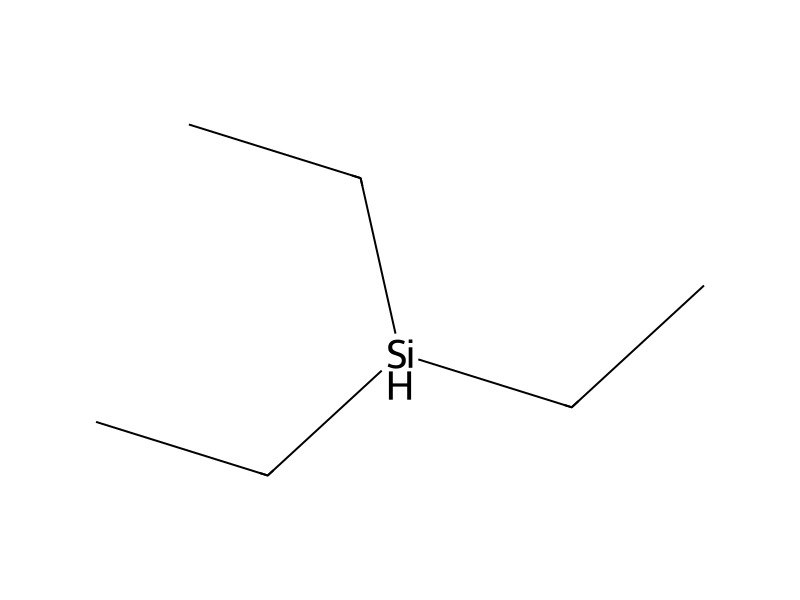
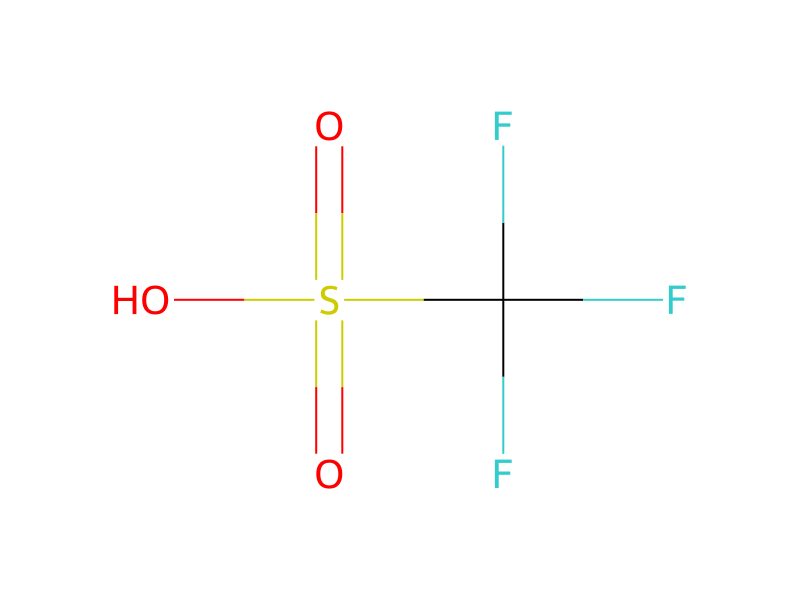
[Br:1][C:2]1[C:3]([O:19][CH3:20])=[CH:4][C:5]([Cl:18])=[C:6]([C:8]([C:10]2[CH:15]=[CH:14][C:13]([CH2:16][CH3:17])=[CH:12][CH:11]=2)=O)[CH:7]=1.C([SiH](CC)CC)C.FC(F)(F)S(O)(=O)=O>FC(F)(F)C(O)=O>[Br:1][C:2]1[CH:7]=[C:6]([CH2:8][C:10]2[CH:11]=[CH:12][C:13]([CH2:16][CH3:17])=[CH:14][CH:15]=2)[C:5]([Cl:18])=[CH:4][C:3]=1[O:19][CH3:20]To a solution of (5-bromo-2-chloro-4-methoxyphenyl)(4-ethylphenyl)methanone (AR) (7.08 g, 20 mmol) in 2,2,2-trifluoroacetic acid (50 mL) was added triethylsilane (4.65 g, 40 mmol) under argon. After stirring for 10 min at room temperature, trifluoromethane-sulfonic acid (0.1 mL) was added. The reaction temperature was raised to reflux. After stirring for 2 h, TLC showed the reaction was complete. The reaction mixture was evaporated and the residue was dissolved in EtOAc (150 mL). The organic layer was washed with H2O, NaHCO3 and brine. After drying over anhydrous Na2SO4, it was filtered and concentrated to give AS as a yellow oil (6.18 g, yield 91%). 1H-NMR (CDCl3, 300 MHz) δ 7.33 (s, 1H), 7.13 (m, 4H), 6.92 (s, 1H), 3.99 (s, 2H), 3.87 (s, 3H), 2.52 (q, J=7.5 Hz, 2H), 1.23 (t, J=7.5 Hz, 3H).
Loading…