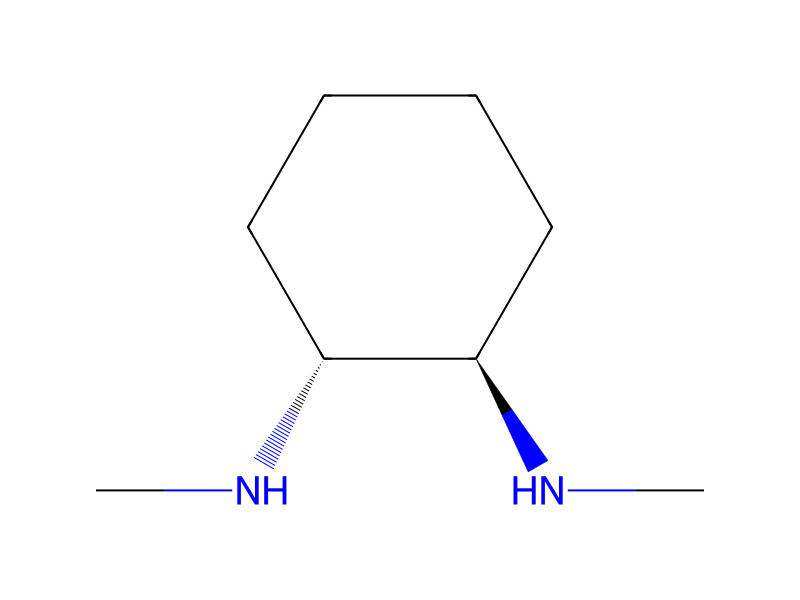
A solution of 2-iodo-5-methylbenzoic acid (4.0 g, 15.3 mmol) in DMF (10 mL) was treated with 1,2,3-triazole (2.1 g, 30.5 mmol), CsCO3 (9.95 g, 30.5 mmol), CuI (0.145 g, 0.76 mmol) and trans-N,N′-dimethylcyclohexane-1,2-diamine (0.43 g, 3.05 mmol). The mixture was heated at 120° C. for 10 min in a microwave reactor. The reaction was cooled to room temperature, diluted with water, and washed with EtOAc. The aqueous phase was acidified with 1N HCl and extracted with EtOAc. The organic layer was dried over Na2SO4, filtered and concentrated. The residue was purified by gradient elution on SiO2 (0 to 10% MeOH in DCM with 0.1% AcOH) to give the faster eluting 2-(2H-1,2,3-triazol-2-yl)-5-methylbenzoic acid, followed by the undesired regioisomer isomer, 1-(2H-1,2,3-triazol-2-yl)-5-methylbenzoic acid. A solution of the acid (3.56 g, 17.52 mmol) in 150 mL of DCM was stirred and cooled to 0° C. The solution was treated with oxalyl chloride (1.9 mL, 21.9 mmol) and DMF (68 μL, 0.878 mmol). The solution was slowly warmed to room temperature and stirred overnight. Solvent was concentrated and the resulting solid was azetroped with DCM and concentrated to provide A-7 as a yellow solid.