HomeMCPSkillsWorkbenchOpenChem
HomeWorkbenchNotificationsMe
llms.txt · skill.md · MCP GuidePrivacy Policy · Terms of Service · Supportv1.8.5
  1. Home
  2. /Reaction

2-Dicyclohexylphosphino-2',4',6'-triisoprophylbiphenyl → (S)-N-(1-{2-[1-(4-Fluorophenyl)ethylamino]-6-(pyrazin-2-ylamino)pyrimidin-4-yl)azetidin-3-yl}acetamide

HRID 1187700
Print

Reaction equation

FC(F)(F)C(O)=O.[NH:8]1[CH2:11][CH:10]([NH:12][C:13](=[O:15])[CH3:14])[CH2:9]1.Cl[C:17]1[N:22]=[C:21]([NH:23][C@H:24]([C:26]2[CH:31]=[CH:30][C:29]([F:32])=[CH:28][CH:27]=2)[CH3:25])[N:20]=[C:19]([NH:33][C:34]2[CH:39]=[N:38][CH:37]=[CH:36][N:35]=2)[CH:18]=1.C1(P(C2CCCCC2)C2C=CC=CC=2C2C(C(C)C)=CC(C(C)C)=CC=2C(C)C)CCCCC1.CC(C)([O-])C.[Na+]>C(OCC)(=O)C.O1CCOCC1.C(N(CC)CC)C>[F:32][C:29]1[CH:30]=[CH:31][C:26]([C@@H:24]([NH:23][C:21]2[N:22]=[C:17]([N:8]3[CH2:11][CH:10]([NH:12][C:13](=[O:15])[CH3:14])[CH2:9]3)[CH:18]=[C:19]([NH:33][C:34]3[CH:39]=[N:38][CH:37]=[CH:36][N:35]=3)[N:20]=2)[CH3:25])=[CH:27][CH:28]=1
ParticipantsConditionsProcedureWorkupSources & evidenceReaction notes

Participants

8

Reactant 4

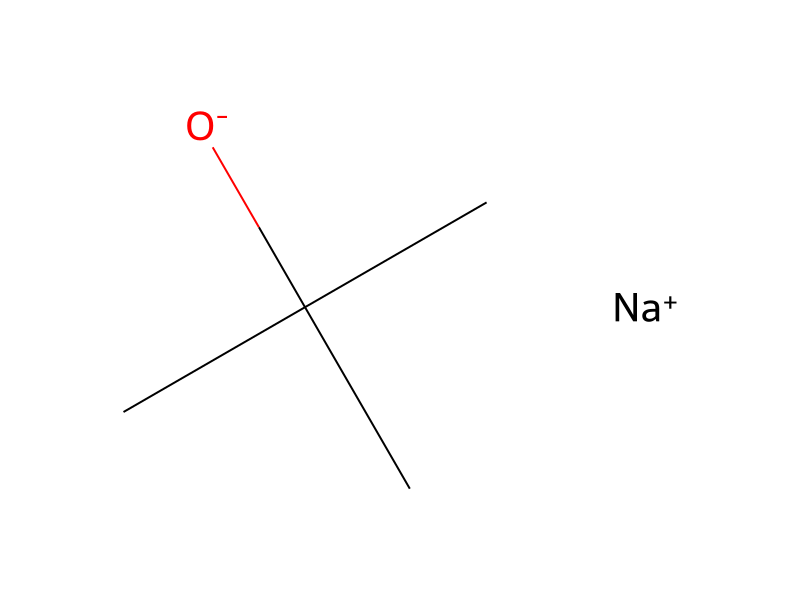
HCID 111557942-Dicyclohexylphosphino-2',4',6'-triisoprophylbiphenylHCID 23676156Sodium t-butoxideHCID 67008008N-(azetidin-3-yl)acetamide trifluoroacetateHCID 86659380(S)-6-Chloro-N2-[1-(4-fluorophenyl)ethyl]-N4-(pyrazin-2-yl)pyrimidine-2,4-diamine

Product 1

HCID 46866640
(S)-N-(1-{2-[1-(4-Fluorophenyl)ethylamino]-6-(pyrazin-2-ylamino)pyrimidin-4-yl)azetidin-3-yl}acetamide
Yield 27.8%

Reagents, catalysts & solvents 3

HCID 8471TriethylamineSolventHCID 8857Ethyl AcetateSolventHCID 312751,4-DioxaneSolvent

Conditions

Temperature
90 °C

Procedure

100 mg of t-butyl azetidin-3-ylcarbamate was dissolved in 5 ml of methylene chloride, and 225 mg of N,N-diisopropylethylamine was added. Under ice-cooling, the reaction mixture was added with 68 mg of acetyl chloride, and stirred at room temperature for 2 days. The reaction solution was diluted with ethyl acetate, and the organic layer was washed with 5% citric acid aqueous solution and brine in turn, and dried over magnesium sulfate. The solvent was distilled off under reduced pressure to obtain 146 mg of a brown oily matter. The obtained residue was dissolved in 2.5 ml of methylene chloride, and 1 ml of trifluoroacetic acid was added thereto, and the mixture was stirred at room temperature overnight. The solvent was distilled off under reduced pressure, and then 66 mg of N-(azetidin-3-yl)acetamide trifluoroacetate was obtained. Subsequently, 33 mg of N-(azetidin-3-yl)acetamide trifluoroacetate, 148 mg of triethylamine, 100 mg of (S)-6-chloro-N2-[1-(4-fluorophenyl)ethyl]-N4-(pyrazin-2-yl)pyrimidine-2,4-diamine, 28 mg of 2-dicyclohexylphosphino-2′,4′,6′-triisopropylbiphenyl, 56 mg of sodium t-butoxide and 30 mg of tris(dibenzylideneacetone)(chloroform)dipalladium were added in turn to 3 ml of degassed 1,4-dioxane, and the mixture was stirred at 90° C. for 2 hours under argon atmosphere. The reaction solution was diluted with ethyl acetate. The solution was washed in turn with water and brine and then dried over magnesium sulfate. The solvent was distilled off under reduced pressure, and then the obtained residue was purified by silica gel column chromatography to obtain 17 mg of the objective compound as bright golden yellow powder.

Workup

  1. washThe solution was washed in turn with water and brine
  2. dry with materialdried over magnesium sulfate
  3. distillationThe solvent was distilled off under reduced pressure
  4. customthe obtained residue was purified by silica gel column chromatography

Sources & evidence

ORD record
ord-816f9826f2ab404d92824230313e7524
Source dataset
uspto-grants-2014_03
DOI
10.6084/m9.figshare.5104873.v1
Patent number
US08673891B2

Reaction notes

On this pageParticipantsConditionsProcedureWorkupSources & evidenceReaction notes