HomeMCPWorkbenchSkills
HomeWorkbenchNotificationsMe
llms.txt · MCP GuidePrivacy Policy · Terms of Service · Supportv1.8.3
  1. Home
  2. /Reaction

Trimethyl borate → 1,3-Dichloro-2-fluoro-5-(3,3,3-trifluoroprop-1-en-2-yl)benzene

HRID 1188003
Print

Reaction equation

HRID 1188003 reaction equation
[Cl:1][C:2]1[CH:3]=[C:4](I)[CH:5]=[C:6]([Cl:9])[C:7]=1[F:8].COB(OC)OC.Br[C:19]([C:21]([F:24])([F:23])[F:22])=[CH2:20].C(=O)([O-])[O-].[K+].[K+]>CCCCCC.C([Li])CCC.O1CCCC1.O.C(OC)(C)(C)C>[Cl:1][C:2]1[CH:3]=[C:4]([C:19]([C:21]([F:24])([F:23])[F:22])=[CH2:20])[CH:5]=[C:6]([Cl:9])[C:7]=1[F:8]
ParticipantsProcedureWorkupSources & evidenceReaction notes

Participants

10

Reactant 4

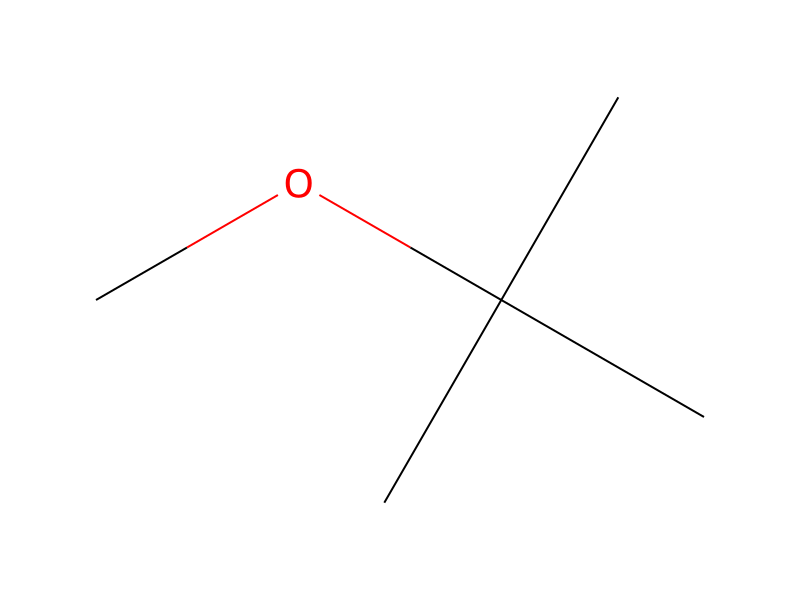
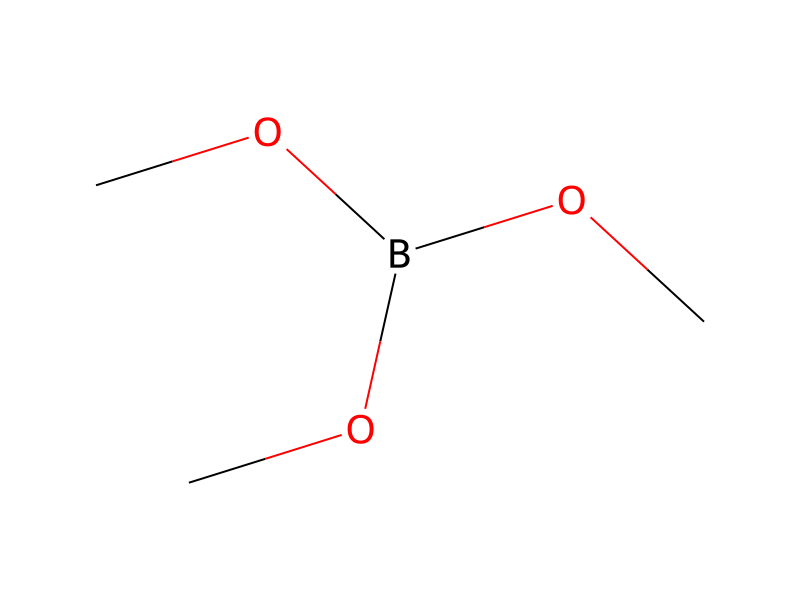
HCID 8470Trimethyl borateHCID 11430Potassium CarbonateHCID 2726961-Propene, 2-bromo-3,3,3-trifluoro-HCID 198217781,3-Dichloro-2-fluoro-5-iodobenzene

Product 1

HCID 584682331,3-Dichloro-2-fluoro-5-(3,3,3-trifluoroprop-1-en-2-yl)benzeneYield 67.4%

Reagents, catalysts & solvents 5

HCID 962
Water
Solvent
HCID 8028TetrahydrofuranSolvent
HCID 8058HexaneSolvent
HCID 15413tert-Butyl methyl etherSolvent
HCID 178418339ButyllithiumSolvent

Procedure

In a solution of 2.00 g of 3,5-dichloro-4-fluoro-iodobenzene and 0.61 g of tert-butylmethyl ether in 18 mL of hexane, 5.3 mL of n-butyl lithium (1.54M hexane solution) was added dropwise at −10° C. with stirring, and stirred at the same temperature for 30 minutes. Then, a solution of 0.57 g of trimethoxyborane in 7 mL of tetrahydrofuran was added dropwise. After the completion of the addition dropwise, it was stirred at the same temperature further for 30 minutes and then the temperature was raised to room temperature. Then, in the reaction mixture, 1.80 g of 2-bromo-3,3,3-trifluoropropene, 1.90 g of potassium carbonate, 10 mL of water and 0.005 g of 1,3-bis(2,6-diisopropylphenyl)imidazole-2-ilidene (1,4-naphthoquinone) palladium (0) dimmer were added, and stirred under nitrogen atmosphere at 60° C. for 15 hours. After the completion of the reaction, the reaction mixture was left and cooled to room temperature, insoluble material was filtered off, and the organic phase was collected and the aqueous phase was extracted with 30 mL of ethyl acetate twice. The combined organic phases were washed with water, and dehydrated with and dried over saturated sodium chloride aqueous solution and then anhydrous sodium sulfate, and the solvent was distilled off under reduced pressure. The residue was purified with silica gel column chromatography that was eluated with hexane to obtain 1.20 g of the aimed product as yellow oily substance.

Workup

  1. stirringstirred at the same temperature for 30 minutes
  2. additionAfter the completion of the addition dropwise
  3. stirringit was stirred at the same temperature further for 30 minutes
  4. stirringstirred under nitrogen atmosphere at 60° C. for 15 hours
  5. customAfter the completion of the reaction
  6. waitthe reaction mixture was left
  7. temperaturecooled to room temperature
  8. filtrationinsoluble material was filtered off
  9. customthe organic phase was collected
  10. extractionthe aqueous phase was extracted with 30 mL of ethyl acetate twice
  11. washThe combined organic phases were washed with water
  12. dry with materialdried over saturated sodium chloride aqueous solution
  13. distillationanhydrous sodium sulfate, and the solvent was distilled off under reduced pressure
  14. customThe residue was purified with silica gel column chromatography that

Sources & evidence

ORD record
ord-62c0938549f4422bba14ae45c701b128
Source dataset
uspto-grants-2014_03
DOI
10.6084/m9.figshare.5104873.v1
Patent number
US08673951B2

Reaction notes

On this pageParticipantsProcedureWorkupSources & evidenceReaction notes