HomeMCPWorkbenchSkills
HomeWorkbenchNotificationsMe
llms.txt · MCP GuidePrivacy Policy · Terms of Service · Supportv1.8.0
  1. Home
  2. /Reaction

Hydrochloric Acid → N-(4-Chloro-2-methylthiopyrimidin-6-yl)-N'-(2-furoyl)hydrazine

HRID 1264868
Notes
Print preview

Reaction equation

HRID 1264868 reaction equation
[O:1]1[CH:5]=[CH:4][CH:3]=[C:2]1[C:6]([NH:8][NH2:9])=[O:7].C1CCN2C(=NCCC2)CC1.[Cl:21][C:22]1[CH:27]=[C:26](Cl)[N:25]=[C:24]([S:29][CH3:30])[N:23]=1.Cl>CN(C=O)C>[Cl:21][C:22]1[CH:27]=[C:26]([NH:9][NH:8][C:6]([C:2]2[O:1][CH:5]=[CH:4][CH:3]=2)=[O:7])[N:25]=[C:24]([S:29][CH3:30])[N:23]=1
ParticipantsProcedureWorkupSources & evidenceReaction notes

Participants

6

Reactant 4

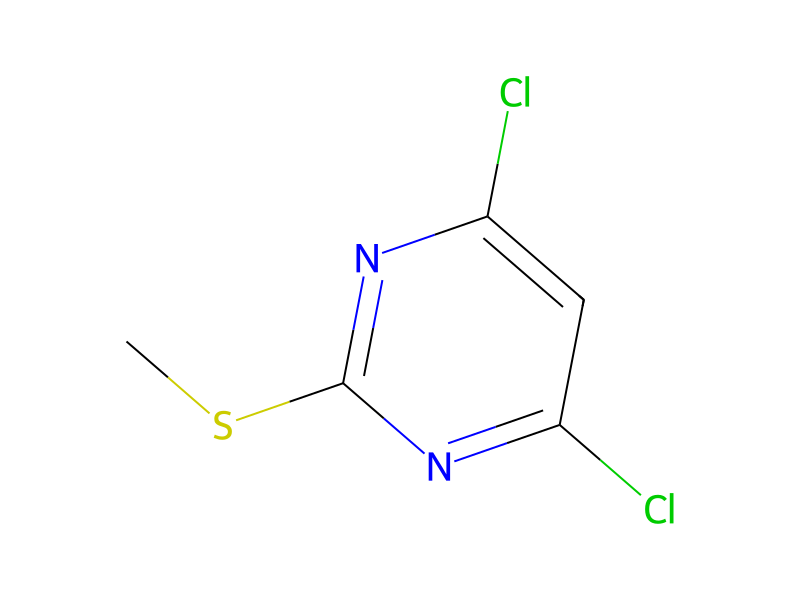
HCID 313Hydrochloric AcidHCID 187312-Furancarboxylic acid, hydrazideHCID 805314,6-Dichloro-2-(methylthio)pyrimidineHCID 811841,8-Diazabicyclo(5.4.0)undec-7-ene

Product 1

HCID 15524321N-(4-Chloro-2-methylthiopyrimidin-6-yl)-N'-(2-furoyl)hydrazineYield 78.1%

Reagents, catalysts & solvents 1

HCID 6228
Dimethylformamide
Solvent
2×

Procedure

Into 150 mL of DMF, 65 g (515 mmol) of 2-furoic hydrazide and 70 mL (510 mmol) of DBU were dissolved, and a DMF solution of 4,6-dichloro-2-methylthiopyrimidine (50.0 g (256 mmol)/100 mL) was slowly added dropwise thereto at room temperature (inner temperature was controlled at 45° C. or lower). After stirring at room temperature for about 2 hours, the reaction solution was poured into ice-water and the pH was adjusted to 6 to 7 with a 2 mol/L hydrochloric acid solution, followed by collecting the resulting solid through filtration. The collected solid was dissolved into an organic solvent (chloroform/methanol=10/1) and, after washing with water, the solution was dried over anhydrous magnesium sulfate. The solvent was evaporated, and the resulting residue was triturated twice with chloroform to obtain 56.9 g of Compound A as white flocculent crystals (yield: 78%). The residue obtained by concentrating the filtrate was purified by silica gel column chromatography (hexane/ethyl acetate=6/4) to additionally recover Compound A in about 10% yield.


Workup

  1. customat room temperature
  2. custom(inner temperature was controlled at 45° C. or lower)
  3. customby collecting the resulting solid
  4. filtrationthrough filtration
  5. dissolutionThe collected solid was dissolved into an organic solvent (chloroform/methanol=10/1)
  6. washafter washing with water
  7. dry with materialthe solution was dried over anhydrous magnesium sulfate
  8. customThe solvent was evaporated
  9. customthe resulting residue was triturated twice with chloroform

Sources & evidence

ORD record
ord-23978a3b04384a94acb79031c13918d8
Source dataset
uspto-grants-2003_04
DOI
10.6084/m9.figshare.5104873.v1
Patent number
US06545000B1

Reaction notes

Loading…

On this pageParticipantsProcedureWorkupSources & evidenceReaction notes