HomeMCPWorkbenchSkills
HomeWorkbenchNotificationsMe
llms.txt · MCP GuidePrivacy Policy · Terms of Service · Supportv1.8.3
  1. Home
  2. /Reaction

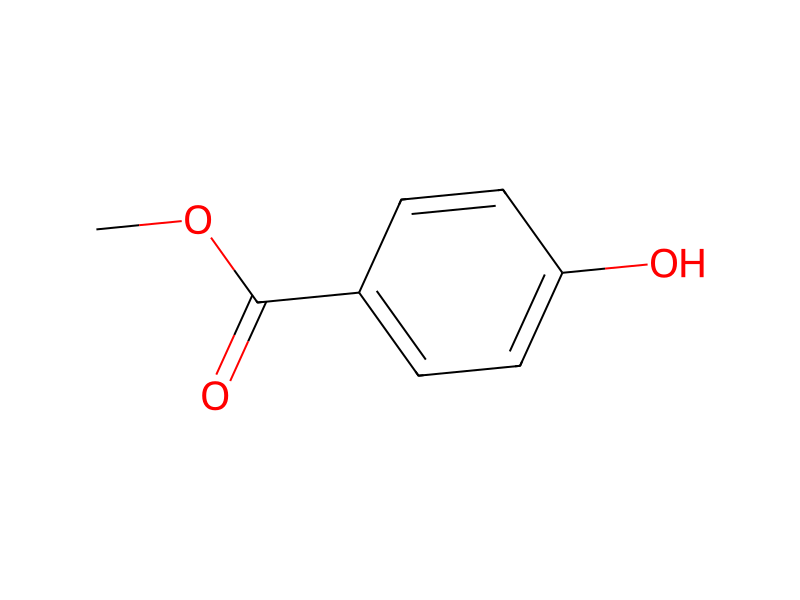
Methylparaben → 4-(2-Piperidinoethoxy)benzoic acid hydrochloride

HRID 1290039
Print

Reaction equation

HRID 1290039 reaction equation
[OH:1][C:2]1[CH:11]=[CH:10][C:5]([C:6]([O:8]C)=[O:7])=[CH:4][CH:3]=1.Cl.[Cl:13][CH2:14][CH2:15][N:16]1[CH2:21][CH2:20][CH2:19][CH2:18][CH2:17]1.C(=O)([O-])[O-].[K+].[K+].C(OCCCCC)(=O)C>CC(C)=O.O>[ClH:13].[N:16]1([CH2:15][CH2:14][O:1][C:2]2[CH:11]=[CH:10][C:5]([C:6]([OH:8])=[O:7])=[CH:4][CH:3]=2)[CH2:21][CH2:20][CH2:19][CH2:18][CH2:17]1
ParticipantsConditionsProcedureWorkupSources & evidenceReaction notes

Participants

7

Reactant 4

HCID 7456Methylparaben2×HCID 11430Potassium CarbonateHCID 12348Amyl AcetateHCID 74826Piperidine, 1-(2-chloroethyl)-, hydrochloride

Product 1

HCID 57438354-(2-Piperidinoethoxy)benzoic acid hydrochloride

Reagents, catalysts & solvents 2

HCID 180
Acetone
Solvent
HCID 962WaterSolvent

Conditions

Temperature
95 °C

Procedure

To two 125 mL 3 neck flasks with mechanical stirring, condensers, and a heating apparatus consisting of an RTD probe in the flask hooked via a temperature controller to a heating mantle the following were added: 7.61 g of methyl 4-hydroxybenzoate, 11.05 g of β-chloroethylpiperidine hydrochloride, 16.59 g of powdered potassium carbonate, and 60 mL of amyl acetate. The flasks were placed in an ambient oil bath and heated under nitrogen to 95° C.-100° C. The reaction was allowed to proceed until HPLC indicated 8% unreacted methyl 4-hydroxybenzoate in A, 12% unreacted in B. The flasks were then cooled to less than 50° C. 40 mL deionized water was added with stirring to dissolve solids. The aqueous layer was separated and discarded. The water wash was repeated and the aqueous layer was separated and discarded. HPLC of organic layers showed 6% 4-hydroxybenzoate remains in A, 3% in B. 25 mL of 8N hydrochloric acid was added with stirring to extract the intermediate. The layers were separated and the acid layers returned to reaction flasks. The acid solutions were heated at about 95° C. for about 4 hours. The flasks were then cooled to less than 40° C. and 25 mL of acetone was added. The mixture was then cooled to 0° C.-5° C. for 1 hour. The mixture was filtered and the cakes rinsed with approximately 25 mL of acetone and dried. A=11.50 g (80.5%), B=10.5 g (73.8%)

Workup

  1. additionwere added
  2. customThe flasks were placed in an ambient oil bath
  3. temperatureheated under nitrogen to 95° C.-100° C
  4. temperatureThe flasks were then cooled to less than 50° C
  5. additionwas added
  6. dissolutionto dissolve solids
  7. customThe aqueous layer was separated
  8. washThe water wash
  9. customthe aqueous layer was separated
  10. addition25 mL of 8N hydrochloric acid was added
  11. stirringwith stirring
  12. extractionto extract the intermediate
  13. customThe layers were separated
  14. customthe acid layers returned to reaction flasks
  15. temperatureThe flasks were then cooled to less than 40° C.
  16. temperatureThe mixture was then cooled to 0° C.-5° C. for 1 hour
  17. filtrationThe mixture was filtered
  18. washthe cakes rinsed with approximately 25 mL of acetone
  19. customdried

Sources & evidence

ORD record
ord-b89402f11e5845c7b24cf918397b7212
Source dataset
uspto-grants-1998_05
DOI
10.6084/m9.figshare.5104873.v1
Patent number
US05750688

Reaction notes

On this pageParticipantsConditionsProcedureWorkupSources & evidenceReaction notes


