Methanol → 3-(4-Cyanobenzylidene)-2-pyrrolidone
Reaction equation

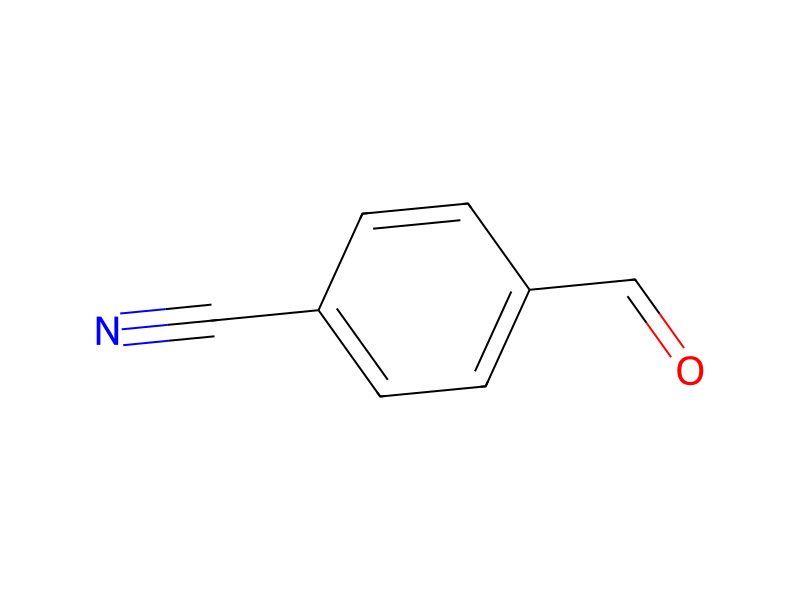
C([N:4]1[CH2:8][CH2:7][CH2:6][C:5]1=[O:9])(=O)C.[C:10]([C:12]1[CH:19]=[CH:18][C:15]([CH:16]=O)=[CH:14][CH:13]=1)#[N:11].[H-].[Na+].CO>O1CCCC1.C(O)(=O)C>[C:10]([C:12]1[CH:19]=[CH:18][C:15]([CH:16]=[C:6]2[CH2:7][CH2:8][NH:4][C:5]2=[O:9])=[CH:14][CH:13]=1)#[N:11]Participants
7






Conditions
- Temperature
- 0 °C
Procedure
A solution of 5.0 g of N-acetyl-2-pyrrolidone and 5.17 g of 4-cyanobenzaldehyde in 50 ml of tetrahydrofuran is added dropwise to a suspension of 5.36 g of sodium hydride (55% in oil) in 50 ml of tetrahydrofuran at 5°-10° C. and the mixture is then stirred at 0° C. for 1 hour. Excess sodium hydride is eliminated by the addition of some methanol, and the reaction mixture is poured onto ice and neutralized with glacial acetic acid. The precipitate is suction-filtered and dissolved in a methylene chloride/methanol mixture, and the solution is dried and evaporated down. The residue is triturated with ether and suction-filtered. 1.4 g of 3-(4-cyanobenzylidene)-2-pyrrolidone are obtained as a colourless powder of melting point 260° C.
Workup
- filtrationThe precipitate is suction-filtered
- dissolutiondissolved in a methylene chloride/methanol mixture
- customthe solution is dried
- customevaporated down
- customThe residue is triturated with ether
- filtrationsuction-filtered
Sources & evidence
- ORD record
- ord-277b538bf3c74864a9fcdedd20184762
- Source dataset
- uspto-grants-1995_11
- Patent number
- US05466687
Reaction notes
Loading…