HomeMCPWorkbenchSkills
HomeWorkbenchNotificationsMe
llms.txt · MCP GuidePrivacy Policy · Terms of Service · Supportv1.8.0
  1. Home
  2. /Reaction

Diisopropylamine → 1,2,3,4-Tetrahydro-6-[hydroxy[4-(2-pyridinyl)phenyl]methyl]-3-methyl-1-(1-methylethyl)-2,4-dioxo-thieno[2,3-d]pyrimidine-5-carboxylic acid, ethyl ester

HRID 131635
Notes
Print preview

Reaction equation

HRID 131635 reaction equation
C([N-]C(C)C)(C)C.[Li+].C(NC(C)C)(C)C.[CH3:16][N:17]1[C:22](=[O:23])[C:21]2[C:24]([C:27]([O:29][CH2:30][CH3:31])=[O:28])=[CH:25][S:26][C:20]=2[N:19]([CH:32]([CH3:34])[CH3:33])[C:18]1=[O:35].[N:36]1[CH:41]=[CH:40][CH:39]=[CH:38][C:37]=1[C:42]1[CH:49]=[CH:48][C:45]([CH:46]=[O:47])=[CH:44][CH:43]=1>O1CCCC1.CN1C(=O)N(C)CCC1>[OH:47][CH:46]([C:45]1[CH:44]=[CH:43][C:42]([C:37]2[CH:38]=[CH:39][CH:40]=[CH:41][N:36]=2)=[CH:49][CH:48]=1)[C:25]1[S:26][C:20]2[N:19]([CH:32]([CH3:34])[CH3:33])[C:18](=[O:35])[N:17]([CH3:16])[C:22](=[O:23])[C:21]=2[C:24]=1[C:27]([O:29][CH2:30][CH3:31])=[O:28]
ParticipantsProcedureWorkupSources & evidenceReaction notes

Participants

7

Reactant 4

HCID 7912DiisopropylamineHCID 15152404-Pyridin-2-ylbenzaldehydeHCID 2724682Lithium diisopropylamideHCID 16102858Ethyl 1-isopropyl-3-methyl-2,4-dioxo-1,2,3,4-tetrahydrothieno[2,3-d]pyrimidine-5-carboxylate

Product 1

HCID 866035771,2,3,4-Tetrahydro-6-[hydroxy[4-(2-pyridinyl)phenyl]methyl]-3-methyl-1-(1-methylethyl)-2,4-dioxo-thieno[2,3-d]pyrimidine-5-carboxylic acid, ethyl ester
Yield 41.5%

Reagents, catalysts & solvents 2

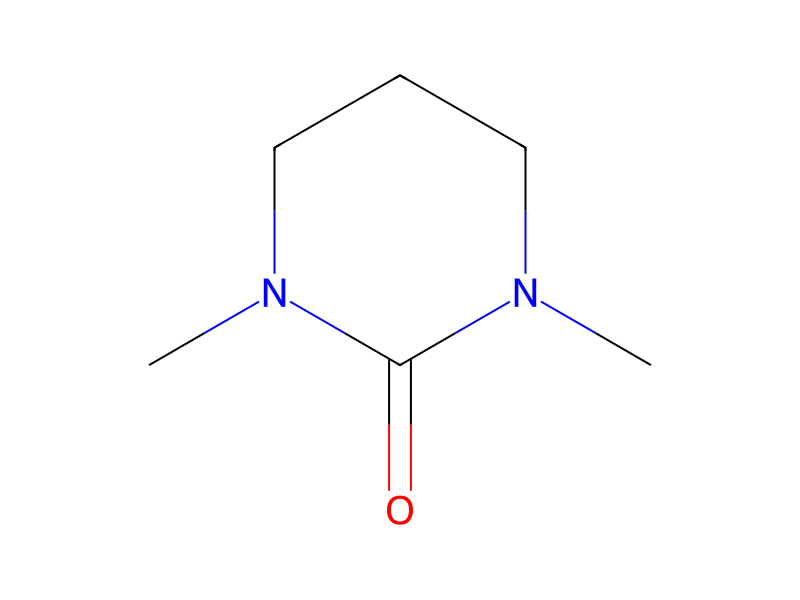
HCID 8028TetrahydrofuranSolvent2×HCID 816462(1H)-Pyrimidinone, tetrahydro-1,3-dimethyl-Solvent

Procedure

Lithium diisopropylamide, freshly made by adding n-buthyllithium (1.1 mL, 2.5M in hexanes) to a solution of diisopropylamine (0.46 mL) in dry tetrahydrofuran under nitrogen at 0° C. and stirring for 20 min, was added to a solution of 1,2,3,4-tetrahydro-3-methyl-1-(1-methylethyl)-2,4-dioxo-thieno[2,3-d]pyrimidine-5-carboxylic acid, ethyl ester (0.7 g), 4-(2-pyridyl)benzaldehyde (0.52 g) and DMPU (057 mL) in dry tetrahydrofuran under nitrogen at −78° C. The reaction mixture was stirred at −78° C. for 4 hours then quenched with glacial acetic acid (10 mL) and allowed to reach room temperature. Water was added and the mixture was extracted with ethyl acetate (twice). The organics were washed with brine, dried over MgSO4 and concentrated under vacuum to give a brown oil which was purified by silica chromatography eluting with isohexane/ethyl acetate (1/1) to give the sub-title compound as a pale yellow foam (0.47 g).

Workup

  1. stirringThe reaction mixture was stirred at −78° C. for 4 hours
  2. customthen quenched with glacial acetic acid (10 mL)
  3. customto reach room temperature
  4. additionWater was added
  5. extractionthe mixture was extracted with ethyl acetate (twice)
  6. washThe organics were washed with brine
  7. dry with materialdried over MgSO4
  8. concentrationconcentrated under vacuum
  9. customto give a brown oil which
  10. customwas purified by silica chromatography
  11. washeluting with isohexane/ethyl acetate (1/1)

Sources & evidence

ORD record
ord-8d09faef37a64a08af2bfd629cc8a1e8
Source dataset
uspto-grants-2008_06
DOI
10.6084/m9.figshare.5104873.v1
Patent number
US07384951B2

Reaction notes

Loading…

On this pageParticipantsProcedureWorkupSources & evidenceReaction notes