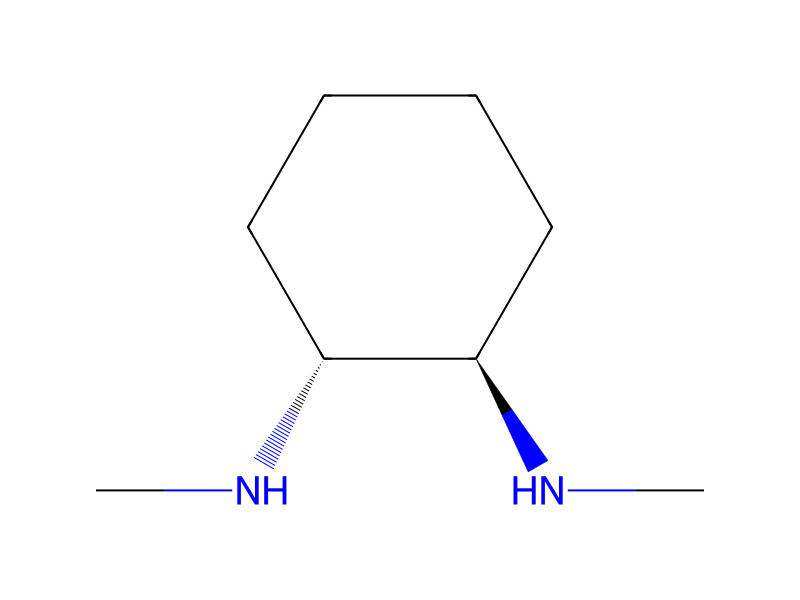
Br[C:2]1[CH:7]=[CH:6][N:5]=[CH:4][C:3]=1/[CH:8]=[N:9]/[NH:10][C:11]1[CH:16]=[CH:15][C:14]([F:17])=[CH:13][CH:12]=1.CN[C@@H]1CCCC[C@H]1NC.C([O-])([O-])=O.[K+].[K+]>CN1C(=O)CCC1.[Cl-].[NH4+].[Cu]I>[F:17][C:14]1[CH:15]=[CH:16][C:11]([N:10]2[C:2]3[CH:7]=[CH:6][N:5]=[CH:4][C:3]=3[CH:8]=[N:9]2)=[CH:12][CH:13]=1A mixture of N-[1-(4-bromopyridin-3-yl)-meth-(E)-ylidene]-N′-(4-fluorophenyl)-hydrazine (3.0 g, 0.010 mol), CuI (97 mg, 0.51 mmol), trans-N,N′-dimethylcyclohexane-1,2-diamine (595 μL, 3.77 mmol), and K2CO3 (2.8 g, 0.020 mol) in NMP (100 mL) was warmed at 120° C. After stirring overnight, the mixture was diluted with aqueous ammonium chloride (400 mL) and the resulting solid collected by filtration. The solid was dissolved in EtOAc, and the aqueous layer was extracted with EtOAc. The combined organics layers were dried over sodium sulfate, filtered and concentrated. The crude product was purified by silica gel chromatography to afford 1-(4-fluorophenyl)-1H-pyrazolo[4,3-c]pyridine as an orange solid.