HomeMCPWorkbenchSkills
HomeWorkbenchNotificationsMe
llms.txt · MCP GuidePrivacy Policy · Terms of Service · Supportv1.8.0
  1. Home
  2. /Reaction

Dimethylformamide → N-(3-(6-Bromo-4-methyl-5-oxo-4,5-dihydropyrazin-2-yl)-2-methylphenyl)-4,5,6,7-tetrahydrobenzo[b]thiophene-2-carboxamide

HRID 1363490
Notes
Print preview

Reaction equation

HRID 1363490 reaction equation
[CH3:1][N:2]1[CH:7]=[C:6]([C:8]2[CH:13]=[CH:12][CH:11]=[C:10]([NH:14][C:15]([C:17]3[S:21][C:20]4[CH2:22][CH2:23][CH2:24][CH2:25][C:19]=4[CH:18]=3)=[O:16])[C:9]=2[CH3:26])[N:5]=[C:4]([O-])[C:3]1=[O:28].[Na+].P(Br)(Br)([Br:32])=O.CN(C)C=O.C(=O)([O-])[O-].[K+].[K+]>C(Cl)Cl>[Br:32][C:4]1[C:3](=[O:28])[N:2]([CH3:1])[CH:7]=[C:6]([C:8]2[C:9]([CH3:26])=[C:10]([NH:14][C:15]([C:17]3[S:21][C:20]4[CH2:22][CH2:23][CH2:24][CH2:25][C:19]=4[CH:18]=3)=[O:16])[CH:11]=[CH:12][CH:13]=2)[N:5]=1
ParticipantsProcedureWorkupSources & evidenceReaction notes

Participants

6

Reactant 4

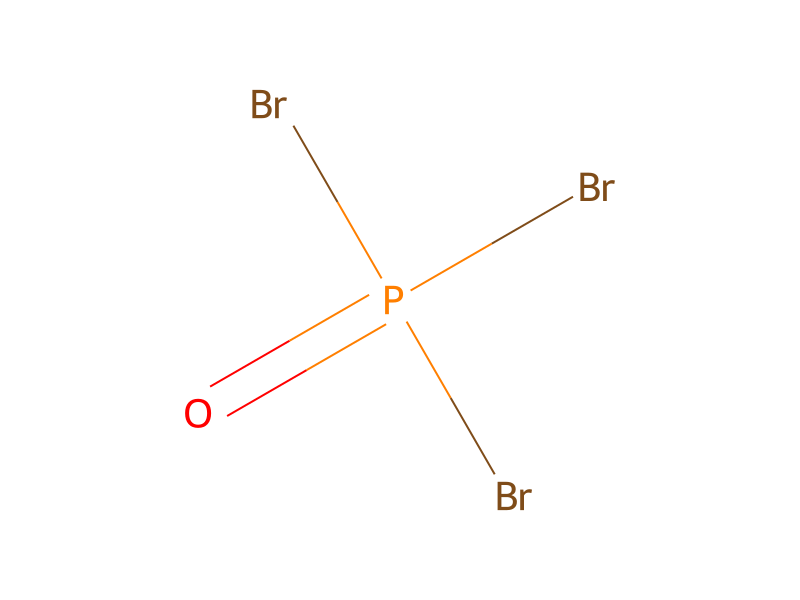
HCID 6228DimethylformamideHCID 11430Potassium CarbonateHCID 24613Phosphorus oxybromideHCID 57625105Sodium 4-methyl-6-(2-methyl-3-(4,5,6,7-tetrahydrobenzo[b]thiophene-2-carboxamido)phenyl)-3-oxo-3,4-dihydropyrazin-2-olate

Product 1

HCID 57625151N-(3-(6-Bromo-4-methyl-5-oxo-4,5-dihydropyrazin-2-yl)-2-methylphenyl)-4,5,6,7-tetrahydrobenzo[b]thiophene-2-carboxamide
Yield 50%

Reagents, catalysts & solvents 1

HCID 6344DichloromethaneSolvent2×

Procedure

A 250-mL single-neck round-bottomed flask equipped with a magnetic stirrer and reflux condenser was purged with nitrogen and charged with 10 (6.55 g, 15.7 mmol) and anhydrous methylene chloride (60 mL). To the resulting suspension phosphorous oxybromide (9.95 g, 34.3 mmol) and N,N-dimethylformamide (190 mg, 2.60 mmol) were added and the reaction was then heated at reflux for 4 h. After this time the reaction mixture was poured into a 10% aqueous potassium carbonate solution (100 mL) and methylene chloride (75 mL) was added. The resulting suspension was filtered through Celite 521 and the layers separated. The aqueous layer was extracted with methylene chloride (2×100 mL) and the combined organic layers were dried over sodium sulfate, filtered and concentrated under reduced pressure. The resulting residue was triturated with a 2:1 solution of ethyl acetate/hexanes (10 mL) and filtered. The filter cake was washed with the 2:1 ethyl acetate/hexanes solution (20 mL) and dried to a constant weight under vacuum to afford a 50% yield (3.59 g) of 11 as a light yellow solid: mp 240-241° C., 1H NMR (500 MHz, DMSO-d6) δ 9.86 (s, 1H), 7.98 (s, 1H), 7.67 (s, 1H), 7.28 (m, 3H), 3.57 (s, 3H), 2.76 (t, 2H, J=5.5 Hz), 2.61 (t, 2H, J=5.5 Hz), 2.18 (s, 3H), 1.76 (m, 4H); MS (ESI+) m/z 458(M+H).

Workup

  1. customA 250-mL single-neck round-bottomed flask equipped with a magnetic stirrer
  2. temperaturereflux condenser
  3. customwas purged with nitrogen
  4. temperaturethe reaction was then heated
  5. temperatureat reflux for 4 h
  6. additionwas added
  7. filtrationThe resulting suspension was filtered through Celite 521
  8. customthe layers separated
  9. extractionThe aqueous layer was extracted with methylene chloride (2×100 mL)
  10. dry with materialthe combined organic layers were dried over sodium sulfate
  11. filtrationfiltered
  12. concentrationconcentrated under reduced pressure
  13. customThe resulting residue was triturated with a 2:1 solution of ethyl acetate/hexanes (10 mL)
  14. filtrationfiltered
  15. washThe filter cake was washed with the 2:1 ethyl acetate/hexanes solution (20 mL)
  16. customdried to a constant weight under vacuum

Sources & evidence

ORD record
ord-12348a6d370f4b1a9c5e1730825ff483
Source dataset
uspto-grants-2011_02
DOI
10.6084/m9.figshare.5104873.v1
Patent number
US07884108B2

Reaction notes

Loading…

On this pageParticipantsProcedureWorkupSources & evidenceReaction notes