Reaction equation

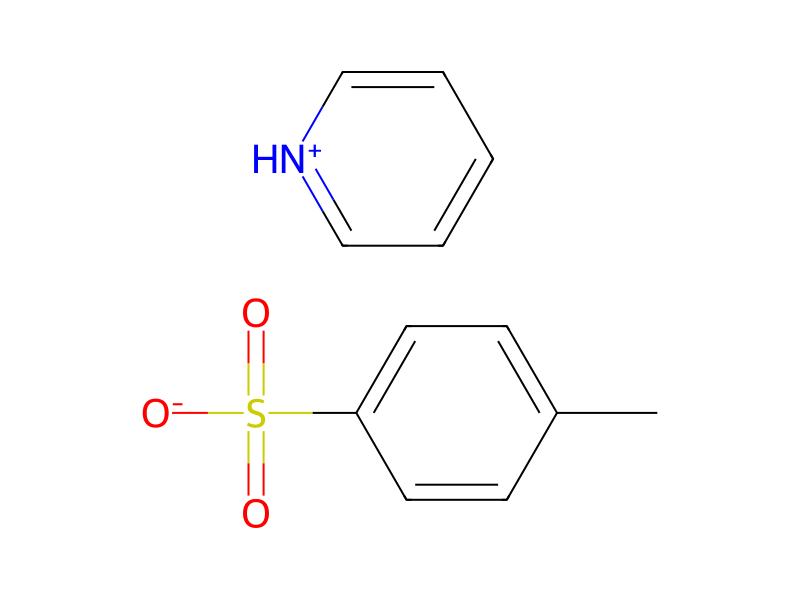
[O:1]1[CH:6]=[CH:5][CH2:4][CH2:3][CH2:2]1.C1(C)C=CC(S([O-])(=O)=O)=CC=1.[NH+]1C=CC=CC=1.[Br:24][C:25]1[CH:30]=[C:29]([F:31])[CH:28]=[CH:27][C:26]=1[OH:32].C(=O)([O-])[O-].[K+].[K+].[Cl-].[Na+]>ClCCl.O>[Br:24][C:25]1[CH:30]=[C:29]([F:31])[CH:28]=[CH:27][C:26]=1[O:32][CH:6]1[CH2:5][CH2:4][CH2:3][CH2:2][O:1]1Participants
Reactant 5




Product 1

Reagents, catalysts & solvents 2


Procedure
A mixture of 478.0 ml (5.24 mol) of 3,4-dihydropyran and 750 ml of dichloromethane was admixed with 65.4 g (260 mmol) of pyridinium p-toluenesulfonate. Subsequently, a solution of 500.0 g (2.62 mmol) of 2-bromo-4-fluorophenol in 500 ml of dichloromethane was added dropwise. After stirring for 24 h, the reaction mixture was admixed with a solution of 50 g of potassium carbonate in 500 ml of water, and then with 500 ml of saturated sodium chloride solution. The organic phase was removed, dried over potassium carbonate and, after freeing it of the solvent and potassium carbonate, fractionally distilled (approx. 1 mbar, top temperature from 79 to 82° C.) by means of a Vigreux column (40 cm). The product was obtained as a colorless, low-viscosity oil. The yield was 520.5 g (72.2%) at a purity of greater than 98.0% by 1H NMR.
Workup
- customThe organic phase was removed
- dry with materialdried over potassium carbonate
- distillationfractionally distilled (approx. 1 mbar, top temperature from 79 to 82° C.) by means of a Vigreux column (40 cm)
- customThe product was obtained as a colorless, low-viscosity oil
Sources & evidence
- ORD record
- ord-30441e9188ee410491001da6d20d30a7
- Source dataset
- uspto-grants-2010_06
- Patent number
- US07728137B2
Linked notes
Loading…