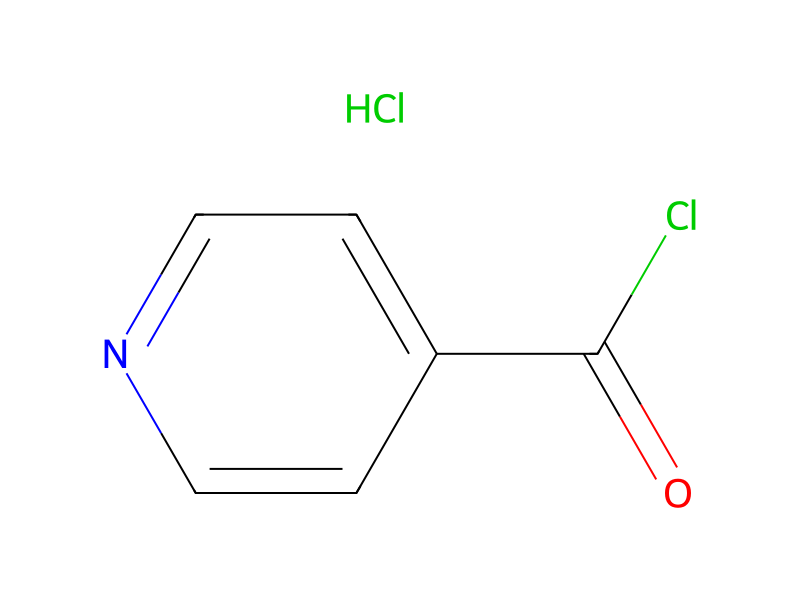
A mixture of isonicotinic acid chloride hydrochloride (2.34 g, 13.2 mmol), triethylamine (1.83 ml, 13.2 mmol) and tetrahydrofuran (10 ml) was added dropwise to a mixture of methyl ester of 3-amino-2-hydroxybenzoic acid hydrochloride (2.0 g, 12.0 mmol), N,N′-dimethylaniline (3.04 ml, 24.0 mmol) and tetrahydrofuran (20 ml) with stirring under ice cooling, and the mixture was stirred at the same temperature for 2 hrs. The reaction mixture was diluted with methylene chloride (200 ml), washed with water and brine in turn and then dried. The solvent was distilled off under reduced pressure, and the residue was purified by column chromatography on amine silica gel (Chromatolex (trademark) NH) (n-hexane/ethyl acetate=4 and chloroform/ethyl acetate=1) to give methyl ester of 2-hydroxy-3-isonicotinoylaminobenzoic acid (2.37 g, 73%) as pale yellow crystals.