HomeMCPWorkbenchSkills
HomeWorkbenchNotificationsMe
llms.txt · MCP GuidePrivacy Policy · Terms of Service · Supportv1.8.3
  1. Home
  2. /Reaction

Diisopropyl Ether → (+/-)-12-(3-Diethylamino-2-hydroxy-1-propyl)-6,7,12,13-tetrahydro-6-methyl-5,7-dioxo-5H-indolo[2,3-a]pyrrolo[3,4-c]-carbazole

HRID 1418635
Print

Reaction equation

HRID 1418635 reaction equation
[CH3:1][N:2]1[C:17](=[O:18])[C:16]2[C:15]3[C:14]4[C:9](=[CH:10][CH:11]=[CH:12][CH:13]=4)[NH:8][C:7]=3[C:6]3[NH:19][C:20]4[CH:21]=[CH:22][CH:23]=[CH:24][C:25]=4[C:5]=3[C:4]=2[C:3]1=[O:26].[H-].[Na+].[Cl-].[CH2:30]([N+:32]1([CH2:37][CH3:38])[CH2:35][CH:34]([OH:36])[CH2:33]1)[CH3:31].C(OC(C)C)(C)C>CN(C)C=O>[CH2:30]([N:32]([CH2:37][CH3:38])[CH2:33][CH:34]([OH:36])[CH2:35][N:19]1[C:6]2[C:7]3[NH:8][C:9]4[CH:10]=[CH:11][CH:12]=[CH:13][C:14]=4[C:15]=3[C:16]3[C:17](=[O:18])[N:2]([CH3:1])[C:3](=[O:26])[C:4]=3[C:5]=2[C:25]2[C:20]1=[CH:21][CH:22]=[CH:23][CH:24]=2)[CH3:31]
ParticipantsConditionsProcedureWorkupSources & evidenceReaction notes

Participants

6

Reactant 4

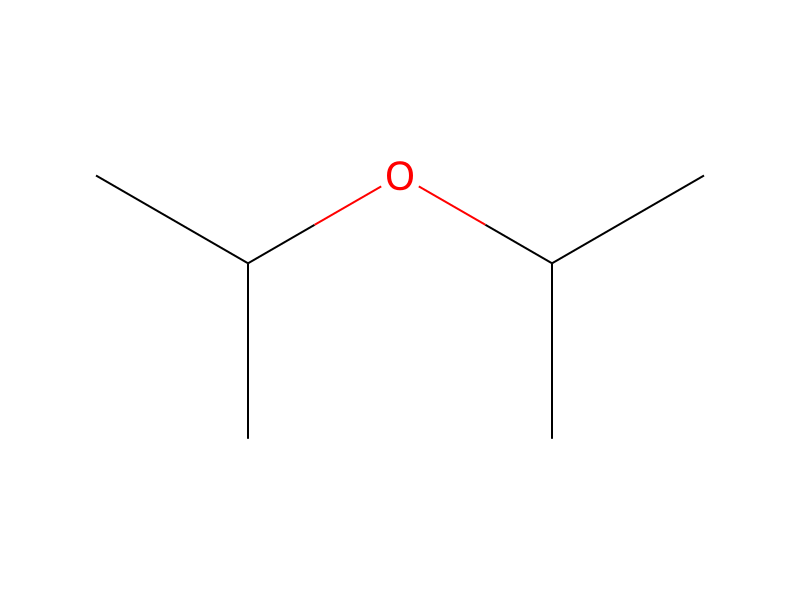
HCID 7914Diisopropyl EtherHCID 24758Sodium hydrideHCID 548235012,13-Dihydro-6-methyl-5H-indolo[2,3-a]pyrrolo[3,4-c]carbazole-5,7(6H)-dioneHCID 11389597Azetidinium, 1,1-diethyl-3-hydroxy-, chloride

Product 1

HCID 21216869(+/-)-12-(3-Diethylamino-2-hydroxy-1-propyl)-6,7,12,13-tetrahydro-6-methyl-5,7-dioxo-5H-indolo[2,3-a]pyrrolo[3,4-c]-carbazole

Reagents, catalysts & solvents 1

HCID 6228DimethylformamideSolvent2×

Conditions

Temperature
20 °C

Procedure

The starting material is prepared in the following manner: 1 g (2.95 mmol) 6,7,12,13-Tetrahydro-6-methyl-5,7-dioxo-5H-indolo[2,3-a]pyrrolo[3,4-c]carbazole (precursor for Example 5) is dissolved in 15 ml dry dimethylformamide and added dropwise, under an atmosphere of argon, to a suspension of 100 mg (3.3 mmol) sodium hydride (80% in paraffin oil) in 25 ml dimethyl formamide. After stirring for 1 hour at 20° C., 915 mg (5.9 mmol) 1,1-diethyl-3-hydroxyazetidinium chloride are added thereto and the reaction mixture is stirred for 3 days at 20° C. The reaction mixture is evaporated in a vacuum, the residue is taken up in 150 ml of water and 500 ml ethyl acetate and the organic phase is separated off and dried over anhydrous sodium sulphate. After filtration, the filtrate is evaporated and the residue is chromatographed on silica gel with dichloro-methane/methanol (99:1 v/v). The fraction with the Rf 0.2 in dichloromethane/methanol (95:5 v/v) is isolated, stirred with 20 ml diisopropyl ether and the crystals obtained are filtered off. (±)-12-(3-Diethylamino-2-hydroxy-1-propyl)-6,7,12,13-tetrahydro-6-methyl-5,7-dioxo-5H-indolo[2,3-a]pyrrolo[3,4-c]-carbazole is obtained in the form of yellow crystals; decomposition point 220°-228° C.

Workup

  1. customThe starting material is prepared in the following manner
  2. stirringthe reaction mixture is stirred for 3 days at 20° C
  3. customThe reaction mixture is evaporated in a vacuum
  4. custom500 ml ethyl acetate and the organic phase is separated off
  5. dry with materialdried over anhydrous sodium sulphate
  6. filtrationAfter filtration
  7. customthe filtrate is evaporated
  8. customthe residue is chromatographed on silica gel with dichloro-methane/methanol (99:1 v/v)
  9. customThe fraction with the Rf 0.2 in dichloromethane/methanol (95:5 v/v) is isolated
  10. customthe crystals obtained
  11. filtrationare filtered off

Sources & evidence

ORD record
ord-446ca82a1f764ef19cbfd81ffb7a824f
Source dataset
uspto-grants-1999_03
DOI
10.6084/m9.figshare.5104873.v1
Patent number
US05883114

Reaction notes

On this pageParticipantsConditionsProcedureWorkupSources & evidenceReaction notes