HomeMCPWorkbenchSkills
HomeWorkbenchNotificationsMe
llms.txt · MCP GuidePrivacy Policy · Terms of Service · Supportv1.8.0
  1. Home
  2. /Reaction

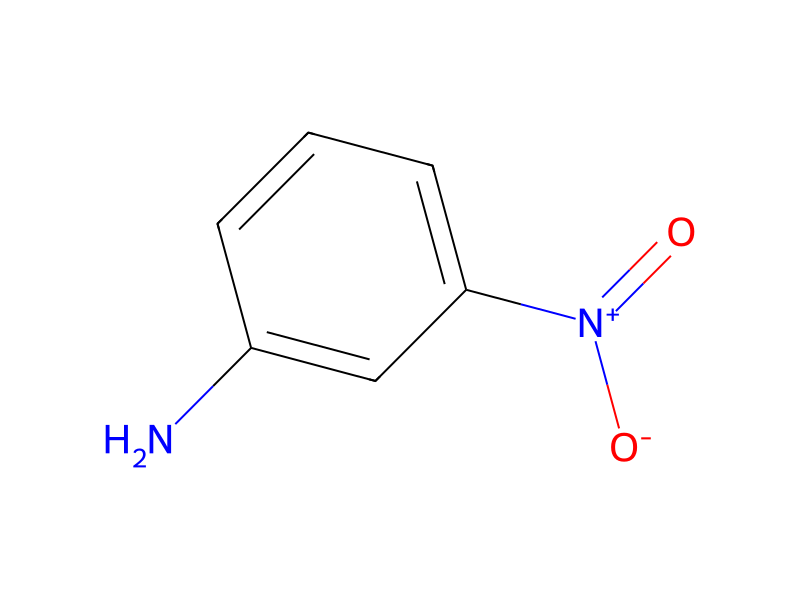
3-Nitroaniline → 3-(((2-Phenylethyl)carbonyl)amino)aniline hydrochloride

HRID 1418845
Notes
Print preview

Reaction equation

HRID 1418845 reaction equation
[N+:1]([C:4]1[CH:5]=[C:6]([CH:8]=[CH:9][CH:10]=1)[NH2:7])([O-])=O.C(N(CC)CC)C.[C:18]([Cl:28])(=[O:27])[CH2:19][CH2:20][C:21]1[CH:26]=[CH:25][CH:24]=[CH:23][CH:22]=1.C(O)(C)C.Cl>C1COCC1.CO.[Pd].C(OCC)(=O)C>[ClH:28].[C:21]1([CH2:20][CH2:19][C:18]([NH:1][C:4]2[CH:5]=[C:6]([CH:8]=[CH:9][CH:10]=2)[NH2:7])=[O:27])[CH:26]=[CH:25][CH:24]=[CH:23][CH:22]=1
ParticipantsProcedureWorkupSources & evidenceReaction notes

Participants

9

Reactant 4

HCID 74233-NitroanilineHCID 8471TriethylamineHCID 64801Benzenepropanoyl chlorideHCID 21912024Isopropanol hydrochloride

Product 1

HCID 195992863-(((2-Phenylethyl)carbonyl)amino)aniline hydrochloride

Reagents, catalysts & solvents 4

HCID 23938
Palladium
Catalyst
HCID 887MethanolSolvent
HCID 8028TetrahydrofuranSolvent
HCID 8857Ethyl AcetateSolvent

Procedure

To a stirred solution of 3-nitroaniline, 2.7 g, 0.019 moles, in 100 ml THF was added 10 ml of triethylamine. To this was added hydrocinnamoyl chloride, 3.0 g, 0.01 moles. The reaction was then stirred at room temperature for 18 hours. To the reaction was added 100 ml of ethyl acetate, and the organic phase was then washed with 1N hydrochloric acid. 100 ml (twice), and then with 2N sodium hydroxide, 100 ml (twice). The organic phase was dried over magnesium sulfate and the solvent was evaporated to yield an oil. This oil was dissolved in 100 ml of methanol and 20 ml of isopropanol/hydrochloric acid and to this solution was added 250 mg of 10% palladium on carbon. The reaction was then hydrogenated for 3 hours. The catalyst was removed by filtration and the solvent was evaporated. The residue was crystallized from hot isopropanol and ethyl acetate to yield 3-(((2-phenylethyl)carbonyl)amino)aniline hydrochloride.

Workup

  1. washthe organic phase was then washed with 1N hydrochloric acid
  2. dry with materialThe organic phase was dried over magnesium sulfate
  3. customthe solvent was evaporated
  4. customto yield an oil
  5. waithydrogenated for 3 hours
  6. customThe catalyst was removed by filtration
  7. customthe solvent was evaporated
  8. customThe residue was crystallized from hot isopropanol and ethyl acetate

Sources & evidence

ORD record
ord-1680de3111924f1d98c518faeb93bb04
Source dataset
uspto-grants-1999_03
DOI
10.6084/m9.figshare.5104873.v1
Patent number
US05885985

Reaction notes

Loading…

On this pageParticipantsProcedureWorkupSources & evidenceReaction notes




