Hydrochloric Acid → 1-[(3-Oxo-2-oxa-bicyclo[2.2.1]heptane-5-carbonyl)-amino]-2-vinyl-cyclo-propane carboxylic acid ethyl ester
HRID 1429152
Reaction equation

[O:1]=[C:2]1[CH:7]2[CH2:8][CH:4]([CH2:5][CH:6]2[C:9]([OH:11])=O)[O:3]1.Cl.[CH2:13]([O:15][C:16]([C:18]1([NH2:23])[CH2:20][CH:19]1[CH:21]=[CH2:22])=[O:17])[CH3:14].CN(C(ON1N=NC2C=CC=NC1=2)=[N+](C)C)C.F[P-](F)(F)(F)(F)F.CCN(C(C)C)C(C)C>CN(C=O)C.C(Cl)Cl>[CH2:13]([O:15][C:16]([C:18]1([NH:23][C:9]([CH:6]2[CH2:5][CH:4]3[CH2:8][CH:7]2[C:2](=[O:1])[O:3]3)=[O:11])[CH2:20][CH:19]1[CH:21]=[CH2:22])=[O:17])[CH3:14]Participants
8
Reactant 5
 HCID 313Hydrochloric Acid
 HCID 81531Diisopropylethylamine
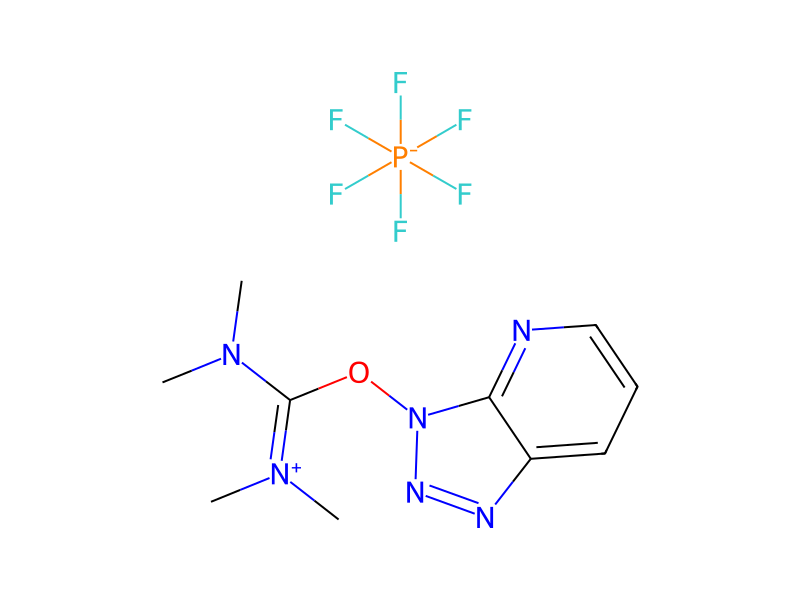 HCID 9886157Methanaminium, N-((dimethylamino)(3H-1,2,3-triazolo(4,5-b)pyridin-3-yloxy)methylene)-N-methyl-, hexafluorophosphate(1-) (1:1)
 HCID 22082824Ethyl 1-amino-2-vinylcyclopropanecarboxylate
 HCID 462449653-Oxo-2-oxabicyclo[2.2.1]heptane-5-carboxylic acid


