Reaction equation

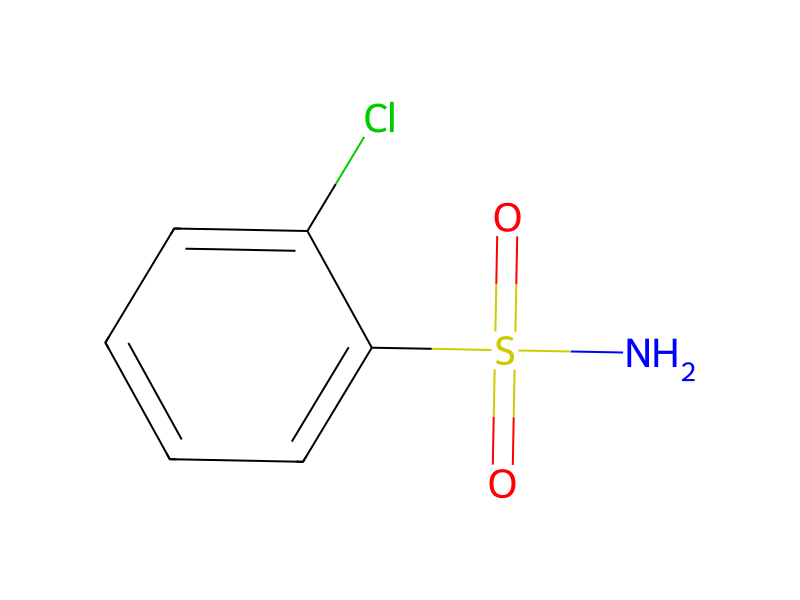
C(=O)([O-])[O-].[K+].[K+].Cl[C:8]1[C:17]([Cl:18])=[N:16][C:15]2[C:10](=[CH:11][CH:12]=[CH:13][CH:14]=2)[N:9]=1.[Cl:19][C:20]1[CH:25]=[CH:24][CH:23]=[CH:22][C:21]=1[S:26]([NH2:29])(=[O:28])=[O:27].Cl>O.CN(C)C=O>[Cl:19][C:20]1[CH:25]=[CH:24][CH:23]=[CH:22][C:21]=1[S:26]([NH:29][C:8]1[C:17]([Cl:18])=[N:16][C:15]2[C:10](=[CH:11][CH:12]=[CH:13][CH:14]=2)[N:9]=1)(=[O:28])=[O:27]Participants
7
Reactant 4



Product 1

Reagents, catalysts & solvents 2


Procedure
In the presence of potassium carbonate (625 mg), 2,3-dichloroquinoxaline (275 mg) and 2-chlorobenzenesulfonamide (264 mg) were allowed to react in the solution of dimethylformamide (4 mL) for 3 hours at 90° C. To the reaction mixture, water and hydrochloric acid were added and extracted with ethyl acetate. The residue was washed with a saturated aqueous solution of sodium chloride, dried with anhydrous magnesium sulfate and concentrated to obtain the title compound (493 mg) having the following physical data.
Workup
- extractionextracted with ethyl acetate
- washThe residue was washed with a saturated aqueous solution of sodium chloride
- dry with materialdried with anhydrous magnesium sulfate
- concentrationconcentrated
Sources & evidence
- ORD record
- ord-f5faa8914f2c48cbb2a90c25cb447563
- Source dataset
- uspto-grants-2010_06
- Patent number
- US07732442B2
Linked notes
Loading…