Reaction equation

I/[CH:2]=[CH:3]/[C:4]([CH3:7])([CH3:6])[CH3:5].C1(P(C2C=CC=CC=2)C2C=CC=CC=2)C=CC=CC=1.C(N)CCC.[CH2:32]([OH:35])[C:33]#[CH:34]>O1CCCC1.[Cu]I.[Pd](Cl)Cl.C(OCC)(=O)C.O>[CH3:5][C:4]([CH3:7])([CH3:6])/[CH:3]=[CH:2]/[C:34]#[C:33][CH2:32][OH:35]Participants
10
Reactant 4




Product 1

Reagents, catalysts & solvents 5




Procedure
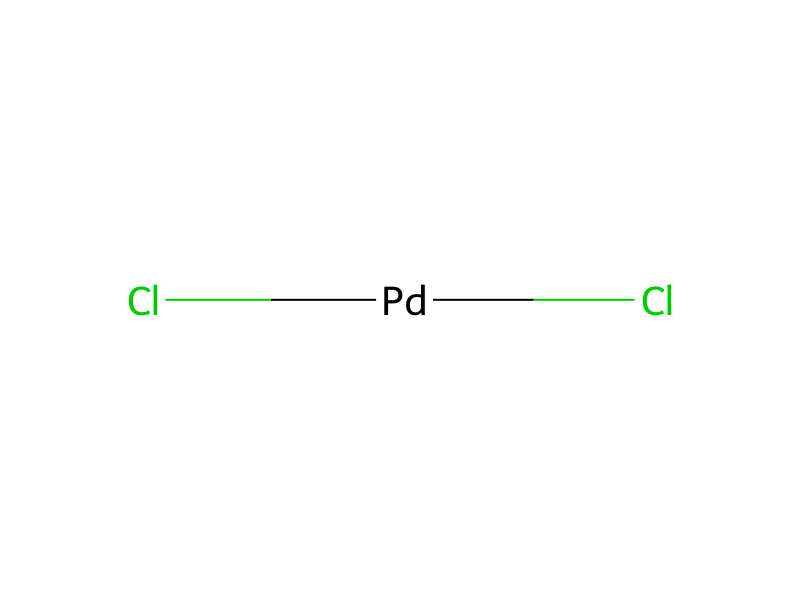
0.63 g of (E)-1- iodo-3,3-dimethyl-1-butene [see J. Org. Chem., 43, 4424 (1978)] was dissolved in 10 ml of tetrahydrofuran, and 31 mg of triphenylphosphine, 29 mg of copper(I) iodide, 11 mg of palladium chloride, 1.5 ml of n-butylamine and 0.35 ml of propargyl alcohol were added. The mixture was stirred overnight at room temperature, and then water and ethyl acetate were added. The organic layer separated was worked up in a customary manner, and the product was purified by silica gel column chromatography [hexane/ethyl acetate=2/1] to give 0.27 g of the captioned compound as a pale brown oil.
Workup
- customThe organic layer separated
- customthe product was purified by silica gel column chromatography [hexane/ethyl acetate=2/1]
Sources & evidence
- ORD record
- ord-8bfc60aedb7d4839b58de804983eda20
- Source dataset
- uspto-grants-1994_04
- Patent number
- US05306728
Linked notes
Loading…