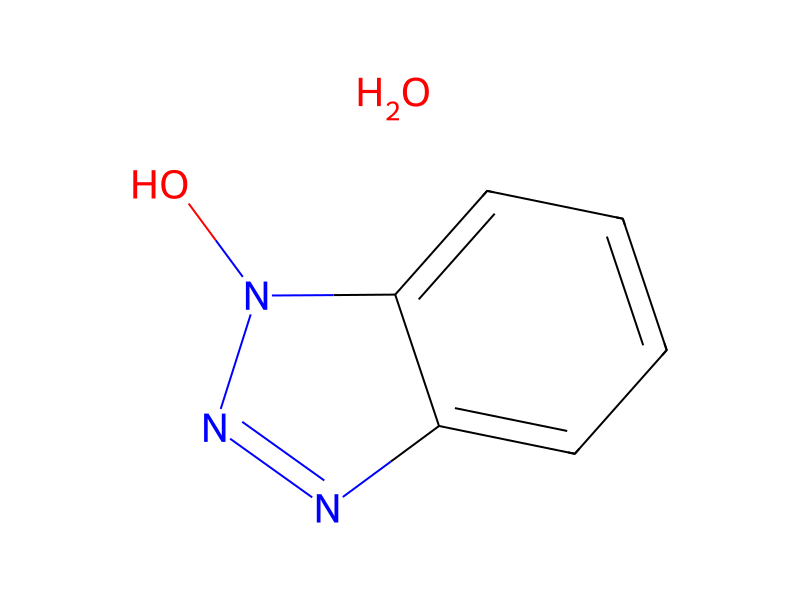
Cl.[NH:2]1[C:7]2[CH:8]=[CH:9][CH:10]=[CH:11][C:6]=2[CH:5]=[N:4][S:3]1(=[O:13])=[O:12].C([N:16](CC)CC)C.[CH3:21][C:22]1[CH:27]=[C:26]([C:28]([OH:30])=O)[CH:25]=[CH:24][N:23]=1.CCN=C=NCCCN(C)C.Cl.[CH:43]1[CH:48]=[C:47]2N=N[N:51](O)[C:46]2=[CH:45]C=1.O.CN([CH:57]=[O:58])C>>[NH2:16][C:5]1[C:6]2[C:11]([O:58][CH2:57][C:46]3([NH:51][C:28](=[O:30])[C:26]4[CH:25]=[CH:24][N:23]=[C:22]([CH3:21])[CH:27]=4)[CH2:45][CH2:43][CH2:48][CH2:47]3)=[CH:10][CH:9]=[CH:8][C:7]=2[NH:2][S:3](=[O:12])(=[O:13])[N:4]=1To a solution of 4-amino-5-(1-aminocyclopentyl)methoxy)-1H-benzo[c][1,2,6]thiadiazine-2,2-dioxide hydrochloride (252 mg, 0.72 mmol) in DMF (7 mL) was added triethylamine (202 uL, 1.45 mmol), followed by a solution of 2-methylpyridine-4-carboxylic acid (99 mg, 0.72 mmol), EDCI HCl (138 mg, 0.72 mmol), and HOBt hydrate (110 mg, 0.72 mmol) in DMF (5 mL). The reaction was stirred at room temperature for 24 h, and the resulting solution was purified by HPLC (10-90% acetonitrile in water). After removal of the solvent, the residue was suspended in an aqueous solution of NaHCO3 (208 mg in 3 mL of water) and heated to 95° C. After complete dissolution, the mixture was cooled to 0° C., neutralized with 1N HCl, and the resulting precipitate was collected by vacuum filtration to provide N-(1-(((4-amino-2,2-dioxido-1H-benzo[c][1,2,6]thiadiazin-5-yl)oxy)methyl)cyclopentyl)-2-methylisonicotinamide (124.1 mg, 40%) as a white solid. 1H NMR (400 MHz, DMSO-d6) δ 1.66 (m, 2H), 1.74 (m, 2H), 1.82 (m, 2H), 2.19 (m, 2H), 2.50 (s, 3H), 4.42 (s, 2H), 6.59 (d, J=8.4 Hz, 1H), 6.77 (d, J=8.4 Hz, 1H), 7.42 (t, J=8.4 Hz, 1H), 7.44 (m, 1H), 7.51 (s, 1H), 7.83 (br s, 1H), 8.40 (br s, 1H), 8.49 (s, 1H), 8.51 (d, J=5.1 Hz, 1H), 10.95 (br s, 1H). MS 430 (MH+).