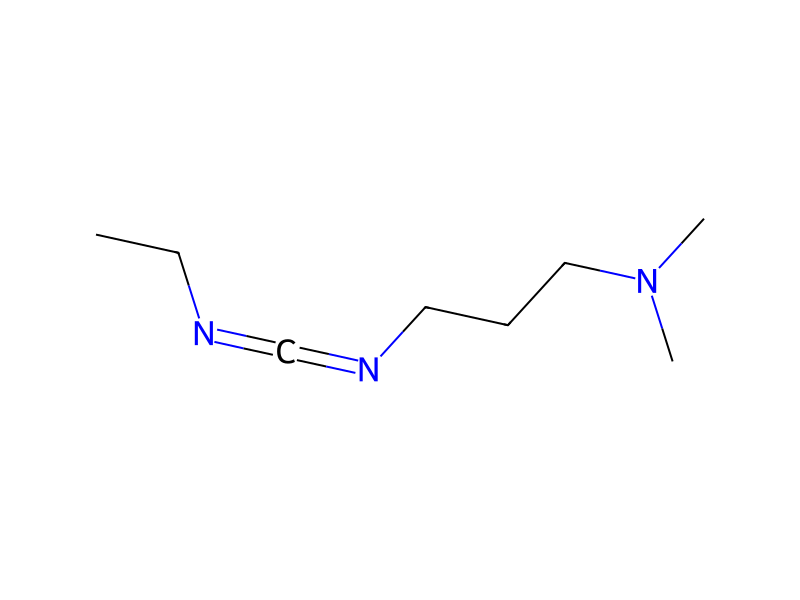
Triethylamine → N-Cbz-valylprolylglycine methyl ester
HRID 1471297
Reaction equation

[C:1]([NH:11][C@H:12]([C:16]([N:18]1[CH2:25][CH2:24][CH2:23][C@H:19]1[C:20](O)=[O:21])=[O:17])[CH:13]([CH3:15])[CH3:14])([O:3][CH2:4][C:5]1[CH:10]=[CH:9][CH:8]=[CH:7][CH:6]=1)=[O:2].CN(C)CCCN=C=NCC.C(N(CC)CC)C.Cl.[CH3:45][O:46][C:47](=[O:50])[CH2:48][NH2:49]>CN(C=O)C.ClCCl>[CH3:45][O:46][C:47](=[O:50])[CH2:48][NH:49][C:20](=[O:21])[C@@H:19]1[CH2:23][CH2:24][CH2:25][N:18]1[C:16](=[O:17])[C@H:12]([CH:13]([CH3:14])[CH3:15])[NH:11][C:1]([O:3][CH2:4][C:5]1[CH:6]=[CH:7][CH:8]=[CH:9][CH:10]=1)=[O:2]Participants
7