HomeMCPWorkbenchSkills
HomeWorkbenchNotificationsMe
llms.txt · MCP GuidePrivacy Policy · Terms of Service · Supportv1.8.0
  1. Home
  2. /Reaction

Potassium Phosphate, Tribasic → HCID 117940279, compound

HRID 1482167
Notes
Print preview

Reaction equation

HRID 1482167 reaction equation
Cl[C:2]1[CH:7]=[C:6]([C:8]2[CH:13]=[CH:12][CH:11]=[CH:10][CH:9]=2)[N:5]=[CH:4][N:3]=1.[C:14]([C:18]1[CH:23]=[CH:22][CH:21]=[CH:20][C:19]=1B(O)O)([CH3:17])([CH3:16])[CH3:15].P([O-])([O-])([O-])=O.[K+].[K+].[K+].COC1C=CC=C(OC)C=1P(C1C(OC)=CC=CC=1OC)C1C(OC)=CC=CC=1OC.C1(P(C2CCCCC2)C2C=CC=CC=2C2C(OC)=CC=CC=2OC)CCCCC1>C1C=CC(/C=C/C(/C=C/C2C=CC=CC=2)=O)=CC=1.C1C=CC(/C=C/C(/C=C/C2C=CC=CC=2)=O)=CC=1.[Pd].C1C=CC(/C=C/C(/C=C/C2C=CC=CC=2)=O)=CC=1.C1C=CC(/C=C/C(/C=C/C2C=CC=CC=2)=O)=CC=1.C1C=CC(/C=C/C(/C=C/C2C=CC=CC=2)=O)=CC=1.[Pd].[Pd].C([O-])(=O)C.[Pd+2].C([O-])(=O)C.O.C1(C)C=CC=CC=1>[C:14]([C:18]1[CH:23]=[CH:22][CH:21]=[CH:20][C:19]=1[C:2]1[CH:7]=[C:6]([C:8]2[CH:13]=[CH:12][CH:11]=[CH:10][CH:9]=2)[N:5]=[CH:4][N:3]=1)([CH3:17])([CH3:16])[CH3:15]
ParticipantsProcedureWorkupSources & evidenceReaction notes

Participants

11

Reactant 5

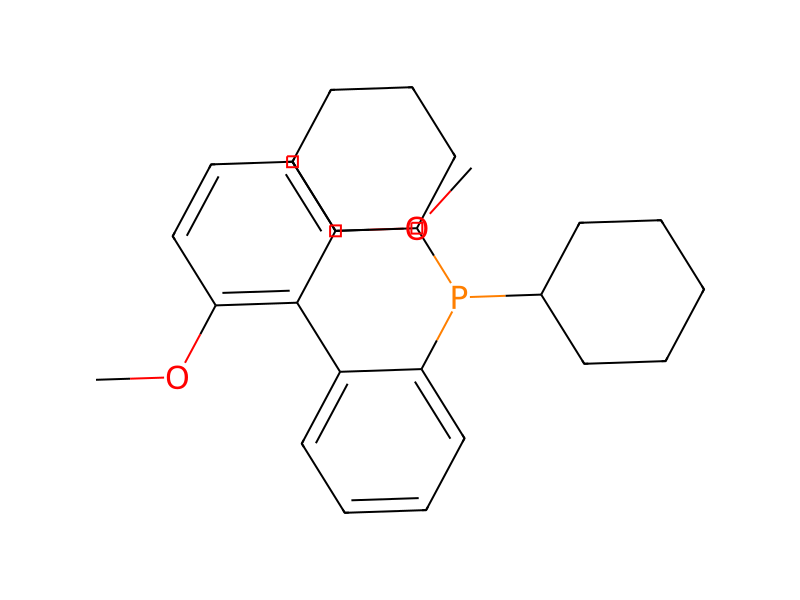
HCID 62657Potassium Phosphate, Tribasic2×HCID 5934294-Chloro-6-phenylpyrimidineHCID 2734597Tris(2,6-dimethoxyphenyl)phosphine2×HCID 112698722-Dicyclohexylphosphino-2',6'-dimethoxybiphenyl3×HCID 22173077(2-Tert-butylphenyl)boronic acid2×

Product 1

HCID 117940279
HCID 117940279, compound
Yield 18%

Reagents, catalysts & solvents 5

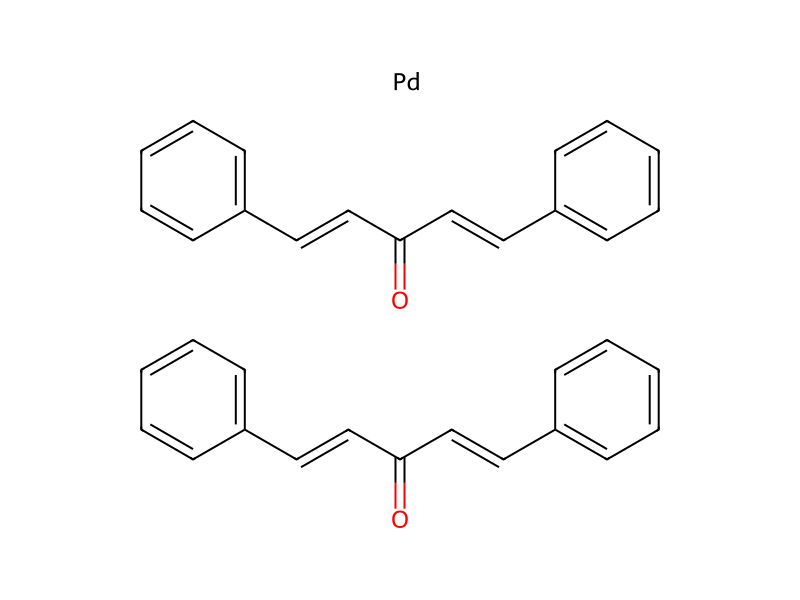
HCID 167845palladium(II) acetateCatalyst3×HCID 6505921(1E,4E)-1,5-diphenylpenta-1,4-dien-3-one; palladiumCatalystHCID 9811564Bis(dibenzylideneacetone)palladiumCatalyst2×HCID 962WaterSolventHCID 1140TolueneSolvent

Procedure

First, 1.0 g of 4-chloro-6-phenylpyrimidine, 1.1 g of 2-tert-butylphenylboronic acid, 4.0 g of potassium phosphate, 39 mL of toluene, and 3.9 mL of water were put in a three-neck flask equipped with a reflux pipe, and the air in the flask was replaced with nitrogen. In this container were added 48 mg of bis(dibenzylideneacetone)palladium(0), namely Pd2(dba)3, and 190 mg of tris(2,6-dimethoxyphenyl)phosphine, and heating was performed at 100° C. for 7 hours. Then, 24 mg of Pd2(dba)3 and 46 mg of tris(2,6-dimethoxyphenyl)phosphine were added and heating was performed at 100° C. for 17 hours. After that, 12 mg of palladium acetate and 44 mg of 2-dicyclohexylphosphino-2′,6′-dimethoxybiphenyl (abbreviation: S-Phos) were added and heating was performed at 100° C. for 15 hours. Furthermore, 5.9 mg of palladium acetate and 27 mg of S-Phos (abbreviation) were added and heating was performed at 100° C. for 8 hours. Then, 0.10 g of 2-tert-butylphenylboronic acid, 2.0 g of potassium phosphate, 13 mg of palladium acetate, and 12 mg of S-Phos (abbreviation) were added and heating was performed at 100° C. for 21 hours. An organic layer was extracted from the obtained mixture with the use of ethyl acetate and was washed with saturated brine. Magnesium sulfate was added and the mixture was subjected to filtration. The solvent in the filtrate was distilled off to give a residue. The residue was purified by neutral silica gel column chromatography using a mixed solvent of ethyl acetate and hexane in a ratio of 1:4 as a developing solvent, so that 0.27 g of Hppm-tBup (abbreviation) that is an objective substance was obtained as a yellowish white solid in a yield of 18%. A synthesis scheme of Step 1 is shown in (b-1) below.


Workup

  1. customequipped with a reflux pipe
  2. temperatureheating
  3. temperatureheating
  4. waitwas performed at 100° C. for 17 hours
  5. temperatureheating
  6. waitwas performed at 100° C. for 15 hours
  7. temperatureheating
  8. waitwas performed at 100° C. for 8 hours
  9. temperatureheating
  10. waitwas performed at 100° C. for 21 hours
  11. extractionAn organic layer was extracted from the obtained mixture with the use of ethyl acetate
  12. washwas washed with saturated brine
  13. additionMagnesium sulfate was added
  14. filtrationthe mixture was subjected to filtration
  15. distillationThe solvent in the filtrate was distilled off
  16. customto give a residue
  17. customThe residue was purified by neutral silica gel column chromatography
  18. customwas obtained as a yellowish white solid in a yield of 18%
  19. customA synthesis scheme of Step 1

Sources & evidence

ORD record
ord-bbcdda368ef64a5f822eb32efd232ea5
Source dataset
uspto-grants-2016_08
DOI
10.6084/m9.figshare.5104873.v1
Patent number
US09412956B2

Reaction notes

Loading…

On this pageParticipantsProcedureWorkupSources & evidenceReaction notes