HomeMCPWorkbenchSkills
HomeWorkbenchNotificationsMe
llms.txt · MCP GuidePrivacy Policy · Terms of Service · Supportv1.8.3
  1. Home
  2. /Reaction

Cyclobutanol → (S)-cyclobutyl 4-acetyl-7-bromo-3-methyl-3,4-dihydroquinoxaline-1(2H)-carboxylate

HRID 1485712
Print

Reaction equation

HRID 1485712 reaction equation
[CH:1]1([OH:5])[CH2:4][CH2:3][CH2:2]1.ClC(Cl)(O[C:10](=[O:16])OC(Cl)(Cl)Cl)Cl.C(N(CC)C(C)C)(C)C.[Br:27][C:28]1[CH:29]=[C:30]2[C:35](=[CH:36][CH:37]=1)[N:34]([C:38](=[O:40])[CH3:39])[C@@H:33]([CH3:41])[CH2:32][NH:31]2>ClCCCl>[C:38]([N:34]1[C:35]2[C:30](=[CH:29][C:28]([Br:27])=[CH:37][CH:36]=2)[N:31]([C:10]([O:5][CH:1]2[CH2:4][CH2:3][CH2:2]2)=[O:16])[CH2:32][C@@H:33]1[CH3:41])(=[O:40])[CH3:39]
ParticipantsConditionsProcedureWorkupSources & evidenceReaction notes

Participants

6

Reactant 4

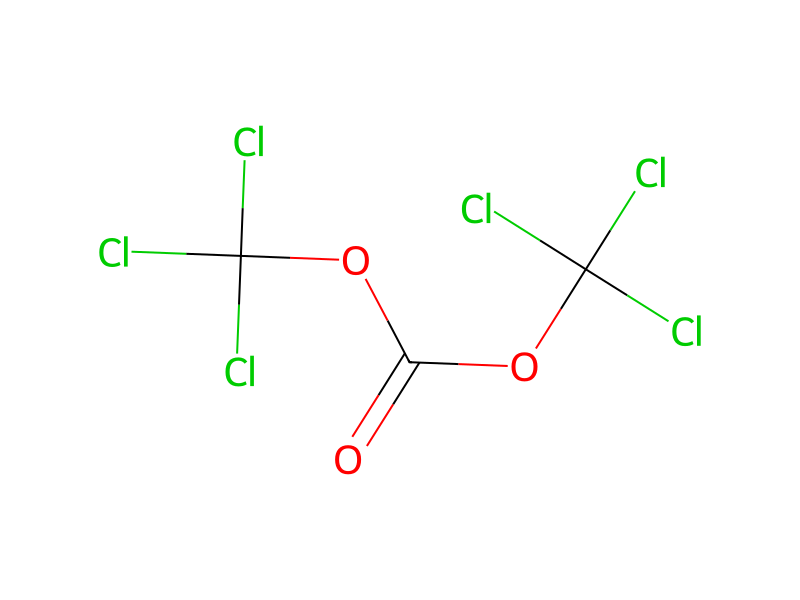
HCID 76218CyclobutanolHCID 81531Diisopropylethylamine2×HCID 94429TriphosgeneHCID 118078861(S)-1-(6-bromo-2-methyl-3,4-dihydroquinoxalin-1(2H)-yl)ethanone

Product 1

HCID 118080227(S)-cyclobutyl 4-acetyl-7-bromo-3-methyl-3,4-dihydroquinoxaline-1(2H)-carboxylateYield 146.4%

Reagents, catalysts & solvents

1
HCID 111,2-DichloroethaneSolvent2×

Conditions

Temperature
50 °C

Procedure

A solution of cyclobutanol (28.8 g, 399 mmol), 1,2-dichloroethane (450 mL), triphosgene (22.1 g, 74.41 mmol) and N,N-diisopropylethyl amine (58.0 mL, 333 mmol) was stirred at 50° C. for 2 hr. A solution of (S)-1-(6-bromo-2-methyl-3,4-dihydroquinoxaline-1(2H)-yl)ethan-1-one (10.0 g, 37.2 mmol) and N,N-diisopropylethyl amine (58.0 mL, 333 mmol) in 1,2-dichloroethane (180 mL) was added dropwise. The resulting solution was stirred for 5 h at 50° C. After cooling to room temperature, the reaction mixture was concentrated under vacuum. The residue was purified via column chromatography on silica gel (eluting with 25% ethyl acetate-petroleum ether) to afford cyclobutyl (S)-4-acetyl-7-bromo-3-methyl-3,4-dihydroquinoxaline-1(2H)-carboxylate (20 g, 73%) as yellow oil. MS (ESI, pos. ion) m/z 367, 369 [M+1]+.

Workup

  1. temperatureAfter cooling to room temperature
  2. concentrationthe reaction mixture was concentrated under vacuum
  3. customThe residue was purified via column chromatography on silica gel (eluting with 25% ethyl acetate-petroleum ether)

Sources & evidence

ORD record
ord-f82105ce95b84b70877ea3cde174b0af
Source dataset
uspto-grants-2016_08
DOI
10.6084/m9.figshare.5104873.v1
Patent number
US09422281B2

Reaction notes

On this pageParticipantsConditionsProcedureWorkupSources & evidenceReaction notes