HomeMCPWorkbenchSkills
HomeWorkbenchNotificationsMe
llms.txt · MCP GuidePrivacy Policy · Terms of Service · Supportv1.8.3
  1. Home
  2. /Reaction

Trifluoroacetic anhydride → ethyl 2-[(E)-2-phenylethenyl]-1,3-oxazole-4-carboxylate

HRID 1487428
Print

Reaction equation

HRID 1487428 reaction equation
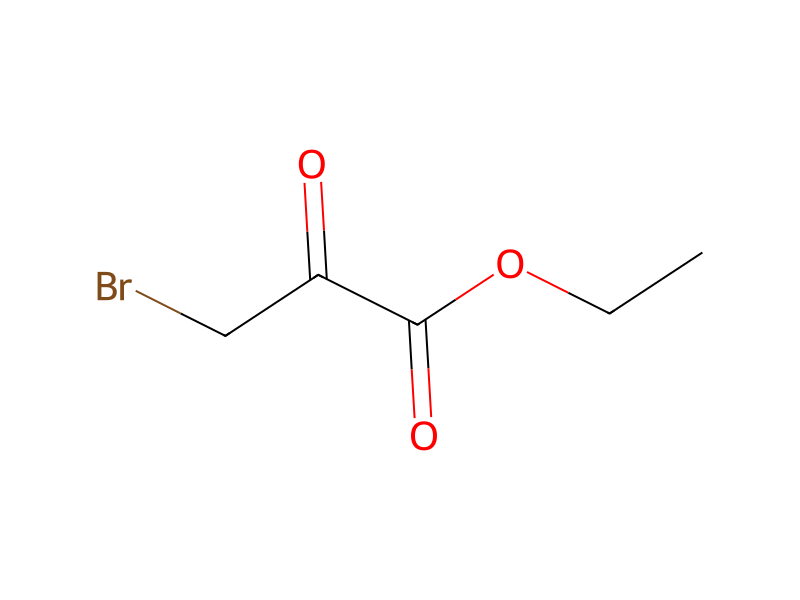
[C:1]1(/[CH:7]=[CH:8]/[C:9]([NH2:11])=[O:10])[CH:6]=[CH:5][CH:4]=[CH:3][CH:2]=1.C(=O)(O)[O-].[Na+].Br[CH2:18][C:19](=O)[C:20]([O:22][CH2:23][CH3:24])=[O:21].FC(F)(F)C(OC(=O)C(F)(F)F)=O>O1CCCC1>[C:1]1(/[CH:7]=[CH:8]/[C:9]2[O:10][CH:18]=[C:19]([C:20]([O:22][CH2:23][CH3:24])=[O:21])[N:11]=2)[CH:6]=[CH:5][CH:4]=[CH:3][CH:2]=1
ParticipantsConditionsProcedureWorkupSources & evidenceReaction notes

Participants

6

Reactant 4

HCID 9845Trifluoroacetic anhydrideHCID 66144Ethyl bromopyruvateHCID 516892Sodium BicarbonateHCID 5273472trans-Cinnamamide

Product 1

HCID 5708074ethyl 2-[(E)-2-phenylethenyl]-1,3-oxazole-4-carboxylate

Reagents, catalysts & solvents 1

HCID 8028
Tetrahydrofuran
Solvent

Conditions

Temperature
0 °C

Procedure

A mixture of (2E)-3-phenylprop-2-enamide (2.00 g, 13.6 mmol) and sodium bicarbonate (4.57 g, 54.4 mmol) in tetrahydrofuran (48 mL) was cooled to 0° C. Ethyl 3-bromo-2-oxopropanoate (3.16 mL, 25.2 mmol) was added drop-wise, and the reaction mixture was heated at reflux for 4 hours, whereupon it was filtered through diatomaceous earth and concentrated in vacuo. The residue was dissolved in tetrahydrofuran (33 mL), cooled to 0° C., and treated drop-wise with trifluoroacetic anhydride (14.8 mL, 105 mmol). The reaction mixture was stirred at room temperature for 10 hours, then cooled to 0° C. and quenched via addition of saturated aqueous sodium bicarbonate solution. The mixture was extracted three times with ethyl acetate, and the combined organic layers were washed with saturated aqueous sodium chloride solution, dried over sodium sulfate, filtered, and concentrated under reduced pressure. Chromatography on silica gel (Gradient: 0% to 30% ethyl acetate in heptane) provided partially purified product; this was crystallized from heptane/ethyl acetate to afford the product as pale yellow needles. Yield: 1.52 g, 6.25 mmol, 46%. LCMS m/z 244.1 [M+H]+. 1H NMR (400 MHz, CDCl3) δ 8.20 (s, 1H), 7.63 (d, J=16.4 Hz, 1H), 7.51-7.56 (m, 2H), 7.34-7.43 (m, 3H), 6.97 (d, J=16.5 Hz, 1H), 4.42 (q, J=7.1 Hz, 2H), 1.41 (t, J=7.1 Hz, 3H).

Workup

  1. temperaturethe reaction mixture was heated
  2. temperatureat reflux for 4 hours, whereupon it
  3. filtrationwas filtered through diatomaceous earth
  4. concentrationconcentrated in vacuo
  5. dissolutionThe residue was dissolved in tetrahydrofuran (33 mL)
  6. temperaturecooled to 0° C.
  7. temperaturecooled to 0° C.
  8. customquenched via addition of saturated aqueous sodium bicarbonate solution
  9. extractionThe mixture was extracted three times with ethyl acetate
  10. washthe combined organic layers were washed with saturated aqueous sodium chloride solution
  11. dry with materialdried over sodium sulfate
  12. filtrationfiltered
  13. concentrationconcentrated under reduced pressure
  14. customChromatography on silica gel (Gradient: 0% to 30% ethyl acetate in heptane) provided partially purified product
  15. customthis was crystallized from heptane/ethyl acetate

Sources & evidence

ORD record
ord-233173d64b0646358c9082bf6bdf3858
Source dataset
uspto-grants-2016_08
DOI
10.6084/m9.figshare.5104873.v1
Patent number
US09428523B2

Reaction notes

On this pageParticipantsConditionsProcedureWorkupSources & evidenceReaction notes