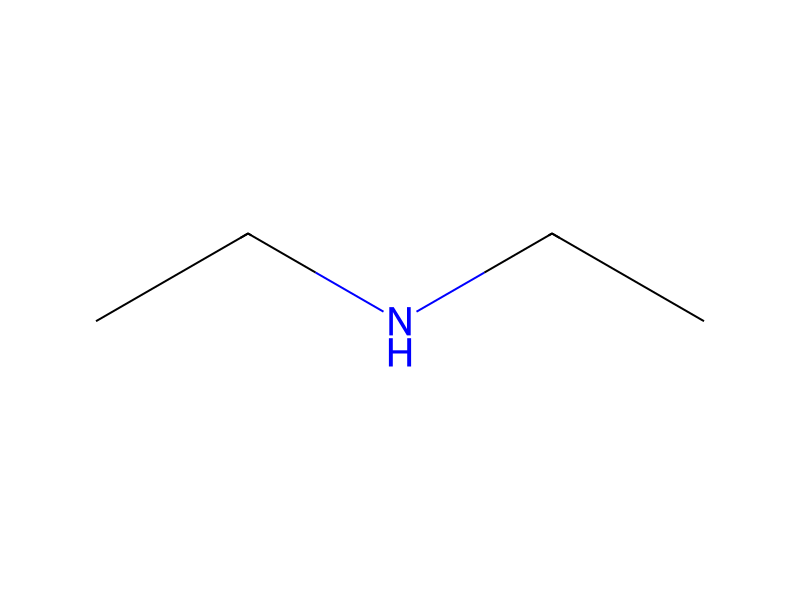
[Cl:1][C:2]1[CH:7]=[CH:6][C:5]([NH2:8])=[C:4](I)[CH:3]=1.[Cl:10][C:11]1[CH:16]=[CH:15][CH:14]=[CH:13][C:12]=1[C:17]#[CH:18].C(NCC)C>CN(C)C=O.Cl[Pd](Cl)([P](C1C=CC=CC=1)(C1C=CC=CC=1)C1C=CC=CC=1)[P](C1C=CC=CC=1)(C1C=CC=CC=1)C1C=CC=CC=1.[Cu]I>[Cl:1][C:2]1[CH:7]=[CH:6][C:5]([NH2:8])=[C:4]([C:18]#[C:17][C:12]2[CH:13]=[CH:14][CH:15]=[CH:16][C:11]=2[Cl:10])[CH:3]=1To a stirred solution of 4-chloro-2-iodo-phenylamine (500 mg, 1.97 mmol) in dimethylformamide (4 ml) was added PdCl2(PPh3)2 (7 mg, 0.02 mmol) followed by copper(I)iodide (3.7 mg, 0.02 mmol), 1-chloro-2-ethynyl-benzene (0.28 ml, 2.36 mmol) and diethylamine (1.65 ml, 15.78 mmol) under nitrogen at RT. The resulting reaction mixture was purged with nitrogen and then heated to 50° C. for 5 h. After cooling to room temperature, the mixture was diluted with water and extracted with ethyl acetate. The combined organic layers were washed with brine, dried over sodium sulfate and concentrated in vacuo to give a crude residue which was purified by flash column chromatography (elution with 4% EtOAc in hexane) to yield 4-chloro-2-(2-chloro-phenylethynyl)-phenylamine (320 mg, 62% yield) as an off white solid. LC-MS: 262 (M+H)+.