HomeMCPWorkbenchSkills
HomeWorkbenchNotificationsMe
llms.txt · MCP GuidePrivacy Policy · Terms of Service · Supportv1.8.3
  1. Home
  2. /Reaction

Methyl Acrylate → (E)-3-(3-Hydroxymethyl-phenyl)-acrylic acid methyl ester

HRID 15005
Print

Reaction equation

HRID 15005 reaction equation
C(N(CC)CC)C.I[C:9]1[CH:10]=[C:11]([CH:14]=[CH:15][CH:16]=1)[CH2:12][OH:13].[C:17]([O:21][CH3:22])(=[O:20])[CH:18]=[CH2:19].[Cl-].[NH4+]>CC#N.CC([O-])=O.CC([O-])=O.[Pd+2]>[CH3:22][O:21][C:17](=[O:20])/[CH:18]=[CH:19]/[C:9]1[CH:16]=[CH:15][CH:14]=[C:11]([CH2:12][OH:13])[CH:10]=1
ParticipantsConditionsProcedureWorkupSources & evidenceReaction notes

Participants

7

Reactant 4

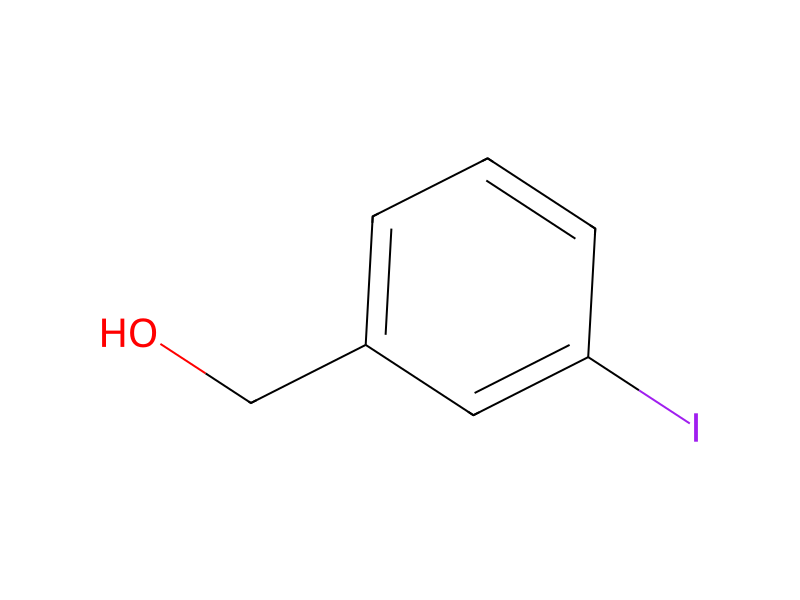
HCID 7294Methyl Acrylate2×HCID 8471Triethylamine2×HCID 25517Ammonium ChlorideHCID 423003-Iodobenzyl alcohol

Product 1

HCID 59794688(E)-3-(3-Hydroxymethyl-phenyl)-acrylic acid methyl esterYield 97%

Reagents, catalysts & solvents 2

HCID 167845
palladium(II) acetate
Catalyst
2×
HCID 6342AcetonitrileSolvent

Conditions

Temperature
100 °C

Procedure

The procedure described in Reich, S. H. etal. J. Med. Chem. 2000, 43, 1670 was followed. Pd(OAc)2 (8.2 mg, 0.037 mmol) and triethylamine (0.360 mL, 2.58 mmol) were added to a solution of 3-iodobenzyl alcohol 15 (0.27 mL, 2.13 mmol) and methyl acrylate 16 (0.220 mL, 2.44 mmol) in CH3CN (4.5 mL). The reaction vessel was sealed with a Teflon screw-cap and was heated at 100° C. for 5 h. At this time, the reaction was allowed to cool to room temperature and the tube was charged with 0.22 mL more of methyl acrylate, 11.7 mg Pd(OAc)2 and 0.360 mL triethylamine. The reaction was heated at 100° C. overnight and then 10 mL saturated ammonium chloride solution was added. The resulting mixture was extracted with dichloromethane (3×40 mL) and the combined dichloromethane solution was dried (Na2SO4), filtered and evaporated. Purification by flash chromatography on silica gel (30% ethyl acetate/hexanes) gave 395 mg (97%) of compound 17.


Workup

  1. customscrew-cap
  2. temperatureto cool to room temperature
  3. temperatureThe reaction was heated at 100° C. overnight
  4. extractionThe resulting mixture was extracted with dichloromethane (3×40 mL)
  5. dry with materialthe combined dichloromethane solution was dried (Na2SO4)
  6. filtrationfiltered
  7. customevaporated
  8. customPurification by flash chromatography on silica gel (30% ethyl acetate/hexanes)

Sources & evidence

ORD record
ord-a51aab874b354bb2a3c422fc2effc228
Source dataset
uspto-grants-2010_06
DOI
10.6084/m9.figshare.5104873.v1
Patent number
US07732443B2

Reaction notes

On this pageParticipantsConditionsProcedureWorkupSources & evidenceReaction notes