Reaction equation

C1(P(C2C=CC=CC=2)C2C=CC=CC=2)C=CC=CC=1.[C:20]([Br:24])(Br)(Br)[Br:21].C(N(CC)CC)C.[OH:32][C:33]1[CH:40]=[CH:39][CH:38]=[CH:37][C:34]=1[CH:35]=O>ClCCl.O>[Br:21][C:20]([Br:24])=[CH:35][C:34]1[CH:37]=[CH:38][CH:39]=[CH:40][C:33]=1[OH:32]Participants
Reactant 4
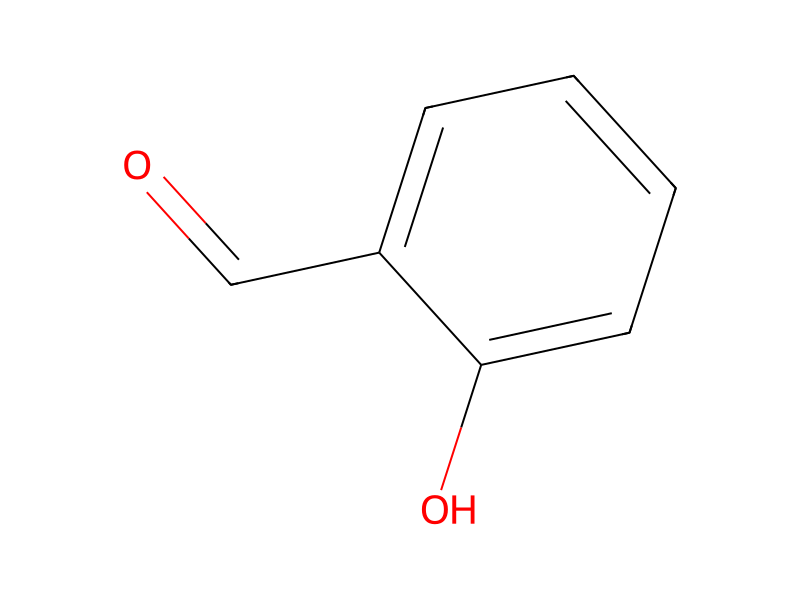



Product 1

Reagents, catalysts & solvents 2


Conditions
- Temperature
- 0 °C
Procedure
To a solution of triphenylphosphine (10.5 g, 40 mmol), carbon tetrabromide (6.6 g, 20 mmol) and triethylamine (3.0 g, 30 mmol) in dichloromethane (10 mL) was added 2-hydroxy-benzaldehyde (1.62 g, 13 mmol), and the mixture temperature was maintained at around 0° C. during the addition. After the addition was completed, the reaction mixture was stirred at room temperature for 1 hour. After the reaction, the mixture was poured into water (200 mL). And then the mixture was extracted with ethyl acetate (200 mL), washed with water (200 mL). The organic phase was dried over anhydrous sodium sulfate, and then filtered. The filtrate was concentrated and the residue was purified by column chromatography (silica gel, ethyl acetate/petroleum ether=1:5) to give the pure product 2-(2,2-dibromovinyl)phenol as a pink solid (2.8 g, 76%). LRMS (M−H)−: calcd 275.9. found 275.
Workup
- additionAfter the addition
- customAfter the reaction
- extractionAnd then the mixture was extracted with ethyl acetate (200 mL)
- washwashed with water (200 mL)
- dry with materialThe organic phase was dried over anhydrous sodium sulfate
- filtrationfiltered
- concentrationThe filtrate was concentrated
- customthe residue was purified by column chromatography (silica gel, ethyl acetate/petroleum ether=1:5)
Sources & evidence
- ORD record
- ord-6807387dc472492eab554fd2f239255e
- Source dataset
- uspto-grants-2015_12
- Patent number
- US09206128B2
Linked notes
Loading…