HomeMCPWorkbenchSkills
HomeWorkbenchNotificationsMe
llms.txt · MCP GuidePrivacy Policy · Terms of Service · Supportv1.8.3
  1. Home
  2. /Reaction

Triphenylphosphine → 4-((6-Chloro-[1,2,4]triazolo[4,3-b]pyridazin-3-yl)methoxy)-7-methoxyquinoline

HRID 1513634
Print

Reaction equation

HRID 1513634 reaction equation
[Cl:1][C:2]1[N:7]=[N:6][C:5]([NH:8][NH:9][C:10](=O)[CH2:11][O:12][C:13]2[C:22]3[C:17](=[CH:18][C:19]([O:23][CH3:24])=[CH:20][CH:21]=3)[N:16]=[CH:15][CH:14]=2)=[CH:4][CH:3]=1.C1(P(C2C=CC=CC=2)C2C=CC=CC=2)C=CC=CC=1.C[Si](N=[N+]=[N-])(C)C.CCOC(/N=N/C(OCC)=O)=O>O1CCCC1>[Cl:1][C:2]1[CH:3]=[CH:4][C:5]2[N:6]([C:10]([CH2:11][O:12][C:13]3[C:22]4[C:17](=[CH:18][C:19]([O:23][CH3:24])=[CH:20][CH:21]=4)[N:16]=[CH:15][CH:14]=3)=[N:9][N:8]=2)[N:7]=1
ParticipantsConditionsProcedureWorkupSources & evidenceReaction notes

Participants

6

Reactant 4

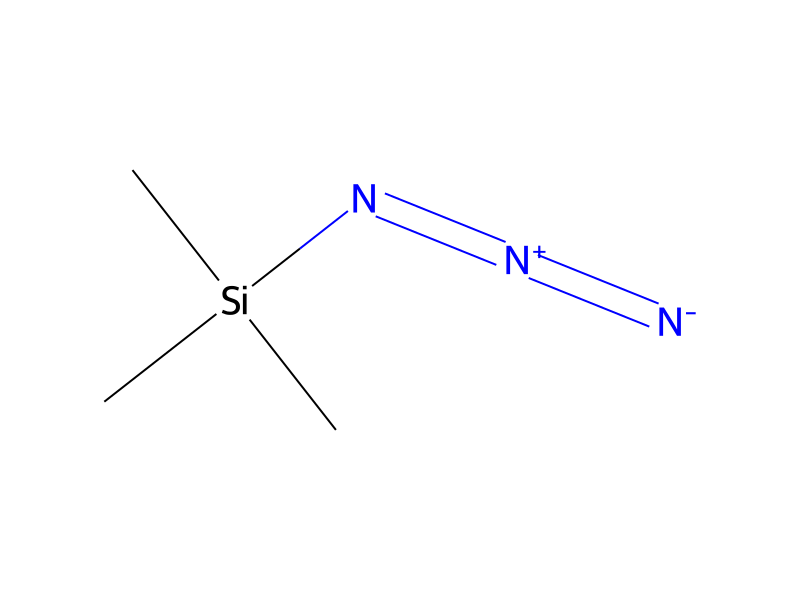
HCID 11776TriphenylphosphineHCID 78378AzidotrimethylsilaneHCID 5462977Diethyl azodicarboxylateHCID 86630262N'-(6-chloropyridazin-3-yl)-2-(7-methoxyquinolin-4-yloxy)acetohydrazide

Product 1

HCID 250669924-((6-Chloro-[1,2,4]triazolo[4,3-b]pyridazin-3-yl)methoxy)-7-methoxyquinoline

Reagents, catalysts & solvents 1

HCID 8028TetrahydrofuranSolvent

Conditions

Temperature
50 °C

Procedure

N′-(6-chloropyridazin-3-yl)-2-(7-methoxyquinolin-4-yloxy)acetohydrazide (2.53 g, 7.0 mmol) was suspended in tetrahydrofuran (50 mL) then added triphenylphosphine (2.8 g, 11 mmol) and trimethylsilyl azide (1.4 ml, 11 mmol). To this suspension, was added diethylazodicarboxylate (2.0 ml, 13 mmol) in rapid drops with a syringe. The mixture became clear and hot to the touch. The reaction mixture was heated at 50° C. for 30 minutes. The reaction mixture was concentrated in vacuo. The remaining oil was triturated with diethyl ether. A gel-like solid formed which was collected on a glass frit, washing with diethyl ether. The solid was then triturated with ethyl acetate, and finally acetonitrile. An amorphous solid formed which was collected on a glass frit, washing with acetonitrile. The solid was further dried under high vacuum. In addition, the ethyl acetate filtrate was concentrated in vacuo. The remaining oil was then triturated with acetonitrile. An amorphous solid formed and was collected on a glass frit, washing with acetonitrile. The solid was further dried under high vacuum affording 4-((6-chloro-[1,2,4]triazolo[4,3-b]pyridazin-3-yl)methoxy)-7-methoxyquinoline as a tan solid. MS (ESI, pos. ion) m/z: 342.1 (M+1).


Workup

  1. concentrationThe reaction mixture was concentrated in vacuo
  2. customThe remaining oil was triturated with diethyl ether
  3. customA gel-like solid formed which
  4. customwas collected on a glass frit
  5. washwashing with diethyl ether
  6. customThe solid was then triturated with ethyl acetate, and finally acetonitrile
  7. customAn amorphous solid formed which
  8. customwas collected on a glass frit
  9. washwashing with acetonitrile
  10. customThe solid was further dried under high vacuum
  11. concentrationIn addition, the ethyl acetate filtrate was concentrated in vacuo
  12. customThe remaining oil was then triturated with acetonitrile
  13. customAn amorphous solid formed
  14. customwas collected on a glass frit
  15. washwashing with acetonitrile
  16. customThe solid was further dried under high vacuum

Sources & evidence

ORD record
ord-1e8538caf3794fb2b44095d85227afd8
Source dataset
uspto-grants-2012_07
DOI
10.6084/m9.figshare.5104873.v1
Patent number
US08217177B2

Reaction notes

On this pageParticipantsConditionsProcedureWorkupSources & evidenceReaction notes