Hydrochloric Acid → Ethyl 2-acetyl-5,5-dimethyl-4-oxohexanoate
Reaction equation

[O:1]=[C:2]([CH3:9])[CH2:3][C:4]([O:6][CH2:7][CH3:8])=[O:5].Br[CH2:11][C:12](=[O:17])[C:13]([CH3:16])([CH3:15])[CH3:14].Cl>O1CCCC1>[C:2]([CH:3]([CH2:11][C:12](=[O:17])[C:13]([CH3:16])([CH3:15])[CH3:14])[C:4]([O:6][CH2:7][CH3:8])=[O:5])(=[O:1])[CH3:9]Participants
5
Reactant 3


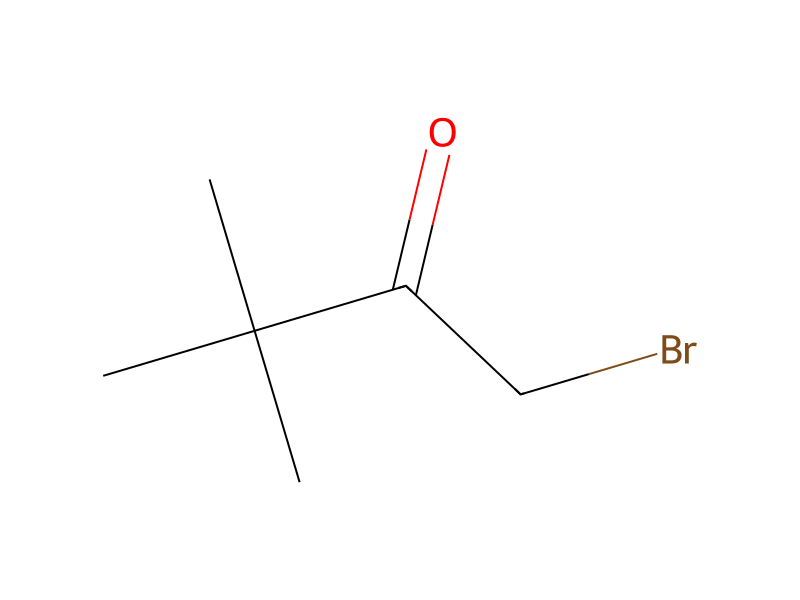
Product 1

Reagents, catalysts & solvents 1

Procedure
A 6.214 g portion of sodium hydride (55% dispersion in oil) was washed with hexane, 150 ml of tetrahydrofuran was added thereto and, under ice-cooling, a solution prepared by dissolving 18.534 g of ethyl 3-oxobutanoate in 75 ml of tetrahydrofuran was added dropwise thereto. After stirring at room temperature for 30 minutes, this solution was added dropwise, under ice-cooling, to a solution prepared by dissolving 25.500 g of 1-bromo-3,3-dimethyl-2-butanone in 150 ml of tetrahydrofuran, followed by stirring overnight at room temperature. After adding 171 ml of 1 M hydrochloric acid to the reaction liquid, tetrahydrofuran was evaporated under a reduced pressure. The residue was extracted with diethyl ether, and the organic layer was washed with water (twice) and saturated brine and then dried over anhydrous sodium sulfate. By evaporating the solvent under a reduced pressure, 30.51 g of ethyl 2-acetyl-5,5-dimethyl-4-oxohexanoate was obtained as yellow oil. A 15.00 g portion of this product was dissolved in 250 ml of acetic acid, and 9.48 ml of 4-fluorophenethylamine was added thereto, followed by stirring at 100° C. for 4 hours. The solvent was evaporated under a reduced pressure. The residue was dissolved in ethyl acetate and washed with water, a 1 M sodium hydroxide aqueous solution (twice) and saturated brine. After drying with anhydrous sodium sulfate, the solvent was evaporated under a reduced pressure, and the residue was purified by silica gel column chromatography (ethyl acetate:hexane=1:15-1:10) to obtain 15.91 g of ethyl 5-tert-butyl-1-[2-(4-fluorophenyl)ethyl]-2-methyl-1H-pyrrole-3-carboxylate as a colorless solid.