HomeMCPWorkbenchSkills
HomeWorkbenchNotificationsMe
llms.txt · MCP GuidePrivacy Policy · Terms of Service · Supportv1.8.3
  1. Home
  2. /Reaction

Hydrochloric Acid → 1-(4-Iodophenyl)cyclopropanamine

HRID 1519725
Print

Reaction equation

HRID 1519725 reaction equation
[I:1][C:2]1[CH:9]=[CH:8][C:5]([C:6]#[N:7])=[CH:4][CH:3]=1.[CH2:10]([Mg]Br)[CH3:11].B(F)(F)F.CCOCC.Cl>CC(C)[O-].[Ti+4].CC(C)[O-].CC(C)[O-].CC(C)[O-].C1COCC1.C(OCC)C>[I:1][C:2]1[CH:9]=[CH:8][C:5]([C:6]2([NH2:7])[CH2:11][CH2:10]2)=[CH:4][CH:3]=1
ParticipantsProcedureWorkupSources & evidenceReaction notes

Participants

8

Reactant 4

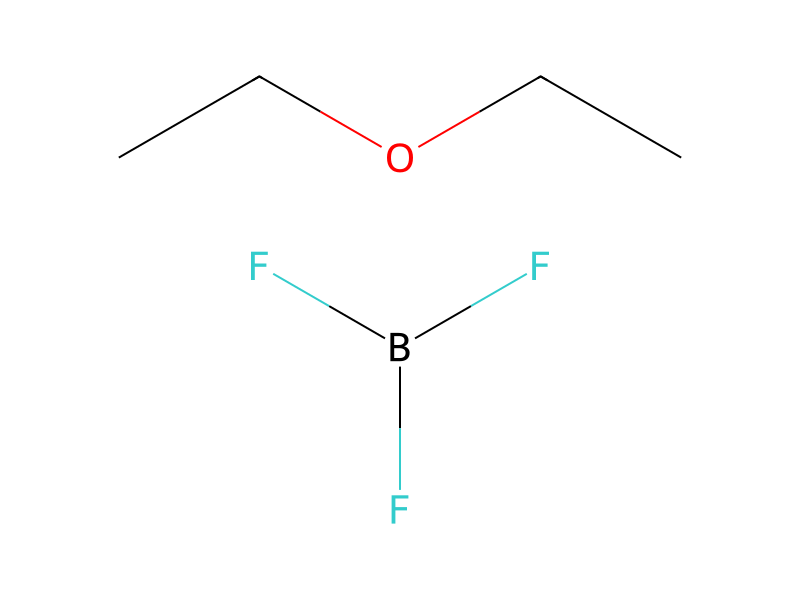
HCID 313Hydrochloric AcidHCID 8000Boron trifluoride etherateHCID 764674-IodobenzonitrileHCID 178418443HCID 178418443, compound

Product 1

HCID 231302211-(4-Iodophenyl)cyclopropanamineYield 23%

Reagents, catalysts & solvents 3

HCID 11026
Titanium isopropoxide
Catalyst
HCID 3283Diethyl EtherSolvent
HCID 8028TetrahydrofuranSolvent

Procedure

Titanium(IV) isopropoxide (7.1 mL) was added to a diethyl ether (0.14 L) solution of 4-iodobenzonitrile (5.0 g) and, with the internal temperature being kept at −60° C. or lower, a THF solution (53 mL) of 0.90 mol/L ethylmagnesium bromide was added dropwise. After the mixture was stirred for 1 hour at room temperature, boron trifluoride diethyl etherate (5.4 mL) was added, and the mixture was stirred for 3 hours at room temperature. Upon addition of 1.0 mol/L hydrochloric acid (65 mL), the aqueous layer was washed with diethyl ether. A 1.0 mol/L sodium hydroxide aqueous solution was added to the washed aqueous layer to bring it to pH 9. The precipitate was filtered out using Celite, and the filtrate was extracted with ethyl acetate. The extract was dried over magnesium sulfate, whereafter the desiccant was filtered out, and the solvent was distilled off under reduced pressure. The resulting residue was purified by OH type silica gel chromatography (gradient elution with hexane/ethyl acetate=50/50→1/99) to obtain 1-(4-iodophenyl)cyclopropylamine (light yellow solid) (1.3 g, 23%).


Workup

  1. custombeing kept at −60° C.
  2. stirringthe mixture was stirred for 3 hours at room temperature
  3. washthe aqueous layer was washed with diethyl ether
  4. additionA 1.0 mol/L sodium hydroxide aqueous solution was added to the washed aqueous layer
  5. filtrationThe precipitate was filtered out
  6. extractionthe filtrate was extracted with ethyl acetate
  7. dry with materialThe extract was dried over magnesium sulfate, whereafter the desiccant
  8. filtrationwas filtered out
  9. distillationthe solvent was distilled off under reduced pressure
  10. customThe resulting residue was purified by OH type silica gel chromatography (gradient elution with hexane/ethyl acetate=50/50→1/99)

Sources & evidence

ORD record
ord-0c03ca21360b48c5972d652cf98f1e76
Source dataset
uspto-grants-2015_07
DOI
10.6084/m9.figshare.5104873.v1
Patent number
US09073821B2

Reaction notes

On this pageParticipantsProcedureWorkupSources & evidenceReaction notes