HomeMCPWorkbenchSkills
HomeWorkbenchNotificationsMe
llms.txt · MCP GuidePrivacy Policy · Terms of Service · Supportv1.8.0
  1. Home
  2. /Reaction

Potassium Carbonate → 2-(4-Cyclopropyl-3-oxo-1-oxa-4,9-diazaspiro[5.5]undecan-9-yl)-2-(2-fluoro-4-(2-hydroxyquinolin-7-yl)phenyl)acetamide

HRID 1525912
Notes
Print preview

Reaction equation

HRID 1525912 reaction equation
Br[C:2]1[CH:7]=[CH:6][C:5]([CH:8]([N:12]2[CH2:26][CH2:25][C:15]3([O:20][CH2:19][C:18](=[O:21])[N:17]([CH:22]4[CH2:24][CH2:23]4)[CH2:16]3)[CH2:14][CH2:13]2)[C:9]([NH2:11])=[O:10])=[C:4]([F:27])[CH:3]=1.CC1(C)C(C)(C)OB(B2OC(C)(C)C(C)(C)O2)O1.C([O-])(=O)C.[K+].Cl[C:52]1[CH:61]=[C:60]2[C:55]([CH:56]=[CH:57][C:58]([OH:62])=[N:59]2)=[CH:54][CH:53]=1.C(=O)([O-])[O-].[K+].[K+]>O1CCOCC1.[Pd].CC(C1C=C(C(C)C)C(C2C(P(C3CCCCC3)C3CCCCC3)=CC=CC=2)=C(C(C)C)C=1)C.C1C=[C-]C(CCN)=CC=1.Cl[Pd+].C1C=CC(P(C2C=CC=CC=2)[C-]2C=CC=C2)=CC=1.C1C=CC(P(C2C=CC=CC=2)[C-]2C=CC=C2)=CC=1.Cl[Pd]Cl.[Fe+2].C(Cl)Cl>[CH:22]1([N:17]2[CH2:16][C:15]3([CH2:25][CH2:26][N:12]([CH:8]([C:5]4[CH:6]=[CH:7][C:2]([C:52]5[CH:61]=[C:60]6[C:55]([CH:56]=[CH:57][C:58]([OH:62])=[N:59]6)=[CH:54][CH:53]=5)=[CH:3][C:4]=4[F:27])[C:9]([NH2:11])=[O:10])[CH2:13][CH2:14]3)[O:20][CH2:19][C:18]2=[O:21])[CH2:24][CH2:23]1
ParticipantsConditionsProcedureWorkupSources & evidenceReaction notes

Participants

9

Reactant 5

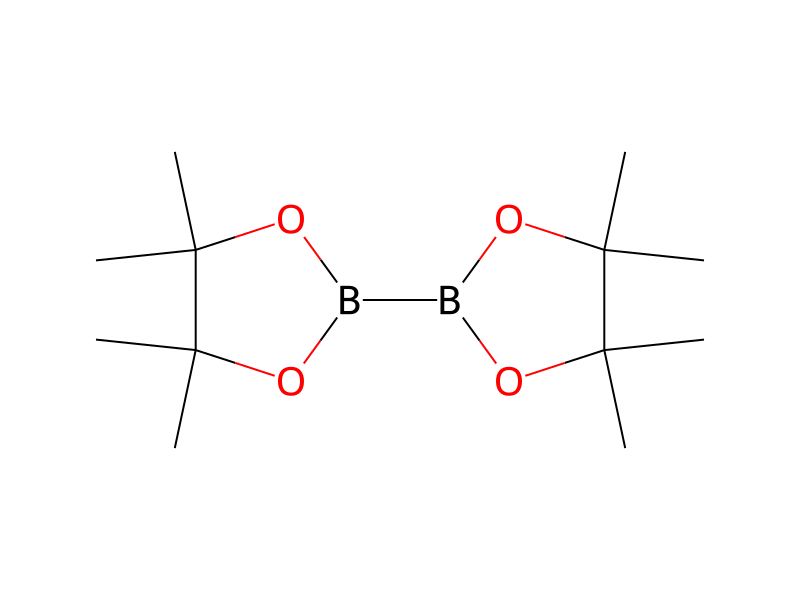
HCID 11430Potassium CarbonateHCID 517044Potassium AcetateHCID 2733548Bis(pinacolato)diboraneHCID 71271075HCID 71271075, compoundHCID 178515603HCID 178515603, compound

Product 1

HCID 178513870
2-(4-Cyclopropyl-3-oxo-1-oxa-4,9-diazaspiro[5.5]undecan-9-yl)-2-(2-fluoro-4-(2-hydroxyquinolin-7-yl)phenyl)acetamide
Yield 13.1%

Reagents, catalysts & solvents 3

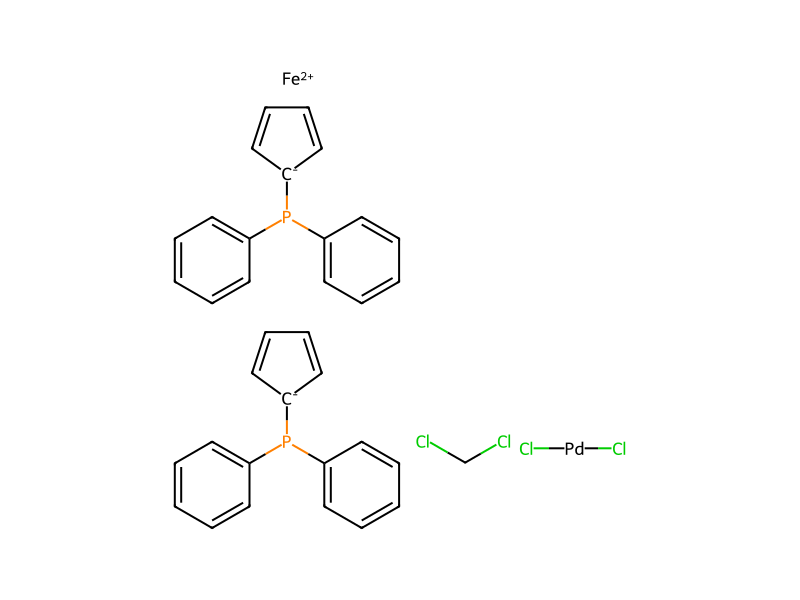
HCID 131731914Pd XPhos precatalystCatalystHCID 178418807HCID 178418807, compoundCatalystHCID 312751,4-DioxaneSolvent

Conditions

Temperature
90 °C

Procedure

A solution of 2-(4-bromo-2-fluorophenyl)-2-(4-cyclopropyl-3-oxo-1-oxa-4,9-diazaspiro[5.5]undecan-9-yl)acetamide (0.302 mmol) in 1,4-dioxane (1.5 mL) was treated with 4,4,4′,4′,5,5,5′,5′-octamethyl-2,2′-bi(1,3,2-dioxaborolane) (0.362 mmol), potassium acetate (0.453 mmol), and PdCl2(dppf)-CH2Cl2 adduct (0.030 mmol). The solution was degassed with a stream of nitrogen for 3 min, at which point the reaction vessel was purged with nitrogen and sealed, and the mixture stirred in an oil bath at 90° C. overnight. The reaction mixture was cooled to room temperature and was treated with 7-chloroquinolin-2-ol (0.302 mmol), 2M aq potassium carbonate (0.906 mmol), and Pd-XPhos Precatalyst (Strem 46-0268) (0.030 mmol). The reaction vessel was purged with nitrogen and sealed, and the mixture stirred in an bath at 90° C. for 16 h. The resulting black mixture was diluted with water (50 mL) and brine (20 mL) and was extracted three times with chloroform. The combined organic layers were dried over sodium sulfate, filtered and concentrated in vacuo. The resulting crude material was purified by reverse phase HPLC (10-40% acetonitrile with 0.1% TFA/water with 0.1% TFA). Fractions containing the desired product were combined and the pH of the resulting mixture was adjusted to ˜7 with saturated aq sodium bicarbonate. This mixture was concentrated to a minimal volume in vacuo and was then extracted three times with chloroform. The combined organic layers were dried over sodium sulfate, filtered and concentrated in vacuo. Purification of the residue by chiral HPLC (Chiralpak AS-H column, acetonitrile:methanol 9:1) followed by lyophilization from water (w/25% acetonitrile) afforded the title compound as a white solid (20 mg, 12%). MS(ES)+ m/e 505.2 [M+H]+, >99% ee, αD=+43 deg (c=0.02, acetonitrile:methano19:1).


Workup

  1. customThe solution was degassed with a stream of nitrogen for 3 min, at which
  2. customwas purged with nitrogen
  3. customsealed
  4. temperatureThe reaction mixture was cooled to room temperature
  5. customThe reaction vessel was purged with nitrogen
  6. customsealed
  7. stirringthe mixture stirred in an bath at 90° C. for 16 h
  8. additionThe resulting black mixture was diluted with water (50 mL) and brine (20 mL)
  9. extractionwas extracted three times with chloroform
  10. dry with materialThe combined organic layers were dried over sodium sulfate
  11. filtrationfiltered
  12. concentrationconcentrated in vacuo
  13. customThe resulting crude material was purified by reverse phase HPLC (10-40% acetonitrile with 0.1% TFA/water with 0.1% TFA)
  14. additionFractions containing the desired product
  15. concentrationThis mixture was concentrated to a minimal volume in vacuo
  16. extractionwas then extracted three times with chloroform
  17. dry with materialThe combined organic layers were dried over sodium sulfate
  18. filtrationfiltered
  19. concentrationconcentrated in vacuo
  20. customPurification of the residue by chiral HPLC (Chiralpak AS-H column, acetonitrile:methanol 9:1)

Sources & evidence

ORD record
ord-64ce38c93a6645439eb0f82a14b2f395
Source dataset
uspto-grants-2015_07
DOI
10.6084/m9.figshare.5104873.v1
Patent number
US09084794B2

Reaction notes

Loading…

On this pageParticipantsConditionsProcedureWorkupSources & evidenceReaction notes