HomeMCPWorkbenchSkills
HomeWorkbenchNotificationsMe
llms.txt · MCP GuidePrivacy Policy · Terms of Service · Supportv1.8.3
  1. Home
  2. /Reaction

Sodium Carbonate → 6-Fluoro-3,4-dimethoxy-2-(2-pyridyl)benzonitrile

HRID 1582378
Print

Reaction equation

HRID 1582378 reaction equation
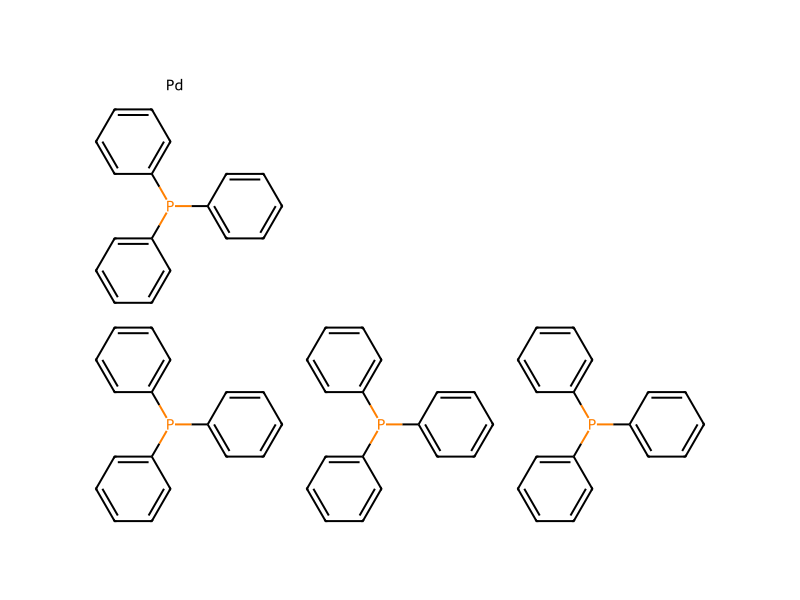
[F:1][C:2]1[C:7]([C:8]#[N:9])=[C:6](I)[C:5]([O:11][CH3:12])=[C:4]([O:13][CH3:14])[CH:3]=1.B([O-])O[C:17]1[CH:22]=[CH:21][CH:20]=[CH:19][N:18]=1.C(=O)([O-])[O-].[Na+].[Na+].C1(P(C2C=CC=CC=2)C2C=CC=CC=2)C=CC=CC=1>[Pd].C1(P(C2C=CC=CC=2)C2C=CC=CC=2)C=CC=CC=1.C1(P(C2C=CC=CC=2)C2C=CC=CC=2)C=CC=CC=1.C1(P(C2C=CC=CC=2)C2C=CC=CC=2)C=CC=CC=1.C1(P(C2C=CC=CC=2)C2C=CC=CC=2)C=CC=CC=1.[Cu]I.C(OCC)(=O)C.O.O1CCOCC1>[F:1][C:2]1[C:7]([C:8]#[N:9])=[C:6]([C:17]2[CH:22]=[CH:21][CH:20]=[CH:19][N:18]=2)[C:5]([O:11][CH3:12])=[C:4]([O:13][CH3:14])[CH:3]=1
ParticipantsProcedureWorkupSources & evidenceReaction notes

Participants

10

Reactant 4

HCID 10340Sodium CarbonateHCID 11776TriphenylphosphineHCID 227212146-Fluoro-2-iodo-3,4-dimethoxybenzonitrileHCID 178514833HCID 178514833, compound2×

Product 1

HCID 98138056-Fluoro-3,4-dimethoxy-2-(2-pyridyl)benzonitrileYield 49.3%

Reagents, catalysts & solvents 5

HCID 24350Copper(1+) iodide; Copper(I) iodide; Cuprous iodide; Cuprous iodide (CuI)Catalyst
HCID 11979704Tetrakis(triphenylphosphine)palladiumCatalyst
HCID 962WaterSolvent
HCID 8857Ethyl AcetateSolvent
HCID 312751,4-DioxaneSolvent

Procedure

Under nitrogen, stirred dioxane (20 ml) at 80° C. was charged with 6-fluoro-2-iodo-3,4-dimethoxybenzonitrile from Example 1(a) (1.0 g, 3.3 mmol), tetrakis(triphenyl-phosphine) palladium(0) (0.19 g, 0.16 mmol), the pyridyl boronate from Example 1(b) (1.22 g, estimated to be 7.1 mmol), copper(I)iodide (0.25 g, 1.3 mmol), sodium carbonate (0.69 g, 6.5 mmol) and triphenylphosphine (0.17 g, 0.65 mmol) and the resulting brown slurry heated to reflux. Further portions of the pyridyl boronate were added at the following times after the reaction had reached reflux: 0.61 g after 30 mins; 0.61 g after 1 hour; 0.61 g after 1 hour 30 mins; 0.61 g after 2 hours 30 mins; 0.61 g after 3 hours; and 0.30 g after 4 hours. After a total of 5 hours at reflux the reaction was allowed to cool to room temperature, water (10 ml) and ethyl acetate (20 ml) were added and the resulting mixture allowed to stir for 15 mins. After this time, the mixture was filtered through Arbocel™ filter aid and the pad washed with ethyl acetate (20 ml). The phases were separated and the aqueous phase extracted with ethyl acetate (20 ml). The organic phases were combined and evaporated to a brown oil. Acetonitrile was added, the mixture warmed to reflux and left to cool to room temperature overnight. The resulting suspension was filtered to give a cream solid that was dried in vacuo overnight at 45° C. to give 0.42 g of the title product (49%).


Workup

  1. temperaturehad reached reflux
  2. wait0.61 g after 1 hour
  3. wait0.61 g after 1 hour 30 mins
  4. wait0.61 g after 2 hours 30 mins
  5. wait0.61 g after 3 hours
  6. waitand 0.30 g after 4 hours
  7. temperatureAfter a total of 5 hours at reflux the reaction
  8. filtrationAfter this time, the mixture was filtered through Arbocel™
  9. filtrationfilter aid
  10. washthe pad washed with ethyl acetate (20 ml)
  11. customThe phases were separated
  12. extractionthe aqueous phase extracted with ethyl acetate (20 ml)
  13. customevaporated to a brown oil
  14. additionAcetonitrile was added
  15. temperaturethe mixture warmed
  16. temperatureto reflux
  17. waitleft
  18. temperatureto cool to room temperature overnight
  19. filtrationThe resulting suspension was filtered
  20. customto give a cream solid
  21. customthat was dried in vacuo overnight at 45° C.

Sources & evidence

ORD record
ord-7495d308c9a040b6888f8539120b865f
Source dataset
uspto-grants-2004_05
DOI
10.6084/m9.figshare.5104873.v1
Patent number
US06734303B2

Reaction notes

On this pageParticipantsProcedureWorkupSources & evidenceReaction notes