HomeMCPSkillsWorkbenchOpenChem
HomeWorkbenchNotificationsMe
llms.txt · skill.md · MCP GuidePrivacy Policy · Terms of Service · Supportv1.8.5
  1. Home
  2. /Reaction

Triethylamine → 2-[2-Chloro-4-(cyclopropylcarbonylamino)phenyl]methyl-4,4-dimethyl-3-isoxazolidinone

HRID 1583482
Print

Reaction equation

[NH2:1][C:2]1[CH:7]=[CH:6][C:5]([CH2:8][N:9]2[C:13](=[O:14])[C:12]([CH3:16])([CH3:15])[CH2:11][O:10]2)=[C:4]([Cl:17])[CH:3]=1.C(N(CC)CC)C.[CH:25]1([C:28](Cl)=[O:29])[CH2:27][CH2:26]1>O1CCCC1>[Cl:17][C:4]1[CH:3]=[C:2]([NH:1][C:28]([CH:25]2[CH2:27][CH2:26]2)=[O:29])[CH:7]=[CH:6][C:5]=1[CH2:8][N:9]1[C:13](=[O:14])[C:12]([CH3:15])([CH3:16])[CH2:11][O:10]1
ParticipantsProcedureWorkupSources & evidenceReaction notes

Participants

5

Reactant 3

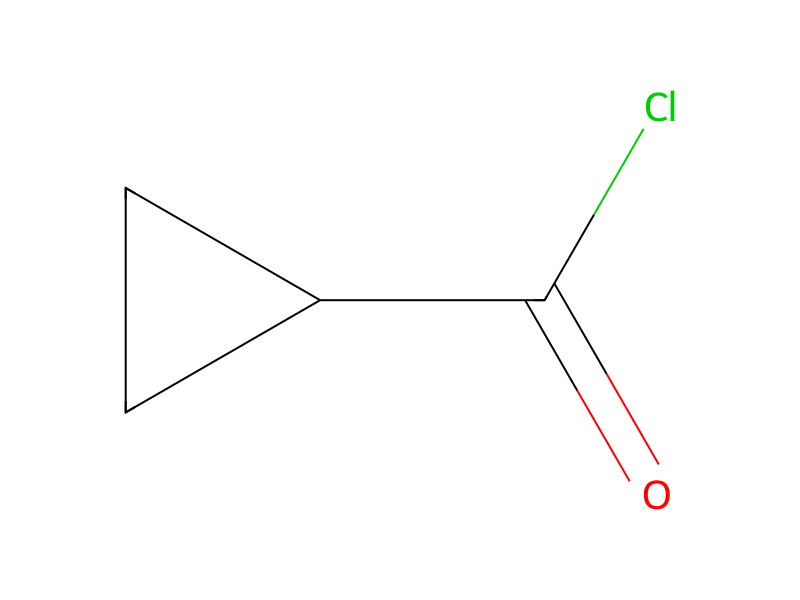
HCID 8471TriethylamineHCID 77637Cyclopropanecarbonyl chlorideHCID 135572192-(4-Amino-2-chlorophenyl)methyl-4,4-dimethyl-3-isoxazolidinone

Product 1

HCID 135572322-[2-Chloro-4-(cyclopropylcarbonylamino)phenyl]methyl-4,4-dimethyl-3-isoxazolidinoneYield 64.5%

Reagents, catalysts & solvents 1

HCID 8028
Tetrahydrofuran
Solvent
2×

Procedure

To a stirred solution of 3.0 grams (0.012 mole) of 2-(4-amino-2-chlorophenyl)methyl-4,4-dimethyl-3-isoxazolidinone and 1.2 grams (0.012 mole) of triethylamine in 30 ml of tetrahydrofuran was added dropwise 1.4 grams (0.013 mole) of cyclopropanecarboxylic acid chloride in 20 ml of tetrahydrofuran. During the addition the reaction mixture was cooled in an ice-water bath. Upon completion of addition the reaction mixture stirred for 16 hours; then was concentrated under reduced pressure to a residual solid. The solid was dissolved in 250 ml of methylene chloride. The solid was washed with water, which caused the precipitation of a solid that was insoluble in the liquid phases. The solid was removed by filtration. The organic phase was separated and washed with three 100 ml portions of water. The organic phase was dried with magnesium sulfate and filtered. The filtrate was concentrated under reduced pressure to a residual solid. Both solids collected were subjected to thin layer chromatography and were determined to be the same material. The solids were combined and recrystallized from ethyl acetate/acetonitrile to give 2.5 grams of 2-[2-chloro-4-(cyclopropylcarbonylamino)phenyl]methyl-4,4-dimethyl-3-isoxazolidinone; m.p. 191°-193° C.


Workup

  1. additionDuring the addition the reaction mixture
  2. temperaturewas cooled in an ice-water bath
  3. additionUpon completion of addition the reaction mixture
  4. concentrationthen was concentrated under reduced pressure to a residual solid
  5. dissolutionThe solid was dissolved in 250 ml of methylene chloride
  6. washThe solid was washed with water, which
  7. customthe precipitation of a solid
  8. customThe solid was removed by filtration
  9. customThe organic phase was separated
  10. washwashed with three 100 ml portions of water
  11. dry with materialThe organic phase was dried with magnesium sulfate
  12. filtrationfiltered
  13. concentrationThe filtrate was concentrated under reduced pressure to a residual solid
  14. customBoth solids collected
  15. customrecrystallized from ethyl acetate/acetonitrile

Sources & evidence

ORD record
ord-7931df10fac748ef84914c71b0262951
Source dataset
uspto-grants-1985_11
DOI
10.6084/m9.figshare.5104873.v1
Patent number
US04552585

Reaction notes

On this pageParticipantsProcedureWorkupSources & evidenceReaction notes