HomeMCPSkillsWorkbenchOpenChem
HomeWorkbenchNotificationsMe
llms.txt · skill.md · MCP GuidePrivacy Policy · Terms of Service · Supportv1.8.4
  1. Home
  2. /Reaction

Triphenylphosphine → [1-(4-Chloro-phenyl)-cyclobutyl]-[3-(4-trifluoromethylphenoxymethyl)-azepan-1-yl]-methanone

HRID 1593095
Print

Reaction equation

[Cl:1][C:2]1[CH:7]=[CH:6][C:5]([C:8]2([C:12]([N:14]3[CH2:20][CH2:19][CH2:18][CH2:17][CH:16]([CH2:21][OH:22])[CH2:15]3)=[O:13])[CH2:11][CH2:10][CH2:9]2)=[CH:4][CH:3]=1.C1(P(C2C=CC=CC=2)C2C=CC=CC=2)C=CC=CC=1.[F:42][C:43]([F:52])([F:51])[C:44]1[CH:49]=[CH:48][C:47](O)=[CH:46][CH:45]=1.N(C(OCC)=O)=NC(OCC)=O.[OH-].[Na+]>O1CCCC1.C(OCC)(=O)C>[Cl:1][C:2]1[CH:3]=[CH:4][C:5]([C:8]2([C:12]([N:14]3[CH2:20][CH2:19][CH2:18][CH2:17][CH:16]([CH2:21][O:22][C:47]4[CH:48]=[CH:49][C:44]([C:43]([F:52])([F:51])[F:42])=[CH:45][CH:46]=4)[CH2:15]3)=[O:13])[CH2:11][CH2:10][CH2:9]2)=[CH:6][CH:7]=1


ParticipantsConditionsProcedureWorkupSources & evidenceReaction notes

Participants

8

Reactant 5

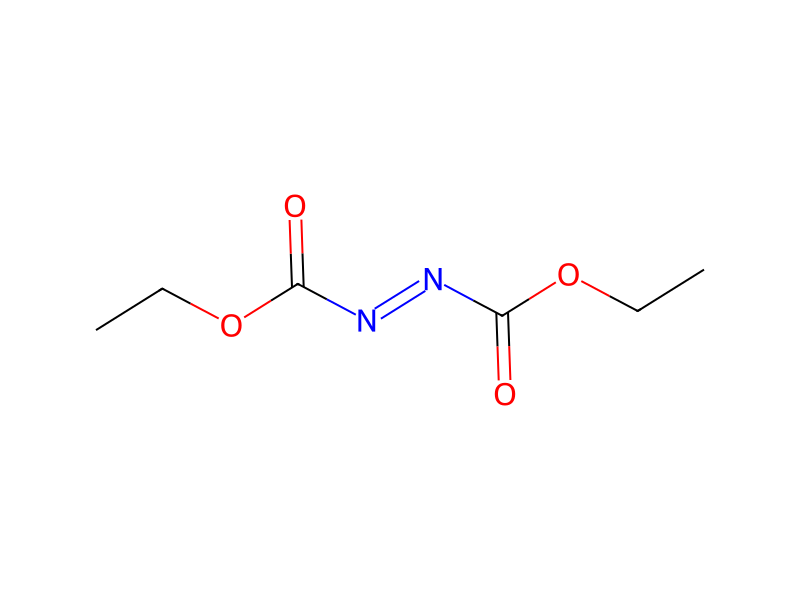
HCID 11776TriphenylphosphineHCID 14798Sodium HydroxideHCID 678744-(Trifluoromethyl)phenolHCID 220568ethyl N-ethoxycarbonyliminocarbamateHCID 21902048[1-(4-Chloro-phenyl)-cyclobutyl]-(3-hydroxymethyl-azepan-1-yl)-methanone

Product 1

HCID 21902106
[1-(4-Chloro-phenyl)-cyclobutyl]-[3-(4-trifluoromethylphenoxymethyl)-azepan-1-yl]-methanone
Yield 26%

Reagents, catalysts & solvents 2

HCID 8028TetrahydrofuranSolventHCID 8857Ethyl AcetateSolvent

Conditions

Temperature
0 °C

Procedure

To a room temperature solution of [1-(4-Chloro-phenyl)-cyclobutyl]-(3-hydroxymethyl-azepan-1-yl)-methanone (0.3307 g, 1.15 mmol) in tetrahydrofuran (5.75 mL, 0.2M) under N2 was added triphenyl phosphine (0.9050 g, 3.45 mmol) and 4-trifluoromethylphenol (0.56 mL, 3.45 mmol). The solution was cooled to 0° C., then diethyl azodicarboxylate (0.54 mL, 3.1 mmol) was added dropwise over 10 minutes. When the reaction was complete by H PLC (2 hours), ethyl acetate and 10% aqueous NaOH was added. The organics were removed, dried with Na2SO4, concentrated, then taken up in Hexanes/ethyl acetate (70:30) and filtered to remove triphenyl phosphine oxide. The remaining yellow oil was purified by silica gel chromatography (3:1 to 2:3 Hexanes:ethyl acetate). The product was further purified by silica gel chromatography with 9:1 hexanes:ethyl acetate to obtain pure product in 26% yield (0.1301 g). Partial 1H NMR (CDCl3, 300 MHz) 7.55 (2H, t, J=8.7 Hz), 7.36-7.26 (4H, m), 6.92 (2H, dd, J=34.9, 8.7 Hz), 4.00-3.85 (2H, m), ppm. Partial 13C NMR (CDCl3, 75 MHz) 174.95, 161.66, 142.17, 132.35, 129.10, 126.95, 126.77, 114.61, 114.61, 71.50, 71.10 ppm. LRMS: 465.26.

Workup

  1. additionwas added
  2. customThe organics were removed
  3. dry with materialdried with Na2SO4
  4. concentrationconcentrated
  5. filtrationfiltered
  6. customto remove triphenyl phosphine oxide
  7. customThe remaining yellow oil was purified by silica gel chromatography (3:1 to 2:3 Hexanes:ethyl acetate)
  8. customThe product was further purified by silica gel chromatography with 9:1 hexanes
  9. customethyl acetate to obtain pure product in 26% yield (0.1301 g)

Sources & evidence

ORD record
ord-6f067ffd89544a9382823cc70c566631
Source dataset
uspto-grants-2007_11
DOI
10.6084/m9.figshare.5104873.v1
Patent number
US07294637B2

Reaction notes

On this pageParticipantsConditionsProcedureWorkupSources & evidenceReaction notes