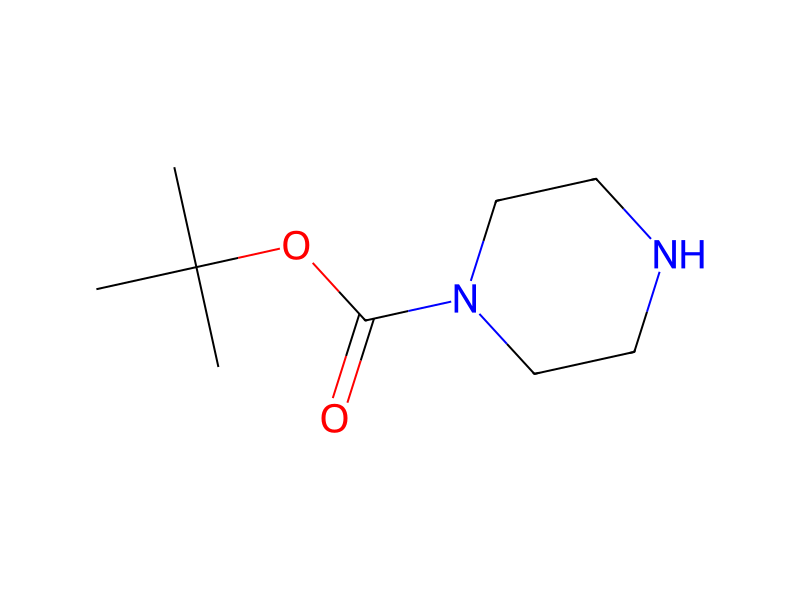
A mixture of (±)-2-(4-fluorophenyl)propyl bromide (3.03 g, 13.96 mmol), N-Boc-piperazine (2.60 g, 13.96 mmol), potassium carbonate (3.86 g, 27.93 mmol) and sodium iodide (2.09 g, 13.96 mmol), in anhydrous isopropyl alcohol (100 ml) was refluxed for 16 h. The inorganics were filtered off and the solvent evaporated in vacuo. The resulting residue was partitioned between CH2Cl2 (3×150 ml) and water (50 ml). The combined extracts were dried (Na2SO4) and evaporated and the residue chromatographed on silica gel eluting with hexane to give 1.8 g (40%) of product. This material was dissolved in 99% formic acid (50 ml) and the solution stirred at room temperature for 16 h. The solvent was removed under vacuum and the residue basified by addition of saturated K2CO3 solution and then extracted with n-butanol (100 ml). The n-butanol was evaporated in vacuo and the residue chromatographed on silica gel eluting with CH2Cl2 /MeOH/NH3 (60:8:1) to give the title-product (0.34 g, 27%), δ(360 MHz, CDCl3) 1.24 (3H, d, J=7.0 Hz, Me), 2.30-2.46 (6H, m, 3 of CH2), 2.78-2.98 (5H, m, 2 of CH2 and CH), 6.94-7.00 (2H, m, Ar--H), 7.12-7.26 (2H, m, Ar--H).