HomeMCPSkillsWorkbenchOpenChem
HomeWorkbenchNotificationsMe
llms.txt · skill.md · MCP GuidePrivacy Policy · Terms of Service · Supportv1.8.5
  1. Home
  2. /Reaction

Diisopropylamine → (2,5-Difluoropyridin-4-yl)boronic acid

HRID 1623345
Print

Reaction equation

C(NC(C)C)(C)C.C([Li])CCC.[Li+].CC([N-]C(C)C)C.[F:21][C:22]1[CH:27]=[CH:26][C:25]([F:28])=[CH:24][N:23]=1.[B:29](OC(C)C)([O:34]C(C)C)[O:30]C(C)C>C1COCC1>[F:21][C:22]1[CH:27]=[C:26]([B:29]([OH:34])[OH:30])[C:25]([F:28])=[CH:24][N:23]=1
ParticipantsConditionsProcedureWorkupSources & evidenceReaction notes

Participants

7

Reactant 5

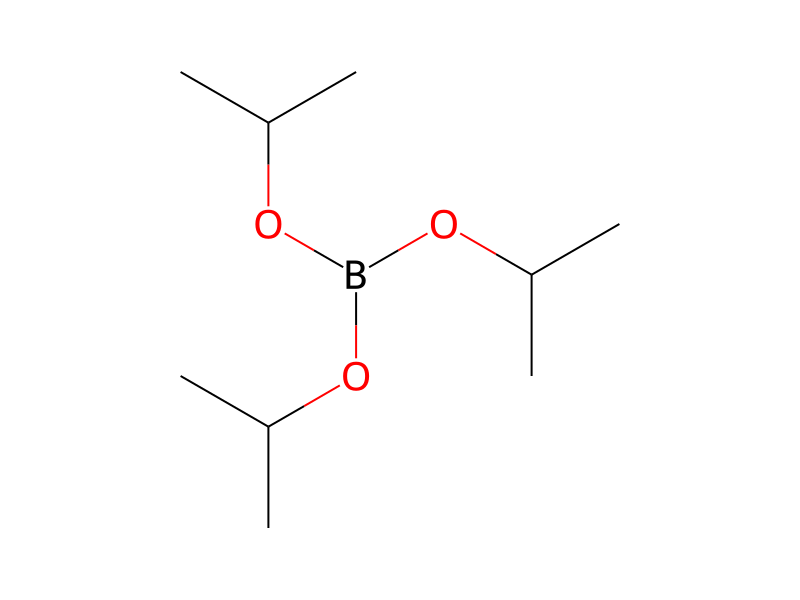
HCID 7912DiisopropylamineHCID 21531Triisopropyl borateHCID 2724682Lithium diisopropylamide3×HCID 27628712,5-DifluoropyridineHCID 178418339Butyllithium

Product 1

HCID 53485463(2,5-Difluoropyridin-4-yl)boronic acidYield 44%

Reagents, catalysts & solvents 1

HCID 8028TetrahydrofuranSolvent3×

Conditions

Temperature
-20 °C

Procedure

Diisopropylamine (1.74 ml, 1.24 g, 12.20 mmol) was dissolved in anhydrous THF (22 ml) and placed under argon. The solution was cooled to −20° C. and then treated with n-butyllithium (7.66 ml, 12.25 mmol, 1.6 M in hexanes) by slow addition over 10 min. The newly formed LDA (LDA=lithium diisopropylamide, this acronyl should be listed in the general session) was then cooled to −78° C. and treated with a solution of 2,5-difluoropyridine (1.05 ml, 1.33 g, 11.56 mmol) dissolved in anhydrous THF (3 ml) by slow addition over 30 min. Once the addition was complete the reaction mixture was allowed to stir at −78° C. for 4 hr. At this time the reaction mixture was treated with a solution of triisopropyl borate (5.90 ml, 4.78 g, 25.4 mmol) dissolved in anhydrous THF (8.6 ml) by dropwise addition. Once the addition was complete the reaction mixture was allowed to warm to ambient temperature then stirred at ambient temperature for an additional hour. The reaction mixture was then quenched by adding 4% aq NaOH (34 ml). The layers were separated and the aqueous layer was cooled in an ice bath. It was then acidified to pH=4 with 6N HCl (˜10 ml) not letting the temperature go above 10° C. This was then extracted with EtOAc (3×50 ml). The extracts were then washed with brine (1×50 ml), dried (Na2SO4), filtered, and the solvent removed in vacuo. The resulting residue was triturated with Et2O to give 0.8084 g (44%) of 2,5-difluoropyridin-4-ylboronic acid.


Workup

  1. temperaturewas then cooled to −78° C.
  2. additionOnce the addition
  3. additionOnce the addition
  4. temperatureto warm to ambient temperature
  5. stirringthen stirred at ambient temperature for an additional hour
  6. customThe reaction mixture was then quenched
  7. additionby adding 4% aq NaOH (34 ml)
  8. customThe layers were separated
  9. temperaturethe aqueous layer was cooled in an ice bath
  10. customgo above 10° C
  11. extractionThis was then extracted with EtOAc (3×50 ml)
  12. washThe extracts were then washed with brine (1×50 ml)
  13. dry with materialdried (Na2SO4)
  14. filtrationfiltered
  15. customthe solvent removed in vacuo
  16. customThe resulting residue was triturated with Et2O

Sources & evidence

ORD record
ord-cca28c1a68d14ecdb316ec0c7a5d2759
Source dataset
uspto-grants-2014_07
DOI
10.6084/m9.figshare.5104873.v1
Patent number
US08778951B2

Reaction notes

On this pageParticipantsConditionsProcedureWorkupSources & evidenceReaction notes