HomeMCPWorkbenchSkills
HomeWorkbenchNotificationsMe
llms.txt · MCP GuidePrivacy Policy · Terms of Service · Supportv1.8.3
  1. Home
  2. /Reaction

Cesium carbonate → 4-Acridinamine

HRID 1636524
Print

Reaction equation

HRID 1636524 reaction equation
O[C:2]1[C:15]2[C:6](=[CH:7][C:8]3[C:13]([N:14]=2)=[CH:12][CH:11]=[CH:10][CH:9]=3)[CH:5]=[CH:4][CH:3]=1.[H-].[Na+].C([O-])([O-])=O.[Cs+].[Cs+].BrC(C)(C)C([NH2:28])=O>O1CCOCC1.CCOC(C)=O.CCCCCC.CN1C(=O)N(C)CCC1.CN1C(=O)CCC1>[NH2:28][C:2]1[C:15]2[C:6](=[CH:7][C:8]3[C:13]([N:14]=2)=[CH:12][CH:11]=[CH:10][CH:9]=3)[CH:5]=[CH:4][CH:3]=1
ParticipantsProcedureWorkupSources & evidenceReaction notes

Participants

9

Reactant 4

HCID 10796Cesium carbonateHCID 24758Sodium hydride2×HCID 874624-HydroxyacridineHCID 1012352-Bromo-2-methylpropanamide

Product 1

HCID 113534-AcridinamineYield 18.1%

Reagents, catalysts & solvents 4

HCID 13387
N-methyl-2-pyrrolidone
Solvent
HCID 312751,4-DioxaneSolvent
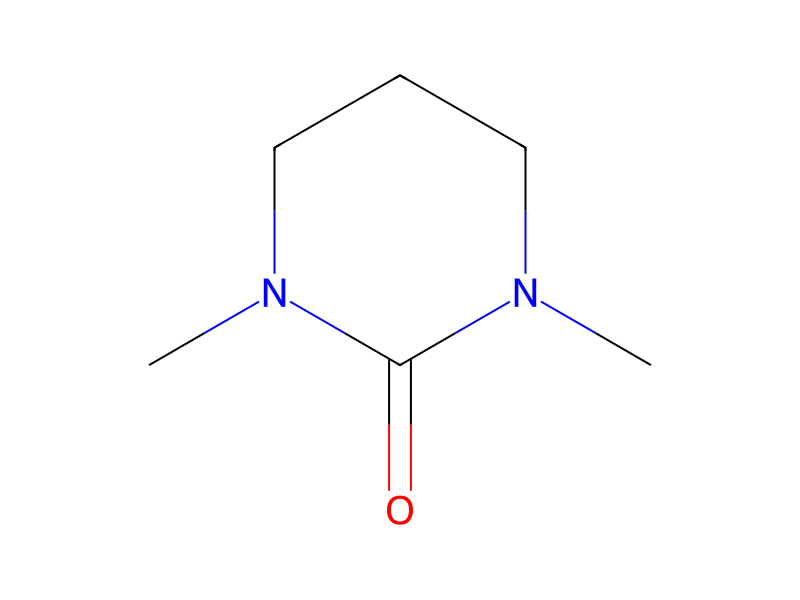
HCID 816462(1H)-Pyrimidinone, tetrahydro-1,3-dimethyl-Solvent
HCID 21226206Ethyl acetate hexaneSolvent

Procedure

To a solution of 4-hydroxyacridine (722 mg, 3.70 mmol) in dioxane (20 mL) was added NaH (Aldrich, dry, 300 mg, 12.2 mmol) and Cs2CO3 (4.00 g, 12.2 mmol). The resulting mixture was stirred at room temperature for about 30 minutes, then 2-bromo-2-methyl-propanamide (2.03 g, 12.2 mmol) was added and the resulting mixture was stirred at reflux for 16 h. After the reflux period, NMP (20 mL), DMPU (2 mL), and NaH (Aldrich, dry, 100 mg, 4.07 mmol) were added. The resulting mixture was stirred at 150° C. for 72 h. The reaction was cooled to room temp., and partitioned between water (50 mL) and EtOAc (100 mL). The aqueous layer was extracted with EtOAc (100 mL) and the combined organics washed with water (2×50 mL), dried (Na2SO4), and concentrated to about 3 g of material. The brown oil was chromatographed on silica (200 mL, 4 cm diam. column), eluting with 1:9 then 3:7 EtOAc/hexane to obtain 4-aminoacridine as a brown solid (130 mg, 0.67 mmol, 18.1% yield).: mp 98-100° C. (lit 105-106° C., Albert, A. et. al., Chemistry and Industry (London), 1941, 60, 122T); 1H NMR (300 MHz, CDCl3) δ8.66 (s, 1 H), 8.23-8.19 (m, 1 H), 7.98-7.95 (m, 1 H), 7.74-7.69 (m, 1 H), 7.53-7.48 (m, 1 H), 7.34 (d, 1 H, J=1.72 Hz), 6.94 (dd, 1 H, J=3.32 Hz), 5.23 (br s, 2 H, N--H2); MS (CI/NH3) 195; IR 3377 (NH).


Workup

  1. stirringthe resulting mixture was stirred
  2. temperatureat reflux for 16 h
  3. stirringThe resulting mixture was stirred at 150° C. for 72 h
  4. temperatureThe reaction was cooled to room temp.
  5. custompartitioned between water (50 mL) and EtOAc (100 mL)
  6. extractionThe aqueous layer was extracted with EtOAc (100 mL)
  7. washthe combined organics washed with water (2×50 mL)
  8. dry with materialdried (Na2SO4)
  9. concentrationconcentrated to about 3 g of material
  10. customThe brown oil was chromatographed on silica (200 mL, 4 cm diam. column)
  11. washeluting with 1:9

Sources & evidence

ORD record
ord-233a362997354aeea7c26d686693776d
Source dataset
uspto-grants-2000_03
DOI
10.6084/m9.figshare.5104873.v1
Patent number
US06034241

Reaction notes

On this pageParticipantsProcedureWorkupSources & evidenceReaction notes