HomeMCPWorkbenchSkills
HomeWorkbenchNotificationsMe
llms.txt · MCP GuidePrivacy Policy · Terms of Service · Supportv1.8.3
  1. Home
  2. /Reaction

Hydrochloric Acid → 3-(3-Chloropyrazinyl)-1-azabicyclo[2.2.2]octan-3-ol

HRID 1646929
Print

Reaction equation

HRID 1646929 reaction equation
CC1(C)CCCC(C)(C)N1.C([Li])CCC.[Cl:16][C:17]1[CH:22]=[N:21][CH:20]=[CH:19][N:18]=1.[N:23]12[CH2:30][CH2:29][CH:26]([CH2:27][CH2:28]1)[C:25](=[O:31])[CH2:24]2.Cl>C1COCC1.CCCCCC.C(O)C>[Cl:16][C:17]1[C:22]([C:25]2([OH:31])[CH:26]3[CH2:29][CH2:30][N:23]([CH2:28][CH2:27]3)[CH2:24]2)=[N:21][CH:20]=[CH:19][N:18]=1
ParticipantsConditionsProcedureWorkupSources & evidenceReaction notes

Participants

9

Reactant 5

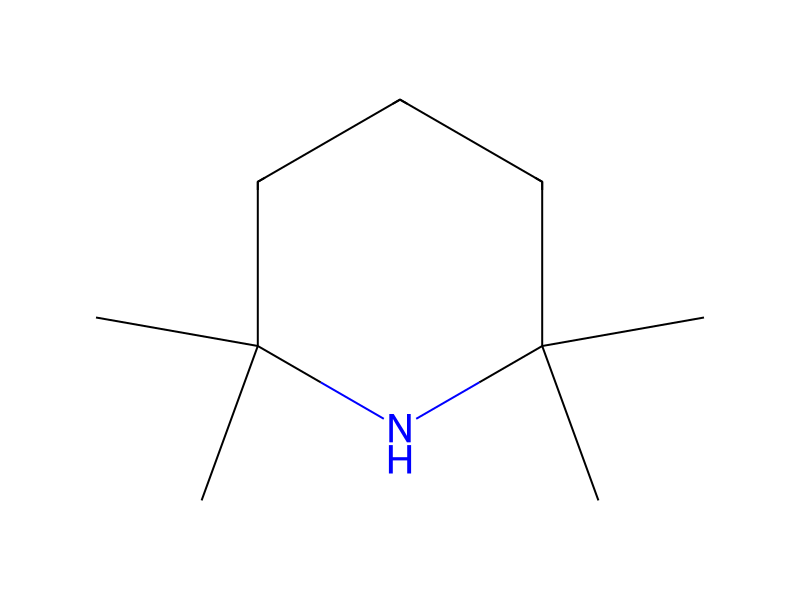
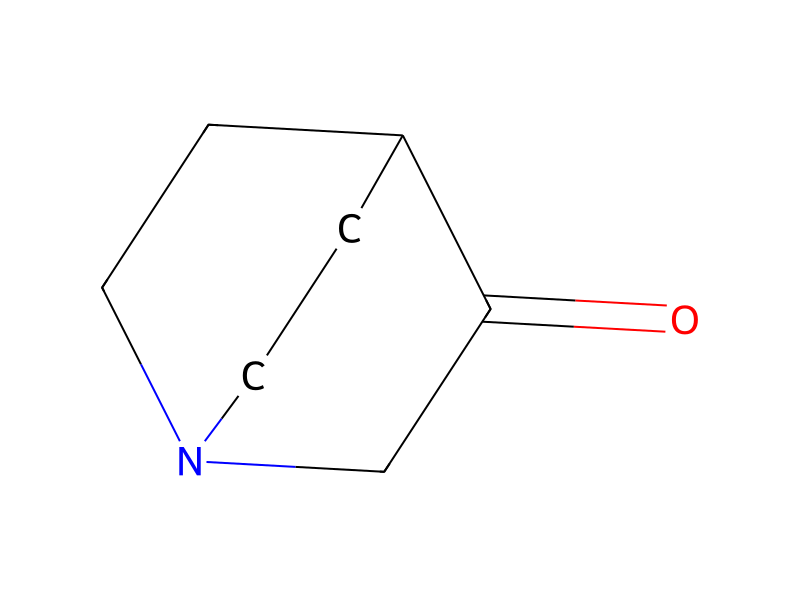
HCID 313Hydrochloric AcidHCID 130352,2,6,6-TetramethylpiperidineHCID 195073-QuinuclidinoneHCID 73277ChloropyrazineHCID 178418339Butyllithium

Product 1

HCID 103318403-(3-Chloropyrazinyl)-1-azabicyclo[2.2.2]octan-3-olYield 84.8%

Reagents, catalysts & solvents 3

HCID 702EthanolSolventHCID 8028TetrahydrofuranSolvent3×HCID 8058HexaneSolvent

Conditions

Temperature
-77 °C

Procedure

A solution of 7.2 ml 2,2,6,6-tetramethylpiperidine (0.034 mol) in 300 ml of dry THF was cooled to -8° C. as 25 ml of 1.6 M butyllithium (0.04 mol) in hexane was added dropwise. The reaction was stirred 20 min then cooled to -77° C. A solution of 2.9 ml of 2-chloropyrazine (0.031 mol) in 5 ml of THF was added to the reaction dropwise. After 15 min, 4.4 g of 3-quinuclidinone (0.0352 mol) in 5 ml of THF was added dropwise and the reaction stirred another 1.5 h. A solution of 8 ml of concentrated HCl and 4 ml of ethanol was added and the cooling was removed. When the temperature reached -5° C., 20 ml of 5 N NaOH was added and the volatile organics were evaporated. The residue was suspended in 50 ml of ice-water and the mixture filtered. The aqueous filtrate was extracted 3× with 50 ml of CHCl3. The extracts were combined with the solid collected from the filtration and the volume of the mixture adjusted to 450 ml with additional CHCl3. The mixture was heated on a steam bath until most of the solid had dissolved. The mixture was dried, filtered, and the solvent evaporated to give a dark brown solid that was recrystallized from isopropanol to give 6.3 g of (7), mp 215°-216° C. NMR ppm (CDCl3) 1.25(1H, m), 1.5 (2H, m), 2.2 (1H, m), 2.65-3.1 (6H, m), 3.6 (1H, bs), 4.05 (1H, d), 8.3 (1H, d), 8.5 (1H, d). Anal. C11H14ClN3O requires C: 55.12; H: 5.89; N: 17.53%. Found C: 55.21; H: 5.99; N: 17.30%.


Workup

  1. additionwas added dropwise
  2. waitAfter 15 min
  3. stirringthe reaction stirred another 1.5 h
  4. customthe cooling was removed
  5. customreached -5° C.
  6. addition20 ml of 5 N NaOH was added
  7. customthe volatile organics were evaporated
  8. filtrationthe mixture filtered
  9. extractionThe aqueous filtrate was extracted 3× with 50 ml of CHCl3
  10. filtrationcollected from the filtration
  11. temperatureThe mixture was heated on a steam bath until most of the solid
  12. dissolutionhad dissolved
  13. customThe mixture was dried
  14. filtrationfiltered
  15. customthe solvent evaporated
  16. customto give a dark brown solid that
  17. customwas recrystallized from isopropanol

Sources & evidence

ORD record
ord-55f5b7981e4e47ad958cedca318c042d
Source dataset
uspto-grants-1993_01
DOI
10.6084/m9.figshare.5104873.v1
Patent number
US05182283

Reaction notes

On this pageParticipantsConditionsProcedureWorkupSources & evidenceReaction notes