HomeMCPWorkbenchSkills
HomeWorkbenchNotificationsMe
llms.txt · MCP GuidePrivacy Policy · Terms of Service · Supportv1.8.3
  1. Home
  2. /Reaction

Triphenylphosphine → Ethyl 2-(diethoxyphosphinyl)-3-[2-(1-tridecynyl)phenyl]-2-E-propenoate

HRID 1647963
Print

Reaction equation

HRID 1647963 reaction equation
Br[C:2]1[CH:7]=[CH:6][CH:5]=[CH:4][C:3]=1/[CH:8]=[C:9](/[P:15]([O:20][CH2:21][CH3:22])([O:17][CH2:18][CH3:19])=[O:16])\[C:10]([O:12][CH2:13][CH3:14])=[O:11].[CH:23]#[C:24][CH2:25][CH2:26][CH2:27][CH2:28][CH2:29][CH2:30][CH2:31][CH2:32][CH2:33][CH2:34][CH3:35].C1(P(C2C=CC=CC=2)C2C=CC=CC=2)C=CC=CC=1>C([O-])(=O)C.[Pd+2].C([O-])(=O)C.C(N(CC)CC)C>[CH2:18]([O:17][P:15]([O:20][CH2:21][CH3:22])(/[C:9](=[CH:8]/[C:3]1[CH:4]=[CH:5][CH:6]=[CH:7][C:2]=1[C:23]#[C:24][CH2:25][CH2:26][CH2:27][CH2:28][CH2:29][CH2:30][CH2:31][CH2:32][CH2:33][CH2:34][CH3:35])/[C:10]([O:12][CH2:13][CH3:14])=[O:11])=[O:16])[CH3:19]
ParticipantsProcedureWorkupSources & evidenceReaction notes

Participants

6

Reactant 3

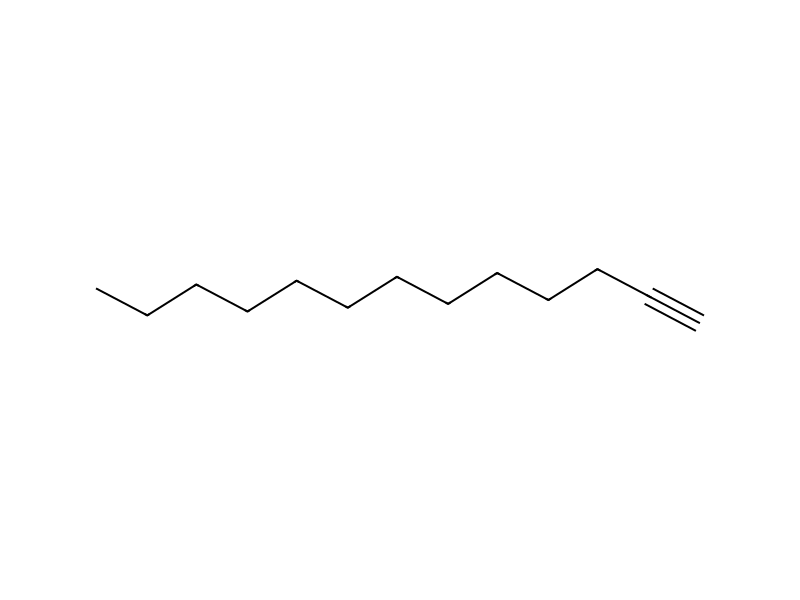
HCID 11776TriphenylphosphineHCID 1177541-Tridecyne2×HCID 5936150Ethyl 3-(2-bromophenyl)-2-E-(diethoxyphosphinyl)propenoate

Product 1

HCID 15284941Ethyl 2-(diethoxyphosphinyl)-3-[2-(1-tridecynyl)phenyl]-2-E-propenoateYield 25.3%

Reagents, catalysts & solvents 2

HCID 167845
palladium(II) acetate
Catalyst
HCID 8471TriethylamineSolvent

Procedure

Ethyl 3-(2-bromophenyl)-2-E-(diethoxyphosphinyl)propenoate (7.84 g, 20.0 mmol) prepared according to Example 4 was placed in a three neck round bottom flask equipped with a condenser, stir bar, internal thermometer, and argon inlet. 1-Tridecyne (6.30 g, 34.9 mmol) and triphenylphosphine (0.161 g, 0.614 mmol) were added along with triethylamine (110 ml) and the system was degassed by repeated vacuum-argon cycles. Under an argon atmosphere, palladium acetate (0.048, 0.214 mmol) was added, and heating in an oil bath (100°-105° C.) was started. The internal temperature stayed in the range of 89°-92° C. during the reaction. Within a few hours a light precipitate started forming. After about 42 hours, additional tridecyne (1.0 g, 5.5 mmol) was added. The reaction was stopped after 53 hours. After cooling the reaction mixture was filtered and the precipitate was washed with triethylamine. The filtrate was stripped down to a reddish oil. Multiple chromatographies on silica eluting with ethyl acetate in hexane (32% ethyl acetate was best) yielded a yellow liquid, 2.43 g, 5.08 mmol, 25.3% yield; 1H NMR (CDCl3) ∂ 0.88 (m, 3H), 1.17 (t, J=7.2 Hz, 3H), 1.21 to 1.48 (several m, 22H), 1.64 (quintet, J=7.5 Hz, 2H), 2.43 (t, J=7.2 Hz, 2H), 4.22 (m, 4H), 7.19 to 7.48 (several m, 4H), 8.06 (d, J=23.7 Hz, 1H); CI mass spectrum m/z 491 (M+H)+.

Workup

  1. customequipped with a condenser
  2. customthe system was degassed by repeated vacuum-argon cycles
  3. temperatureheating in an oil bath (100°-105° C.)
  4. customThe internal temperature stayed in the range of 89°-92° C. during the reaction
  5. customWithin a few hours a light precipitate started forming
  6. waitThe reaction was stopped after 53 hours
  7. temperatureAfter cooling the reaction mixture
  8. filtrationwas filtered
  9. washthe precipitate was washed with triethylamine
  10. customyielded a yellow liquid, 2.43 g, 5.08 mmol, 25.3% yield

Sources & evidence

ORD record
ord-04577cdbf7db42798f426dadb72042ea
Source dataset
uspto-grants-1995_07
DOI
10.6084/m9.figshare.5104873.v1
Patent number
US05434288

Reaction notes

On this pageParticipantsProcedureWorkupSources & evidenceReaction notes