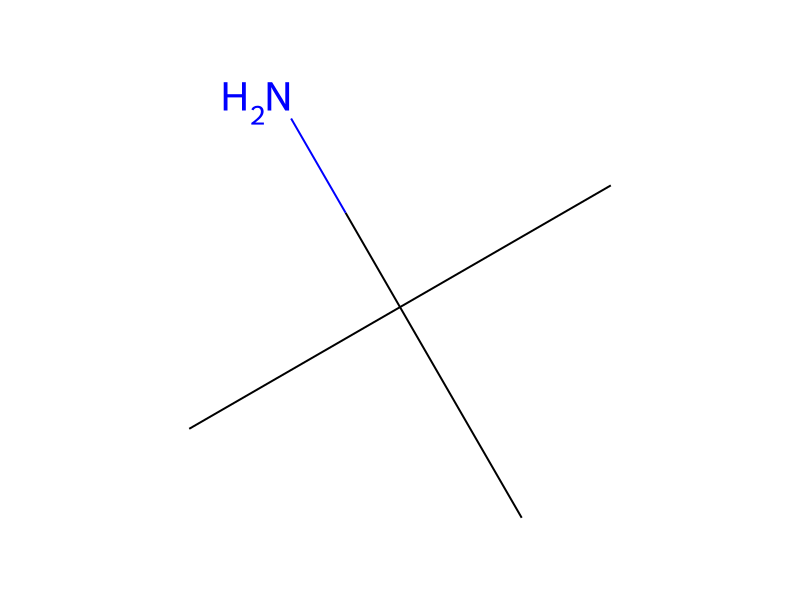
To a solution of 4,4-dicyclopropyl-2-cyclopenten-1-ol (0.52 g) in acetone (5 ml) were added methanesulfonyl chloride (0.27 ml) and triethylamine (0.49 ml) with ice bath cooling. After being stirred for 10 minutes, sodium iodide (0.52 g) was added thereto, and the mixture was stirred for 10 minutes. To the mixture was added t-butylamine (6.4 ml), and the mixture was stirred at room temperature overnight. The solvent was evaporated in vacuo, and then cold water was added thereto, and the mixture was extracted with ethyl acetate. The extract was washed with brine, dried over sodium sulfate, and evaporated in vacuo. The residue was dissolved in ethyl acetate, and hydrogen chloride in ethanol (8.9N, 0.5 ml) was added thereto, and evaporated in vacuo. The residue was crystallized from diethyl ether to give N-t-butyl-4,4-dicyclopropyl-2-cyclopentenylamine hydrochloride (0.51 g). These crystals were recrystallized from a mixture of isopropyl alcohol and ethyl acetate to give pure one (0.41 g).