HomeMCPWorkbenchSkills
HomeWorkbenchNotificationsMe
llms.txt · MCP GuidePrivacy Policy · Terms of Service · Supportv1.8.3
  1. Home
  2. /Reaction

Isopropyl iodide → 2-Isopropoxy-5-nitrobenzaldehyde

HRID 1667598
Print

Reaction equation

HRID 1667598 reaction equation
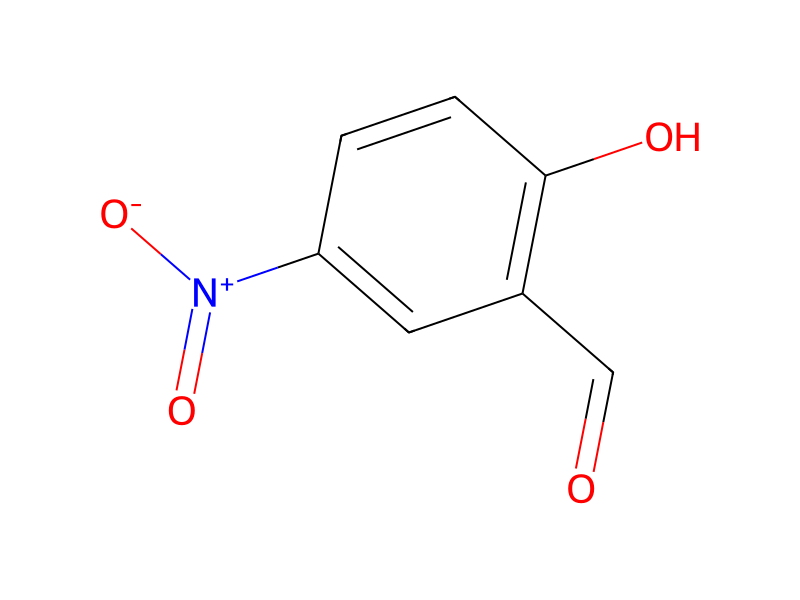
[OH:1][C:2]1[CH:9]=[CH:8][C:7]([N+:10]([O-:12])=[O:11])=[CH:6][C:3]=1[CH:4]=[O:5].[CH:13](I)([CH3:15])[CH3:14].C(=O)([O-])[O-].[K+].[K+]>CN(C=O)C.C(OCC)(=O)C>[CH:13]([O:1][C:2]1[CH:9]=[CH:8][C:7]([N+:10]([O-:12])=[O:11])=[CH:6][C:3]=1[CH:4]=[O:5])([CH3:15])[CH3:14]
ParticipantsConditionsProcedureWorkupSources & evidenceReaction notes

Participants

6

Reactant 3

HCID 6362Isopropyl iodideHCID 11430Potassium CarbonateHCID 668085-Nitrosalicylaldehyde

Product 1

HCID 115575382-Isopropoxy-5-nitrobenzaldehydeYield 89.2%

Reagents, catalysts & solvents 2

HCID 6228DimethylformamideSolvent
HCID 8857
Ethyl Acetate
Solvent

Conditions

Temperature
95 °C

Procedure

To commercially available 2-hydroxy-5-nitrobenzaldehyde (500 mg, 3.0 mmol) in DMF (10 mL) in a sealable tube was added isopropyl iodide (1.02 g, 6.0 mmol) and potassium carbonate (1.7 g, 12 mmol). The tube was sealed and heated to 95° C. overnight. After cooling to rt, the reaction was diluted with ethyl acetate. The layers were separated, and the organic layer was washed with brine, then concentrated and purified via silica gel chromatography (10-20% ethyl acetate/hexane) to provide 8A (560 mg, 89%). 1H NMR (400 MHz, CDCl3) δ ppm 1.48 (d, J=6.15 Hz, 6H) 4.69-4.96 (m, 1H) 7.10 (d, J=9.23 Hz, 1H) 8.40 (dd, J=9.23, 3.08 Hz, 1H) 8.70 (d, J=3.08 Hz, 1H) 10.46 (s, 1H).

Workup

  1. customThe tube was sealed
  2. temperatureAfter cooling to rt
  3. customThe layers were separated
  4. washthe organic layer was washed with brine
  5. concentrationconcentrated
  6. custompurified via silica gel chromatography (10-20% ethyl acetate/hexane)

Sources & evidence

ORD record
ord-8ad9475e022c416f8f4c94d37fe3ab68
Source dataset
uspto-grants-2011_10
DOI
10.6084/m9.figshare.5104873.v1
Patent number
US08044242B2

Reaction notes

On this pageParticipantsConditionsProcedureWorkupSources & evidenceReaction notes