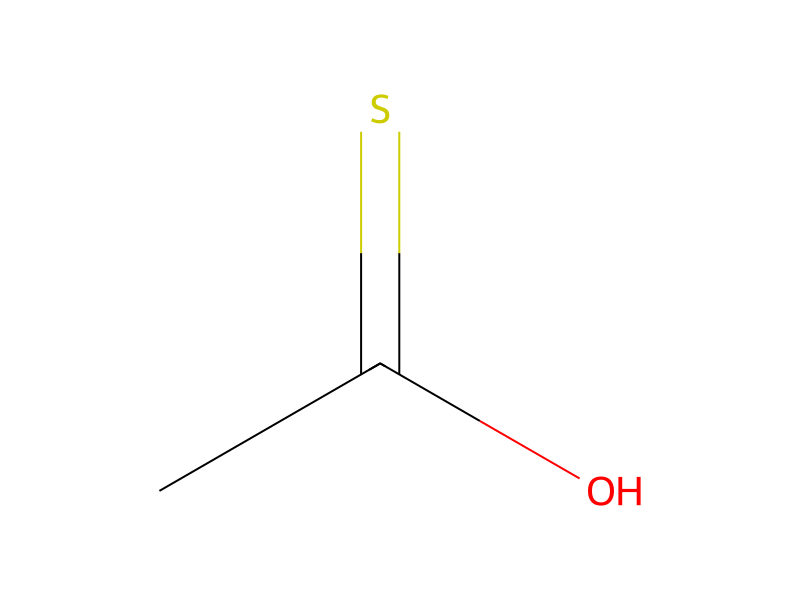
To a THF (50 ml) solution of 2.85 g (10.9 mmol) of triphenylphosphine was added, under ice-cooling, 2.2 g (10.9 mmol) of diisopropyl azodicarboxylate, followed by stirring for 30 minutes. To the solution was added a THF (5 ml) solution of 1.0 g (5.43 mmol) of (3,4-dichloroisothiazol-5-yl)methanol and 0.83 g (10.9 mmol) of thioacetic acid, followed by stirring at room temperature for 5 hours, to give rise to a reaction. After the completion of the reaction, ethyl acetate was added to the reaction mixture. The resulting mixture was washed with water, dried over anhydrous magnesium sulfate and concentrated. The residue was purified by silica gel column chromatography to obtain 0.42 g (yield: 32%) of (3,4-dichloroisothiazol-5-yl)methyl thioacetate as a light red oily substance (refractive index: 1.5855).