HomeMCPWorkbenchSkills
HomeWorkbenchNotificationsMe
llms.txt · MCP GuidePrivacy Policy · Terms of Service · Supportv1.8.3
  1. Home
  2. /Reaction

2-Aminothiazole → N-(thiazol-2-yl)thieno[3,2-c]pyridin-4-amine

HRID 1685291
Print

Reaction equation

HRID 1685291 reaction equation
Cl[C:2]1[C:7]2[CH:8]=[CH:9][S:10][C:6]=2[CH:5]=[CH:4][N:3]=1.[NH2:11][C:12]1[S:13][CH:14]=[CH:15][N:16]=1.[O-]P([O-])([O-])=O.[K+].[K+].[K+]>C1COCC1.C1C=CC(/C=C/C(/C=C/C2C=CC=CC=2)=O)=CC=1.C1C=CC(/C=C/C(/C=C/C2C=CC=CC=2)=O)=CC=1.C1C=CC(/C=C/C(/C=C/C2C=CC=CC=2)=O)=CC=1.[Pd].[Pd].CC1(C)C2C(=C(P(C3C=CC=CC=3)C3C=CC=CC=3)C=CC=2)OC2C(P(C3C=CC=CC=3)C3C=CC=CC=3)=CC=CC1=2>[S:13]1[CH:14]=[CH:15][N:16]=[C:12]1[NH:11][C:2]1[C:7]2[CH:8]=[CH:9][S:10][C:6]=2[CH:5]=[CH:4][N:3]=1
ParticipantsConditionsProcedureWorkupSources & evidenceReaction notes

Participants

7

Reactant 3

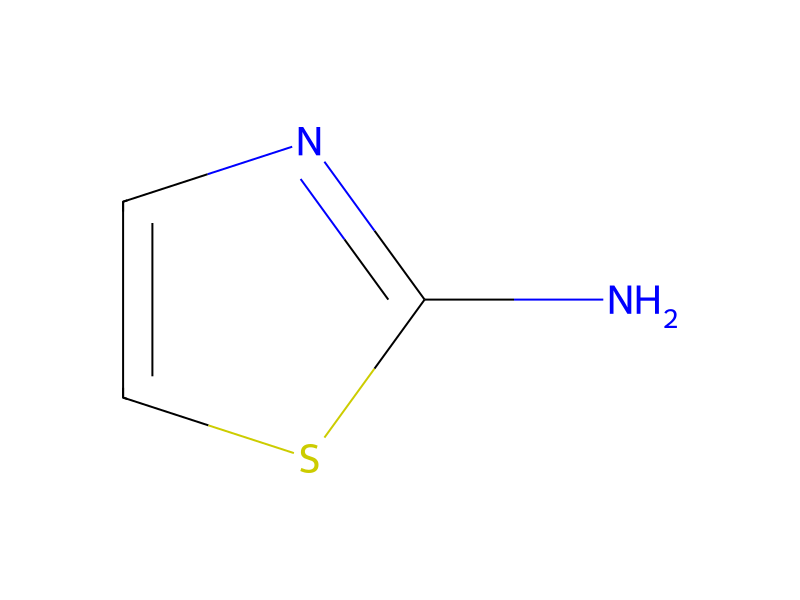
HCID 21552-AminothiazoleHCID 62657Potassium Phosphate, TribasicHCID 128273124-Chlorothieno[3,2-c]pyridine

Product 1

HCID 59200459N-(thiazol-2-yl)thieno[3,2-c]pyridin-4-amineYield 62.1%

Reagents, catalysts & solvents 3

HCID 6360441,1'-(9,9-Dimethyl-9H-xanthene-4,5-diyl)bis(1,1-diphenylphosphine)
Catalyst
HCID 9811564Bis(dibenzylideneacetone)palladiumCatalyst
HCID 8028TetrahydrofuranSolvent

Conditions

Temperature
100 °C

Procedure

A flask charged with 4-chlorothieno[3,2-c]pyridine (New, James S. et al. J. Med. Chem., 32(6), p. 1147-1156 (1989)) (2.307 g, 13.6 mmol), 2-aminothiazole (1.67 g, 16.68 mmol), tris(dibenzylideneacetone)dipalladium (0) (0.225 g, 0.25 mmol), XANTPHOS (0.424 g, 0.73 mmol) and K3PO4 (4.08 g, 19.22 mmol) was purged with argon (3×). Dioxane (54 mL) was then added and the mixture was again purged with argon (5×). The reaction was heated to 100° C. with stirring under argon overnight. The reaction was then cooled to room temperature and gave a precipitate. This mixture was diluted with THF, filtered through Celite and washed with THF. SiO2 was then added and the mixture was concentrated and purified on several Biotage silica gel chromatographies (5% to 100% ethyl acetate in hexane; 10% to 100% (2:1 dichloromethane:acetone) in dichloromethane; 10% to 100% (10% methanol in dichloromethane) in dichloromethane) to give the title material (1.97 g, 62%) as a solid. 1H NMR (400 MHz, DMSO-d6) δ ppm: 11.59 (1H, s), 8.20 (1H, d, J=5.56 Hz), 8.13 (1H, d, J=5.81 Hz), 7.80 (1H, d, J=5.56 Hz), 7.60 (1H, d, J=5.56 Hz), 7.47 (1H, d, J=3.54 Hz), 7.07 (1H, d, J=3.79 Hz). LC/MS (M+H)+: 234. HPLC ret. time (Condition I): 1.73 min.

Workup

  1. customwas purged with argon (3×)
  2. additionDioxane (54 mL) was then added
  3. customthe mixture was again purged with argon (5×)
  4. temperatureThe reaction was then cooled to room temperature
  5. customgave a precipitate
  6. filtrationfiltered through Celite
  7. washwashed with THF
  8. additionSiO2 was then added
  9. concentrationthe mixture was concentrated
  10. custompurified on several Biotage silica gel chromatographies (5% to 100% ethyl acetate in hexane; 10% to 100% (2:1 dichloromethane:acetone) in dichloromethane; 10% to 100% (10% methanol in dichloromethane) in dichloromethane)

Sources & evidence

ORD record
ord-7c75e206234b440caf8563684e76fa02
Source dataset
uspto-grants-2012_04
DOI
10.6084/m9.figshare.5104873.v1
Patent number
US08148400B2

Reaction notes

On this pageParticipantsConditionsProcedureWorkupSources & evidenceReaction notes



