HomeMCPWorkbenchSkills
HomeWorkbenchNotificationsMe
llms.txt · MCP GuidePrivacy Policy · Terms of Service · Supportv1.8.3
  1. Home
  2. /Reaction

Guanidine Hydrochloride → HCID 178495361, compound

HRID 1690614
Print

Reaction equation

HRID 1690614 reaction equation
[Na].Cl.[NH2:3][C:4]([NH2:6])=[NH:5].[CH3:7][O:8][CH2:9][CH2:10][CH2:11][O:12][C:13]1[CH:18]=[C:17]([CH2:19][CH2:20][C:21](OCC)=[O:22])[CH:16]=[CH:15][C:14]=1[C:26]1[CH:31]=[CH:30][C:29]([CH2:32][N:33]2[CH2:38][CH2:37][CH2:36][CH2:35][CH2:34]2)=[CH:28][CH:27]=1.[Cl:39]CCl.[Cl-].[Na+].O>C(O)C.CN(C=O)C>[ClH:39].[NH2:5][C:4](=[NH:6])[NH:3][C:21](=[O:22])[CH2:20][CH2:19][C:17]1[CH:16]=[CH:15][C:14]([C:26]2[CH:31]=[CH:30][C:29]([CH2:32][N:33]3[CH2:38][CH2:37][CH2:36][CH2:35][CH2:34]3)=[CH:28][CH:27]=2)=[C:13]([O:12][CH2:11][CH2:10][CH2:9][O:8][CH3:7])[CH:18]=1
ParticipantsProcedureWorkupSources & evidenceReaction notes

Participants

7

Reactant 4

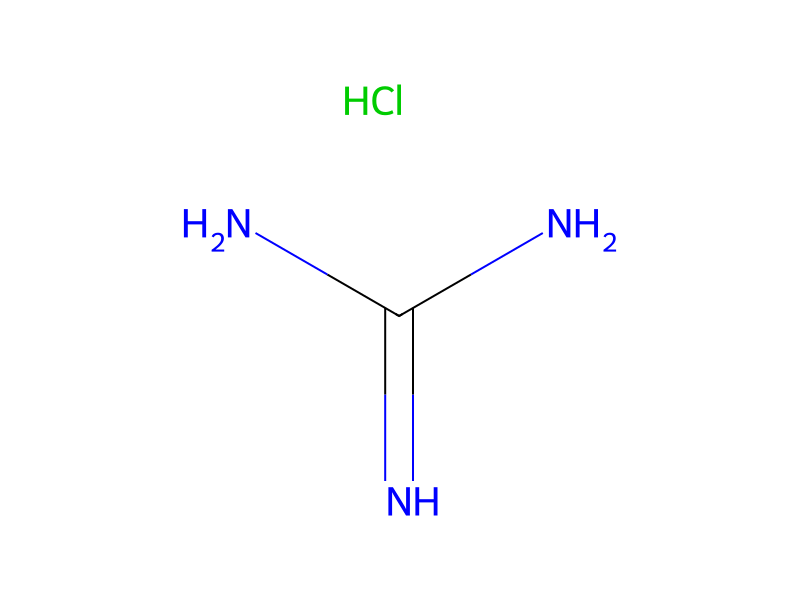
HCID 5742Guanidine HydrochlorideHCID 5360545Sodium2×HCID 66906385Ethyl 3-[2-(3-methoxypropoxy)-4'-(piperidin-1-ylmethyl)biphenyl-4-yl]propanoateHCID 131726697Dichloromethane brine

Product 1

HCID 178495361HCID 178495361, compoundYield 43%

Reagents, catalysts & solvents 2

HCID 702EthanolSolventHCID 6228DimethylformamideSolvent

Procedure

Sodium (0.15 g, 6.4 mmol) was dissolved in ethanol (3.5 mL) at room temperature. Once all the sodium was dissolved, guanidine hydrochloride (0.61 g, 6.4 mmol) was added and the mixture was stirred for 1 h. A white precipitate formed and was filtered off. The filtrate was evaporated under reduced pressure and a solution of ethyl 3-[2-(3-methoxypropoxy)-4′-(piperidin-1-ylmethyl)biphenyl-4-yl]propanoate (0.45 g, 1.0 mmol) and DMF (3.5 mL) was added at room temperature. After completion of the reaction, the mixture was poured into: dichloromethane/brine (50/50). The aqueous layer was extracted three times with dichloromethane. The combined organic layers were washed with brine, dried over anhydrous sodium sulfate, filtered and evaporated under reduced pressure. The residue was then dissolved in ethanol and HCl in diethyl ether (1N, 2 mL) was added. The mixture was evaporated and the residue was purified on reverse phase (C18) flash chromatography (H2O, HCl N/1000, acetonitrile, 100/0 to 80/20) to afford 0.23 g (43%) of the desired product as a white solid: mp=70° C.; 1H NMR (400 MHZ, d6-DMSO) δ 12.04 (bs, 1H), 10.12 (bs, 1H), 8.31 (bs, 2H), 7.56 (s, 4H), 7.22 (d, 1H), 7.00 (s, 1H), 6.91 (d, 1H), 4.22 (s, 2H), 4.01 (t. 2H), 3.35 (m, 6H), 3.21 (s, 3H), 2.93 (t, 2H), 2.87 (t, 2H), 1.90 (m, 2H), 1.76 (m, 6H).

Workup

  1. customA white precipitate formed
  2. filtrationwas filtered off
  3. customThe filtrate was evaporated under reduced pressure
  4. customAfter completion of the reaction
  5. extractionThe aqueous layer was extracted three times with dichloromethane
  6. washThe combined organic layers were washed with brine
  7. dry with materialdried over anhydrous sodium sulfate
  8. filtrationfiltered
  9. customevaporated under reduced pressure
  10. dissolutionThe residue was then dissolved in ethanol
  11. additionHCl in diethyl ether (1N, 2 mL) was added
  12. customThe mixture was evaporated
  13. customthe residue was purified on reverse phase (C18) flash chromatography (H2O, HCl N/1000, acetonitrile, 100/0 to 80/20)

Sources & evidence

ORD record
ord-cd46150bd3c24213b8ffb0b30baf7d73
Source dataset
uspto-grants-2012_04
DOI
10.6084/m9.figshare.5104873.v1
Patent number
US08153647B2

Reaction notes

On this pageParticipantsProcedureWorkupSources & evidenceReaction notes


